Infrared Sauna and Mitochondrial Health: Boost Energy at the Cellular Level
Published: October 15, 2025
Last updated: December 15, 2025

If you’ve ever stepped out of an infrared session feeling clearer, lighter, or more “charged,” it’s natural to wonder what’s happening under the hood 🔋. A lot of people describe infrared sauna sessions as an energy reset—and one of the most interesting explanations involves your mitochondria.
Mitochondria are often called the “powerhouses” of your cells because they help produce ATP (cellular energy). While an infrared sauna isn’t a magic battery charger, heat exposure can influence systems that mitochondria rely on—like blood flow, oxygen delivery, metabolic signaling, and recovery chemistry.
In this guide, we’ll keep it practical and science-minded 🧠: what mitochondria do, how infrared heat may support mitochondrial-friendly conditions, what the research can (and can’t) say, and how to structure sessions safely so you’re building resilience—not just sweating.
Quick next step
If you’re still choosing a sauna type (dome vs tent vs cabin), start here: 2025 Infrared Sauna Buyer’s Guide →
Note: This content is educational and wellness-focused. If you have a medical condition or take medications that affect heat tolerance or blood pressure, check with a clinician before starting a heat routine.
What Mitochondria Actually Do (and Why You Feel It)

Mitochondria aren’t just an anatomy-class trivia fact—they’re one of the biggest reasons you notice real differences in energy, stamina, recovery, and brain clarity ⚡️.
In simple terms, mitochondria help your body:
- Make ATP (the usable energy currency your cells spend)
- Manage oxidative stress (balancing reactive byproducts of metabolism)
- Regulate metabolic signaling (how your cells respond to demand and stress)
- Support recovery by coordinating repair processes and adaptation
So when someone says they’re “tired,” it may not just be sleep. It can be a mix of factors that affect mitochondrial output—like poor circulation, chronic stress signaling, inflammatory load, or deconditioning.
That’s where infrared sauna mitochondrial health becomes an interesting topic. Infrared heat doesn’t directly “install new mitochondria,” but it can create adaptation signals (a controlled stressor) that some people use alongside sleep, movement, and nutrition to improve their baseline resilience.
If you’re building the bigger foundation first, it helps to understand the major wellness effects infrared heat is known for—this page connects the dots nicely: 5 Infrared Sauna Benefits Backed by Science →
How Infrared Heat Could Support Mitochondrial-Friendly Conditions
Think of an infrared sauna session as a controlled heat challenge 🌡️. Your body responds by shifting blood flow, cooling mechanisms, stress proteins, and recovery signaling. Those responses can matter because mitochondria thrive (or struggle) depending on the environment around them.
Three pathways that may matter most
- Circulation & oxygen delivery: Better blood flow can improve nutrient and oxygen availability—two essentials for ATP production.
- Heat-shock response: Heat exposure can stimulate protective “chaperone” proteins (often discussed as heat shock proteins) that support cellular stress tolerance.
- Metabolic flexibility signals: Heat can mimic aspects of exercise stress (not the same as exercise), nudging adaptation pathways tied to conditioning.
It’s also helpful to separate the mechanism from the experience. People often report better sleep, reduced tension, and improved mood after a consistent sauna routine. Those outcomes can indirectly support mitochondrial function because chronic stress and poor sleep are strongly linked to low energy and reduced recovery capacity.
For a deeper dive into heat therapy’s general physiologic effects, Cleveland Clinic’s educational resources on sauna/heat exposure are a solid starting point (especially for safety context): a clinical education hub from Cleveland Clinic →
Next, we’ll get more specific about circulation—because if there’s one “bridge” between infrared heat and cellular energy, it’s often the delivery system 🚚.
Circulation, Nitric Oxide, and Energy: The Delivery System

Your mitochondria can only produce energy efficiently if they have what they need—primarily oxygen and fuel. That’s why circulation shows up in so many conversations about fatigue and recovery 🫀.
What infrared heat may do here
- Encourage vasodilation (blood vessels widen), which can improve peripheral blood flow
- Increase heart rate modestly during a session, raising circulation demand
- Support a “recovery state” after sessions for some users, especially with hydration and cooldown
This doesn’t mean every session equals “more energy.” If you overdo heat (too hot, too long, too soon), you can feel wiped out. The goal is dose it like training: enough stress to adapt, not enough stress to crash.
If you want a practical overview of why circulation is a core benefit category for sauna users, keep this in your internal reading loop: Infrared Sauna Blog Index →
Next up: the “stress proteins” and cellular protection angle—what people mean when they talk about heat building resilience 🧩.
Heat Stress, Adaptation, and Cellular Resilience
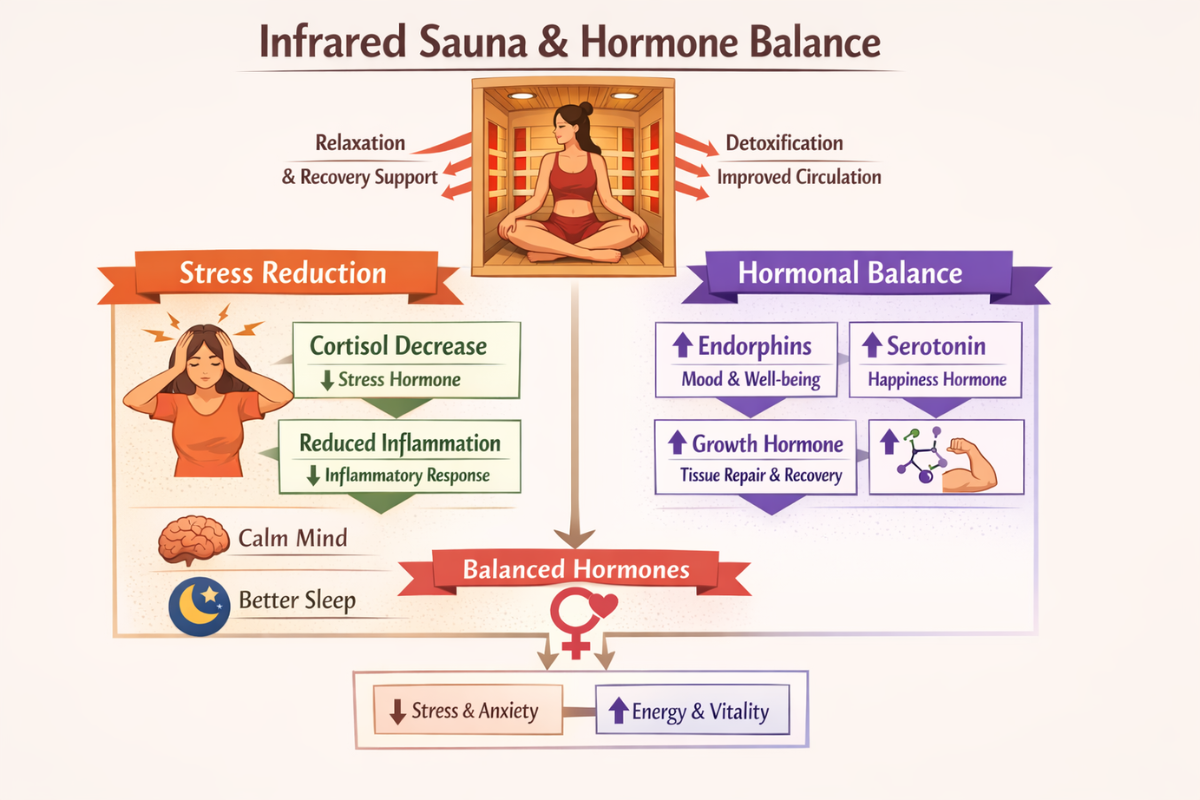
Your body is remarkably good at adapting—if the stress is controlled. Infrared sauna sessions work on this principle 🔁. Short, tolerable heat exposure can act as a signal that nudges cells to become more resilient the next time stress shows up.
This is where people often mention heat shock proteins (HSPs). These proteins help stabilize other proteins, assist with cellular repair, and support stress tolerance. While most of the detailed research comes from exercise and heat-exposure studies, the same adaptive logic applies to sauna-style heat.
Why this matters for mitochondrial health
- Mitochondria are sensitive to chronic stress and inflammation
- Adaptive stress can improve how cells handle future demands
- Better stress signaling may support energy consistency over time
Importantly, this is not about pushing to extremes. More heat is not better. Consistency and recovery are what allow adaptation to occur—much like strength training or endurance work.
For an evidence-informed overview of how heat exposure affects human physiology and stress adaptation, NIH-hosted resources on thermoregulation and stress responses provide useful background: NIH biomedical literature resources →
Inflammation, Oxidative Stress, and Energy Drain

One reason low energy can feel so persistent is that inflammation and oxidative stress quietly drain resources 🔥. When your body is stuck in a high-alert state, mitochondria often shift from efficient energy production to survival mode.
How infrared sauna use may help indirectly
- Promoting relaxation and parasympathetic (rest-and-digest) activity
- Supporting post-session recovery states when paired with hydration
- Encouraging circulation that helps clear metabolic byproducts
This does not mean infrared sauna use “cures inflammation.” However, many people use it as part of a broader recovery stack that includes sleep, nutrition, and movement.
Mayo Clinic emphasizes that chronic inflammation is closely tied to fatigue, metabolic stress, and overall health—making recovery strategies especially relevant: clinical overviews from Mayo Clinic →
If inflammation management is one of your goals, it’s worth seeing how this topic connects with other sauna-related benefits outlined here: Infrared Sauna Benefits Overview →
What the Research Actually Says (and What It Doesn’t)
It’s important to be precise here 🧪. There are no large human trials showing that infrared saunas directly increase mitochondrial count or ATP output in isolation.
What does exist is a body of research suggesting that:
- Heat exposure influences circulation, stress signaling, and recovery
- Improved recovery environments can support energy consistency
- Heat may complement exercise-induced mitochondrial adaptations
In other words, infrared sauna mitochondrial health is best understood as a supportive context, not a standalone intervention. It works upstream—by improving the conditions that allow energy systems to function well.
Systematic reviews and mechanistic discussions indexed on PubMed are helpful if you want to explore this topic at a deeper scientific level: peer-reviewed literature on PubMed →
This perspective also keeps expectations realistic—which is essential for long-term consistency.
Infrared Sauna vs Other Energy-Support Strategies
| Strategy | Primary Benefit | Mitochondrial Relevance | Best Used When |
|---|---|---|---|
| Infrared Sauna | Heat-based recovery & circulation | Indirect support via stress adaptation | You want recovery without impact |
| Exercise (Aerobic/Resistance) | Direct metabolic demand | Strong mitochondrial stimulus | You can tolerate physical training |
| Sleep Optimization | System-wide recovery | Foundational for energy production | Fatigue is chronic or unexplained |
| Nutrition & Hydration | Fuel availability | Required for ATP synthesis | Energy crashes or dehydration issues |
The takeaway is simple ✔️: infrared sauna use works best alongside other fundamentals. It can amplify recovery and resilience, but it doesn’t replace movement, sleep, or nutrition.
If you’re still deciding which sauna format fits your lifestyle and space, this is the logical next resource: Compare Infrared Sauna Types →
Real-World Use: How People Structure Sauna Sessions for Energy

When people use an infrared sauna to support mitochondrial health, the goal usually isn’t intensity—it’s consistency and recovery 🔁. Most energy-related benefits show up when sessions are treated like a sustainable routine, not an occasional stress test.
A common energy-focused session pattern
- Temperature: Moderate (not maxed out)
- Duration: 20–35 minutes
- Frequency: 3–4 times per week
- Timing: Earlier in the day or post-workout recovery window
Many users report that shorter, repeatable sessions feel better than long, draining ones—especially when energy consistency is the goal. Feeling slightly refreshed after a session is usually a better signal than feeling flattened.
Hydration plays a major role here. Even mild dehydration can worsen post-sauna fatigue, which is why pairing sauna use with a hydration routine matters.
If you’re mapping this into a broader wellness schedule, browsing how others use sauna in daily life can help spark ideas: See real-world sauna routines →
Who This Approach Is Best For (and Who Should Be Cautious)

Infrared sauna mitochondrial health support isn’t an all-or-nothing proposition. It tends to work best for certain people—and should be approached more carefully by others ⚖️.
This approach may fit well if you:
- Feel mentally or physically drained despite adequate sleep
- Train regularly and want better recovery between workouts
- Respond well to heat and relaxation-based recovery tools
- Prefer low-impact strategies alongside movement
Extra caution is wise if you:
- Have heat intolerance or frequent dizziness
- Experience blood pressure instability
- Are recovering from illness or severe fatigue syndromes
- Are new to sauna use and tend to overdo protocols
When in doubt, starting conservatively—and discussing heat exposure with a clinician—can prevent setbacks. Safety guidance is especially important for anyone experimenting with sauna use for energy support.
You can review foundational safety considerations here: Questions about safe sauna use? Contact Sauna Sage →
Simple Ways to Enhance the Energy Benefit Safely

Infrared sauna use doesn’t exist in a vacuum. Small adjustments around your session can meaningfully affect how you feel afterward 🔧.
Energy-friendly enhancements
- Hydrate before and after (water + electrolytes if you sweat heavily)
- Cool down gradually instead of rushing back into activity
- Pair with light movement earlier in the day rather than late at night
- Track how you feel the next morning, not just immediately after
Many people find that post-session fatigue disappears once hydration, temperature, and duration are dialed in. Think of this as tuning—not forcing—the system.
If you’re still exploring which sauna type makes sense for consistent home use, this resource ties the practical details together: Infrared Sauna Buyer’s Guide →
A Simple Decision Framework for Energy-Focused Sauna Use

If you want a quick way to decide whether infrared sauna use fits your energy goals, use this checklist 🧭:
- If you want recovery without impact → infrared sauna can complement light training
- If you crash after heat → reduce duration and temperature
- If energy improves the next day → you’re likely dosing it well
- If fatigue worsens → pause and reassess hydration, frequency, or timing
The most reliable signal isn’t how intense a session feels—it’s how steady your energy is over the week. That’s where mitochondrial-friendly habits tend to show up.
For a broader perspective on where sauna fits within overall wellness benefits, this page connects the dots: Infrared Sauna Benefits Explained →
Conclusion: Infrared Sauna, Energy, and Cellular Support
Infrared sauna mitochondrial health isn’t about chasing a shortcut—it’s about creating better conditions for your body to do what it already knows how to do 🔋.
Mitochondria respond to signals like circulation, recovery, stress balance, and metabolic demand. Infrared heat can support those signals indirectly by improving blood flow, encouraging relaxation, and providing a controlled stressor that—when dosed correctly—builds resilience rather than exhaustion.
The key themes to remember:
- Infrared sauna use supports energy systems; it doesn’t replace sleep, movement, or nutrition
- Consistency and moderation matter more than heat intensity
- The best indicator is next-day and next-week energy, not post-session fatigue
If you’re exploring infrared sauna use as part of a long-term wellness routine, the most practical next step is choosing a format that fits your space, schedule, and tolerance level.
Next step
Compare dome, tent, and cabin options to find the right fit: See the Infrared Sauna Buyer’s Guide →
When used thoughtfully, infrared sauna sessions can become a steady, restorative tool—one that supports energy not by pushing harder, but by helping your system recover smarter.