
Infrared Sauna and Autophagy: Can Heat Trigger Cellular Cleansing for Longevity?
Published: October 25, 2025
Last updated: December 22, 2025

Autophagy—often described as the body’s internal “cellular cleanup” system—has become a focal point in longevity science. This natural process helps cells recycle damaged components, maintain metabolic balance, and adapt to stress. While fasting and exercise are well-known autophagy triggers, growing interest surrounds whether infrared sauna heat may also play a supportive role.
Infrared sauna therapy introduces a unique form of thermal stress. Unlike traditional saunas that primarily heat the surrounding air, infrared systems use radiant heat to warm tissues more directly. This raises important questions: Can heat exposure stimulate cellular stress responses linked to autophagy? And if so, what does that mean for long-term health, aging, and recovery?
In this guide, we examine what current science suggests about infrared sauna use and autophagy, including how heat stress interacts with cellular repair pathways, what researchers actually know (and don’t know), and how this concept fits into a realistic, evidence-based wellness routine. We’ll also clarify common misconceptions—separating promising biological mechanisms from overstated claims.
Throughout the article, you’ll find conservative explanations grounded in physiology, references to recognized medical sources, and practical context for everyday sauna users. For a broader overview of infrared sauna technology and how different systems compare, see our comprehensive 2025 Infrared Sauna Buyer’s Guide .

What autophagy actually is (and what people get wrong) 🧬
Autophagy is a normal cellular process where the body breaks down and recycles worn-out or damaged cellular parts. Think of it less as a “detox hack” and more as routine cellular maintenance. Cells package damaged proteins or dysfunctional components into vesicles, deliver them to lysosomes (the cell’s recycling centers), and reuse the resulting building blocks for repair and energy needs.
When people search for “infrared sauna autophagy,” they’re usually trying to answer one core question: Can heat exposure flip on the same cellular maintenance signals that fasting or exercise does? That’s a reasonable hypothesis—but it’s also where a lot of online content drifts into exaggeration.
What autophagy is not
- Not a guaranteed “longevity switch” you can flip on demand.
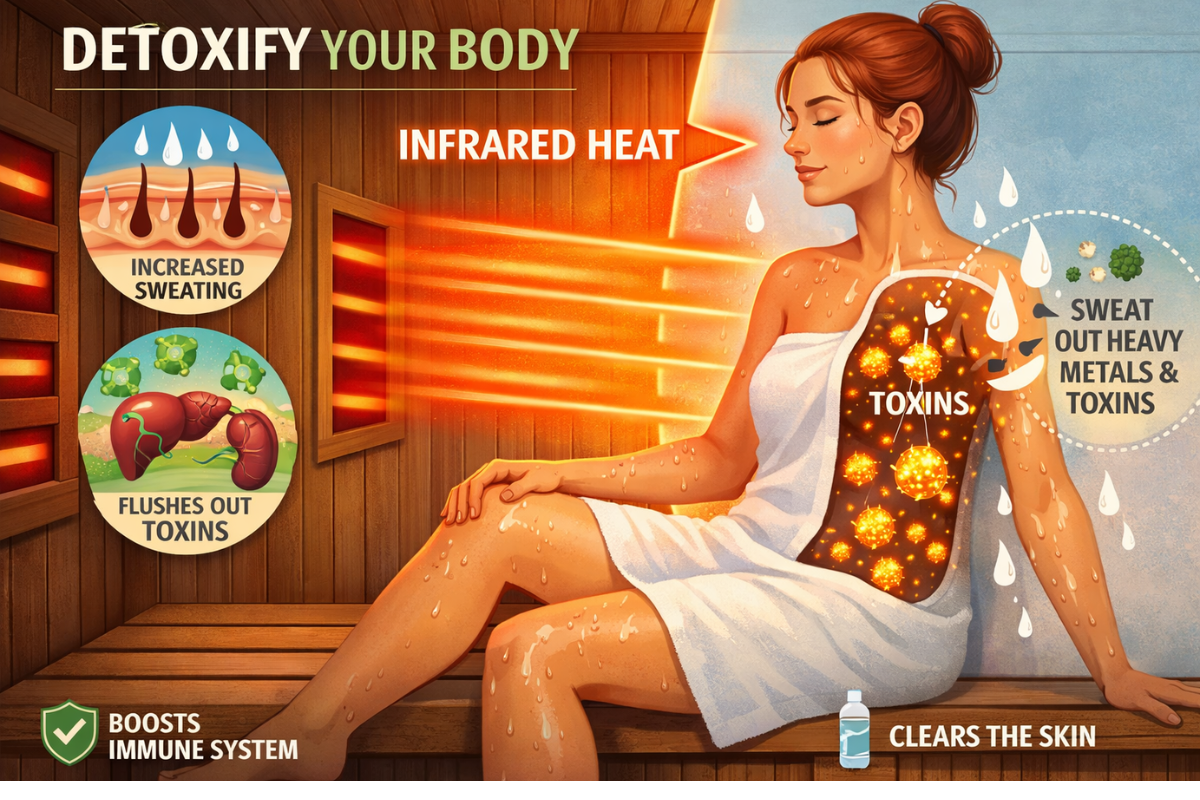
- Not the same thing as “sweating out toxins.” (Sweat is primarily a cooling mechanism.)
- Not a single pathway—autophagy involves multiple related processes and regulatory signals.
- Not always “more is better.” Excessive stress can backfire, especially with dehydration, overheating, or underlying conditions.
What makes autophagy relevant to wellness and longevity
Autophagy is studied in connection with cellular resilience, metabolic regulation, and healthy aging. Researchers often discuss it alongside broader “stress-adaptation” systems like heat shock proteins, oxidative stress signaling, mitochondrial quality control, and inflammation regulation. Importantly, most of what we know comes from a mix of animal data, cellular models, and indirect human evidence—so claims should stay cautious and realistic.
From a practical sauna-user perspective, the most helpful way to think about autophagy is this: it’s a downstream adaptation that may be influenced by your overall stress-and-recovery environment—sleep, training load, nutrition, and how you use heat exposure.
If you want the broader physiological benefits and safety context for infrared sauna use (recovery, circulation, stress regulation), you may also like our overview here: infrared sauna benefits guide .

How heat stress signals the body (heat shock proteins + adaptation) 🔥
To understand how an infrared sauna might connect to autophagy, you first have to understand heat stress. When your core temperature rises (even modestly), your body treats it as a controlled stressor. In response, it initiates protective systems designed to maintain stability and reduce cellular damage.
One of the best-known heat-adaptation systems involves heat shock proteins (HSPs). These proteins help cells manage stress by stabilizing other proteins, assisting with repair, and supporting proper folding and function. In plain terms: heat can push the body to activate “maintenance crews” that protect cells under strain.
Why this matters for “infrared sauna autophagy”
Autophagy and heat shock responses are separate processes, but they can be part of the same bigger picture: cellular quality control. When stress increases, cells may upregulate pathways that repair, recycle, or remove damaged components. That’s one reason researchers explore whether heat exposure could influence autophagy-related signaling.
What you might notice in real-world sauna use
- Early sessions feel harder as your body adapts to heat (sweating onset changes, heart rate response shifts).
- Heat tolerance improves over weeks with consistent, moderate exposure.
- Recovery can feel smoother when sauna use is paired with hydration, cooldown, and adequate sleep.
Those patterns don’t prove autophagy is increasing—but they do align with the idea that the body adapts to controlled stress through multiple protective pathways.
For clinical context on sauna use and heat exposure safety, it’s helpful to start with established medical guidance. For example, Cleveland Clinic provides an overview of sauna safety considerations and who should be cautious with heat exposure: Cleveland Clinic’s guidance on sauna use and safety .
The plausible link: autophagy, cellular stress, and infrared sauna use 🧠
So—does infrared sauna heat cause autophagy? The most accurate answer today is: we don’t have direct, definitive human evidence that proves infrared sauna sessions reliably “trigger” autophagy in the same measurable way as fasting protocols. However, there is a biologically plausible pathway worth understanding.
Autophagy is often influenced by the balance between:
- Cellular stress signals (like heat, exercise, or nutrient deprivation)
- Energy availability (AMPK/mTOR signaling is commonly discussed in autophagy research)
- Inflammation and oxidative stress context (too much stress can be harmful; the right dose can be adaptive)
What heat can realistically do
Heat exposure may support conditions that could make autophagy more likely indirectly—particularly through stress-response proteins and improvements in circulatory dynamics, sleep quality, and recovery behaviors. Many sauna users also pair sessions with routines known to influence cellular health (movement, consistent sleep timing, improved hydration practices), which complicates cause-and-effect claims.
Why “cellular cleansing” language needs caution
The phrase “cellular cleansing” is popular, but it can mislead. Autophagy isn’t a magic detox. It’s better described as cellular recycling and quality control. If heat supports it, it would likely be through adaptive stress signaling, not through sweating out impurities.
For readers who want to build a safer, more structured sauna routine (temperature, duration, hydration, pacing), our blog hub is a good next stop: Infrared Sauna Blog: wellness, reviews & product insights .
Quick reality check
If you’re using an infrared sauna for longevity, the most defensible goal is consistent, tolerable heat exposure that supports recovery, sleep, and metabolic health habits—not chasing extreme sessions to “force” autophagy.
What the research actually shows (human vs. animal evidence) 📚
When evaluating claims about infrared sauna autophagy, it’s essential to separate direct evidence from biological plausibility. Much of the discussion around heat-triggered autophagy comes from laboratory and animal research—not human sauna studies measuring autophagy markers directly.
What the evidence supports
- Heat stress activates cell-protective responses, including heat shock proteins.
- Regular sauna use is associated with cardiovascular and metabolic benefits in observational human studies.
- Autophagy is responsive to stressors like fasting and exercise, which share overlap with stress-adaptation pathways.
Where evidence remains indirect
- Few human studies directly measure autophagy following sauna exposure.
- Most mechanistic autophagy data comes from animal or cellular models.
- Infrared sauna–specific research is more limited than traditional sauna data.
A PubMed-indexed review explains how cellular stress regulates autophagy signaling, but translating these findings to real-world sauna sessions requires caution: a PubMed review on autophagy regulation and cellular stress .
The key takeaway is proportionality: infrared sauna use may support adaptive cellular conditions, but current evidence does not justify strong causal claims.

Infrared sauna vs. fasting and exercise for autophagy ⚖️
Autophagy is most consistently observed in humans during energy stress states—particularly fasting and physical exercise. That’s why comparisons between sauna heat and these established triggers are common.
How they differ mechanistically
- Fasting primarily influences autophagy by reducing insulin and activating energy-sensing pathways.
- Exercise combines mechanical stress, energy depletion, and inflammatory signaling.
- Infrared sauna heat introduces thermal stress without depleting calories or glycogen.
This distinction matters. Sauna heat may complement autophagy-supportive behaviors, but it does not replicate the metabolic conditions created by fasting or training. That’s why most longevity researchers frame heat exposure as an adjunct stressor, not a primary driver.
From a safety and public-health standpoint, Mayo Clinic emphasizes moderation with heat exposure and highlights populations who should use saunas cautiously. Their overview helps anchor expectations around what sauna therapy can—and cannot—replace: Mayo Clinic on sauna health effects and benefits
If you’re evaluating sauna use as part of a broader wellness stack, it’s worth viewing it as supportive infrastructure—similar to sleep optimization or recovery tools—rather than a singular longevity intervention.

Frequency, duration, and heat levels: what’s reasonable 🕒
Because autophagy is stress-responsive, increasing heat intensity or session length does not automatically improve outcomes. Excessive heat can increase dehydration and cardiovascular strain, which may undermine recovery.
Conservative sauna parameters
- Frequency: 3–4 sessions per week
- Duration: 20–40 minutes
- Temperature: Commonly 120–140°F for infrared systems
These ranges reflect patterns seen in population-level sauna research and clinical safety guidance. The goal is repeatable, tolerable stress that allows adaptation rather than fatigue.
The National Institutes of Health emphasizes that physiological adaptation depends on appropriate dosing and recovery: NIH discussion of stress adaptation and physiological regulation .
How infrared sauna fits into a longevity framework 🧩
| Longevity Factor | Primary Role | How Infrared Sauna Fits |
|---|---|---|
| Autophagy | Cellular recycling | Possible indirect support via heat stress signaling |
| Exercise | Metabolic & mechanical stress | Complementary recovery and circulation support |
| Nutrition | Energy & nutrient balance | Does not replace fasting or caloric control |
| Sleep | Hormonal regulation | Often improved with regular sauna routines |
| Stress management | Nervous system balance | Promotes relaxation and parasympathetic activation |
This framework helps clarify expectations. Infrared sauna use sits alongside foundational longevity behaviors rather than above them. Its value lies in supporting consistency, recovery, and stress regulation—conditions under which adaptive cellular processes are more likely to function well.
For readers planning a long-term approach, the most reliable strategy is stacking modest interventions that reinforce one another. Heat exposure can be part of that stack, but it works best when integrated thoughtfully.
What a realistic infrared sauna longevity routine looks like 🧘♂️
Longevity benefits—regardless of mechanism—come from routines that are sustainable. Infrared sauna use works best when it fits naturally into daily life rather than becoming an extreme intervention.
A practical weekly approach
- 3–4 sauna sessions per week
- Sessions timed for relaxation or recovery (evening or post-exercise)
- Intentional hydration before and after sessions
Many users find sauna sessions act as a behavioral anchor, reinforcing habits like stretching, breathwork, or improved sleep timing. These indirect effects may be more meaningful for long-term health than any isolated cellular pathway.
Who should be cautious about chasing autophagy claims ⚠️
While infrared sauna therapy is generally well tolerated for many people, it’s not appropriate—or beneficial—for everyone to pursue heat exposure aggressively in the name of “cellular cleansing.”
Extra caution is warranted if you:
- Have cardiovascular conditions that affect heat tolerance.
- Are prone to dehydration, dizziness, or heat exhaustion.
- Use medications that impair thermoregulation.
- Are pregnant or managing chronic illness without medical guidance.
In these cases, pushing heat stress in pursuit of autophagy could do more harm than good. Longevity science consistently emphasizes risk reduction and functional capacity—not extreme interventions.
If you’re unsure whether infrared sauna use is appropriate for your situation, it’s wise to start conservatively and, when needed, discuss heat exposure with a qualified healthcare professional.
Supporting habits that matter more than heat alone 🌱
Even if heat exposure influences autophagy indirectly, it remains just one factor in a larger system. Cellular health depends on behaviors with far stronger human evidence.
Foundational longevity habits
- Regular physical activity
- Consistent, sufficient sleep
- Balanced nutrition supporting metabolic health
- Stress regulation to limit chronic inflammation
Infrared sauna use can support recovery and relaxation, but it works best when layered on top of these fundamentals—not as a replacement.
For additional education and practical guidance, explore our Infrared Sauna Blog .
A simple decision framework for sauna users 🧭
If you’re considering infrared sauna use with cellular health or longevity in mind, this framework can help clarify your approach:
- If you want maximal autophagy signaling → prioritize exercise, nutrition timing, and sleep first.
- If you want recovery and stress support → infrared sauna use can be a helpful addition.
- If heat feels draining → reduce duration or frequency rather than pushing through.
- If consistency is difficult → simplify your routine instead of adding intensity.
The most sustainable longevity strategies are rarely extreme. They are repeatable, flexible, and aligned with how your body responds over time.
For help choosing an infrared sauna that fits your space, tolerance, and long-term goals, you can explore options in our Infrared Sauna Buyer’s Guide or reach out through our contact page .
Infrared sauna and autophagy: a grounded takeaway 🧠
The idea that infrared sauna heat could support autophagy is biologically plausible, but it’s also frequently overstated. Current evidence does not show that sauna sessions reliably “switch on” autophagy in humans the way fasting or exercise can. What heat exposure does appear to do is activate protective stress-response systems that may support cellular maintenance indirectly—especially when paired with recovery, sleep, and consistent routines.
From a longevity perspective, that distinction matters. Autophagy is not a detox shortcut or a single lever you can pull. It’s one outcome of a well-regulated system that responds to stress, energy balance, and recovery over time. Infrared sauna use fits best as a supportive practice—one that encourages relaxation, circulation, and repeatable stress adaptation rather than extreme biological claims.
If you’re exploring sauna therapy with cellular health in mind, focus on what’s most defensible:
- Moderate, consistent heat exposure you can maintain long term
- Strong foundations in exercise, sleep, and nutrition
- Listening to tolerance signals instead of chasing intensity
For readers ready to explore different infrared sauna types and find options that match their space and tolerance, our comprehensive Infrared Sauna Buyer’s Guide offers a practical next step. And if you have questions about using infrared sauna therapy safely within your routine, our contact page is always available.
Bottom line: infrared sauna use may help create conditions where healthy cellular processes can function well—but longevity comes from consistency, not extremes.

Similar Posts
Infrared Sauna for Detox: Myth or Miracle? (2025 Guide)
Published: July 13, 2025 Last updated: December 9, 2025 Does an infrared sauna “detox” you—or is it just a wellness…
Infrared Sauna and Skin Aging: Can Heat Therapy Protect Collagen and Elasticity?
Published: September 25, 2025 Last updated: December 17, 2025 If you care about healthy, youthful-looking skin, you’ve probably wondered how…
Heat Shock Proteins and Infrared Saunas: How Cellular Stress Builds Resilience
Published: September 17, 2025 Last updated: December 18, 2025 Heat Shock Proteins: Your Cellular Stress-Response Team 🧬🔥 When you step…
Infrared Sauna for Longevity & Anti-Aging: Can Heat Therapy Extend Your Healthspan?
Published: August 25, 2025 Last updated: December 20, 2025 Infrared sauna therapy is gaining traction in the anti-aging and longevity…