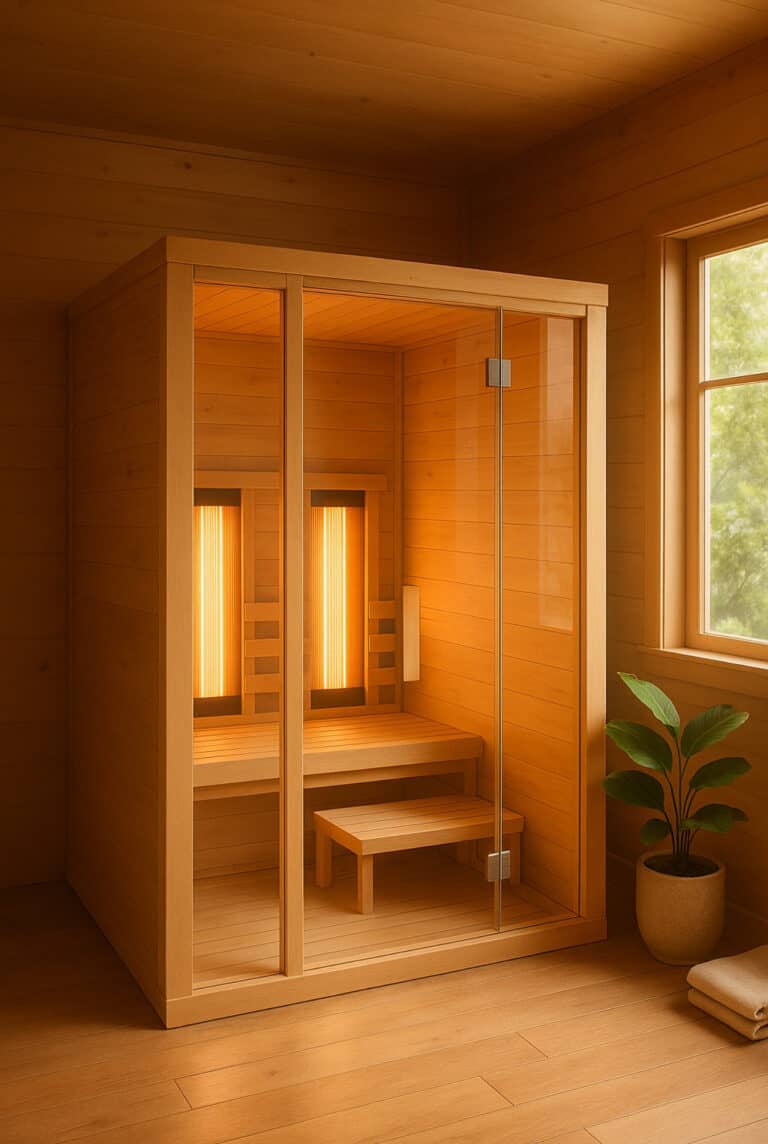
Infrared Sauna and Longevity Habits: How Heat Therapy Fits into a Daily Anti-Aging Routine
Published: October 20, 2025
Last updated: December 22, 2025

Longevity isn’t about chasing a single miracle intervention — it’s about building daily habits that quietly support your body over decades. Nutrition, movement, sleep, and stress management all matter. Increasingly, so does heat exposure, particularly through a consistent infrared sauna longevity routine.
Infrared saunas have become a staple in many anti-aging and wellness protocols because they deliver controlled heat that penetrates deeper than ambient warmth. Rather than focusing on relaxation alone, modern longevity discussions examine how repeated, moderate heat exposure may influence cellular stress responses, circulation, metabolic efficiency, and recovery capacity.
This guide explores how infrared sauna sessions can fit into a realistic, sustainable longevity routine — not as a replacement for foundational habits, but as a complementary tool. We’ll look at:
- How heat therapy interacts with known longevity pathways
- What a practical daily or weekly infrared sauna routine looks like
- How sauna use compares to other anti-aging habits
- Who benefits most — and who should be cautious
Throughout this article, the focus remains conservative and evidence-based. There are no exaggerated claims or promises of lifespan extension. Instead, you’ll learn how infrared sauna use may support the same physiological systems targeted by proven longevity habits, such as exercise, calorie balance, and sleep hygiene.
If you’re new to infrared saunas, you may also want to review our infrared sauna benefits overview or explore how different sauna types compare in our 2025 Infrared Sauna Buyer’s Guide .

When people say “longevity,” they often mean two different things: living longer and living better. Most realistic longevity plans focus on the second one — maintaining strength, mobility, cognition, cardiovascular health, and emotional resilience as the years stack up.
That’s why longevity habits usually share a theme: they improve the body’s ability to handle stress and recover. In science terms, many longevity habits are forms of “beneficial stress” — small, controlled challenges that trigger adaptation.
Core longevity habits (the “big rocks”)
- Movement (especially strength + cardio)
- Sleep consistency and circadian rhythm support
- Nutrition that supports metabolic health and inflammation balance
- Stress regulation (breathwork, community, decompression)
- Recovery practices that keep the system resilient
A well-designed infrared sauna longevity routine belongs in the “recovery + adaptation” bucket. Heat exposure isn’t magic — but it may help the body practice a controlled version of heat stress, which can influence circulation, cardiovascular load tolerance, and a range of cellular repair mechanisms (more on those soon).
If you’re building your routine from the ground up, the sauna should be viewed like a multiplier: it enhances a strong base, but it can’t replace the base. That’s why the most effective users tend to pair sauna sessions with fundamentals — regular exercise, hydration, and consistent sleep.
For a broader foundational overview, review our infrared sauna benefits guide and then use this article to plug sauna use into your daily rhythm in a way that feels sustainable.

One of the most useful ways to think about heat therapy is through the lens of hormesis — a concept where a small, controlled dose of stress encourages the body to adapt and become more resilient.
Common examples of hormesis include:
- Exercise: short-term strain that improves strength and metabolic health
- Cold exposure: brief discomfort that can enhance stress tolerance
- Heat exposure: thermal stress that challenges cardiovascular and cooling systems
In an infrared sauna, your body responds by increasing circulation and activating cooling mechanisms. While this isn’t the same stimulus as exercise, it still represents a meaningful physiological challenge — especially when repeated consistently.
Why infrared matters for consistency
Infrared saunas heat the body more directly and often feel tolerable at lower ambient temperatures. For many users, this makes sessions easier to repeat week after week — a critical factor in any infrared sauna longevity routine.
For readers choosing a sauna intended for frequent home use, our Best Infrared Saunas 2025 – Buyer’s Guide explains which formats tend to support long-term consistency.

Longevity research does not point to any single intervention as decisive. Instead, sauna studies tend to focus on how repeated heat exposure may influence cardiovascular function, cellular stress responses, and recovery capacity.
1) Cardiovascular conditioning
Heat exposure raises heart rate and increases blood flow as the body regulates temperature. Repeated exposure may help support cardiovascular adaptability — a theme explored in long-term observational sauna research.
Several well-known cohort studies indexed in PubMed have examined associations between sauna bathing frequency and cardiovascular outcomes. While observational data cannot prove causation, it has helped guide interest in sauna as a lifestyle practice.
2) Heat shock proteins and cellular maintenance
Heat exposure can stimulate heat shock proteins (HSPs), which assist with protein repair and cellular stress management. These systems are frequently discussed in aging research because cellular repair efficiency tends to decline with age.
3) Inflammation balance and recovery
Low-grade inflammation often increases with aging. Sauna research sometimes explores whether heat exposure influences inflammatory markers or subjective recovery, reinforcing sauna’s role as a recovery-support tool rather than a medical intervention.
Clinical guidance from organizations such as the Cleveland Clinic emphasizes moderation, hydration, and individual tolerance when using sauna for wellness.

Longevity routines work best when they blend into daily life instead of disrupting it. For most people, the most sustainable infrared sauna longevity routine isn’t extreme — it’s predictable, time-bound, and paired with other habits that already exist.
Where sauna fits best in the day
- Post-workout: supports relaxation and perceived recovery after resistance or cardio training
- Early evening: encourages parasympathetic “wind-down,” especially when paired with hydration
- Non-training days: acts as a light recovery stimulus without mechanical stress
Many longevity-focused users gravitate toward evening sessions because heat exposure followed by cooling can reinforce circadian signals. Mainstream clinical guidance often highlights relaxation and improved sleep onset as common downstream effects of heat exposure, when used appropriately. Resources like Mayo Clinic frequently emphasize that timing, hydration, and moderation matter more than intensity.
A realistic “weekday” sauna pattern
- Session length: 15–30 minutes
- Frequency: 3–5 sessions per week
- Heat level: warm-to-hot, not maximal
The goal is not exhaustion. A good longevity-oriented session leaves you relaxed, lightly fatigued, and able to sleep well — not depleted.
If you’re deciding what type of home sauna setup makes this kind of routine easiest to maintain, our 2025 Infrared Sauna Buyer’s Guide breaks down which formats tend to work best for frequent, low-friction use.

Infrared sauna works best when it’s stacked with other longevity-supportive behaviors. Think of it as a connector habit — something that reinforces multiple systems at once.
High-impact sauna “pairings”
- Breathwork: slow nasal breathing during sessions can enhance relaxation
- Hydration rituals: electrolytes before or after sessions support fluid balance
- Light stretching: gentle mobility work during cooldown phases
- Sleep hygiene: consistent post-sauna routines reinforce nighttime cues
From a longevity perspective, these combinations matter because they target overlapping systems — nervous system balance, vascular tone, and metabolic recovery. The sauna becomes the anchor that nudges multiple habits in the right direction.
This is also why sauna use is often discussed alongside other stress-modulating practices in research contexts. Agencies like the National Institutes of Health (NIH) frequently frame lifestyle interventions as synergistic rather than isolated — modest effects that compound when combined.
If you’re just starting out, keep it simple. One consistent pairing (for example, sauna + hydration + early bedtime) beats a complicated routine you abandon after two weeks.

Frequency questions come up constantly — and for good reason. Longevity habits depend on dose and repetition, not single heroic efforts.
What research-informed routines tend to share
- Moderate sessions repeated weekly
- Enough heat to trigger sweating and cardiovascular response
- Avoidance of dehydration or extreme fatigue
In observational sauna research, higher weekly exposure is often associated with stronger health correlations — but that doesn’t mean more is always better. The safest interpretation is that regular use beats sporadic extremes.
For most people, a baseline of 3–4 infrared sauna sessions per week fits well within a longevity framework, especially when combined with movement and sleep consistency. Some advanced users go higher, but only after adapting gradually.
If you’re unsure how sauna benefits fit your personal context, our infrared sauna benefits page covers adaptation timelines and what most users notice first versus later.
| Longevity Tool | Main Stressor | Primary Benefit Focus | Recovery Cost |
|---|---|---|---|
| Infrared Sauna | Heat | Circulation, recovery, relaxation | Low–moderate |
| Strength Training | Mechanical load | Muscle, bone density, metabolism | Moderate |
| Cardio Training | Cardiovascular stress | Heart health, endurance | Moderate |
| Cold Exposure | Cold shock | Stress tolerance, alertness | Moderate–high |
| Sleep Optimization | None (restorative) | Hormonal balance, repair | Low |
From a longevity perspective, infrared sauna shines because it offers a meaningful physiological stimulus with relatively low recovery cost. That makes it easier to layer on top of training, work stress, and daily life.
The most effective routines don’t choose one tool — they prioritize the fundamentals and use sauna strategically to support recovery and consistency over time.

Longevity habits only work if they survive real life. In practice, people who maintain an infrared sauna longevity routine tend to use it in predictable, low-friction ways.
Common long-term usage patterns
- Evening decompression: sauna to downshift before sleep
- Training support: sauna after workouts or on recovery days
- Low-impact option: sauna during injuries or deload phases
What these scenarios share is flexibility. Sessions can be shortened or skipped without breaking the overall habit — an important factor for routines intended to last years rather than weeks.
For users designing a home setup to support consistency, ease of access and comfort matter more than maximum heat output. Our Buyer’s Guide explains which formats integrate most smoothly into daily living spaces.

Infrared sauna is often discussed broadly, but it’s not equally appropriate for everyone. Longevity is personal, and routines should match health status, goals, and tolerance.
This routine may be a good fit if you:
- Already exercise and want a low-impact recovery tool
- Struggle with chronic stress or difficulty unwinding
- Prefer gentle, repeatable wellness practices
- Want a habit that supports circulation without joint strain
This routine may not be ideal if you:
- Have medical conditions affected by heat without medical clearance
- Regularly experience dizziness or dehydration with heat exposure
- Expect sauna use to replace exercise or nutrition
Clinical organizations consistently emphasize that sauna use should be approached conservatively, especially for individuals with cardiovascular conditions or blood pressure concerns. Educational overviews from institutions like the Cleveland Clinic stress moderation, hydration, and listening to warning signs.
When in doubt, shorter sessions at lower temperatures provide most of the habit-building value with less risk.

Longevity isn’t supported by intensity alone — it’s protected by basic safety habits. Most negative sauna experiences trace back to hydration errors, poor timing, or pushing past comfort.
Foundational safety practices
- Drink fluids before and after every session
- Consider electrolytes if sweating heavily
- Exit the sauna immediately if you feel lightheaded or unwell
- Avoid combining sauna use with alcohol or severe calorie restriction
From a longevity standpoint, these precautions matter because dehydration and overexertion create unnecessary physiological stress — the opposite of what most people are trying to achieve with sauna use.
For a deeper dive into safe session duration, temperature ranges, and warning signs, review our Contact page if you have questions about whether infrared sauna fits your situation, or consult general medical guidance from sources like Mayo Clinic .

If longevity habits feel overwhelming, a simple framework helps cut through the noise. Infrared sauna fits best when it supports consistency — not perfection.
- If recovery is your bottleneck → sauna 3–4x/week at moderate heat
- If stress dominates your health picture → sauna in the evening with breathwork
- If time is limited → shorter sessions beat skipped sessions
- If training volume is high → sauna on non-lifting or post-cardio days
The most effective infrared sauna longevity routine is one that supports your weakest link — whether that’s sleep, recovery, or stress regulation — while staying easy enough to maintain long term.
For readers exploring equipment options that make this framework practical at home, our Infrared Sauna Blog and Buyer’s Guide provide next-step comparisons and setup guidance.
Longevity is rarely about adding something dramatic — it’s about reinforcing the habits that quietly protect your health year after year. An infrared sauna longevity routine fits best when it supports recovery, stress regulation, circulation, and consistency rather than chasing extremes.
Used thoughtfully, infrared sauna sessions act as a low-impact physiological nudge. They encourage relaxation after stress, reinforce evening wind-down routines, and complement movement-based longevity habits without adding joint strain or mechanical load.
The most important takeaway is this: sauna use works best as a supporting player. It amplifies the benefits of exercise, sleep, hydration, and nutrition — but it cannot replace them. When framed that way, it becomes easier to use sauna sessions regularly, safely, and sustainably.
If you’re considering making sauna a long-term part of your wellness routine, the next step is choosing a setup that removes friction rather than adding it. Size, heat feel, comfort, and ease of use matter more than raw specifications.
To explore which home sauna formats are most practical for daily or weekly longevity routines, review our Best Infrared Saunas 2025 – Buyer’s Guide or browse related educational guides in the Infrared Sauna Blog .
Longevity is built quietly. Choose habits you can keep — and let consistency do the work.