
5 Infrared Sauna Benefits (2025 Guide)

Infrared saunas are one of the most researched wellness tools available today. As of 2025, the scientific consensus continues to grow: consistent infrared sessions can improve circulation, detoxification, stress management, skin health, and sleep quality. 🌡️✨
This cornerstone guide breaks down the five most important infrared sauna benefits, combining peer-reviewed evidence with practical routines you can start using tonight. If you want to explore specific sauna types afterward, you can check out our 2025 Infrared Sauna Buyer’s Guide.
What Makes Infrared Saunas Unique?

Infrared saunas stand apart from traditional saunas because they focus on heat penetration rather than air temperature. Instead of warming the air, infrared heaters use targeted wavelengths of light that interact directly with tissues, muscles, and cells. This is why infrared sessions feel gentler yet produce a deeper, more productive sweat—even at temperatures as low as 110–140°F.
From a physiological standpoint, infrared light stimulates vasodilation, enhances capillary expansion, and supports mitochondrial energy production. Studies referenced by the Mayo Clinic and NIH show that this form of gentle heat stress can improve blood flow, support the lymphatic system, and influence autonomic balance in ways traditional saunas typically cannot achieve at similar comfort levels.
Another reason infrared saunas are unique is the range of wavelengths they offer. Each interacts with the body differently:
- Far Infrared (FIR) – Deep heat penetration that supports detoxification, circulation, and muscle recovery.
- Mid Infrared (MIR) – Targets soft tissue and joint support, helping with flexibility and stiffness.
- Near Infrared (NIR) – Interacts with the skin’s surface layers and mitochondria, influencing collagen production and cellular repair.
Full-spectrum infrared saunas combine all three wavelengths, creating a “layered” effect that benefits circulation, skin health, and recovery simultaneously. This is why users often report multiple health improvements within the first 4–8 weeks of consistent use.
Ultimately, what makes infrared saunas unique is how much therapeutic impact they deliver with such manageable heat. People who find traditional saunas overwhelming often find infrared therapy extremely accessible—making it one of the most flexible wellness tools available today.
Benefit #1: Improved Circulation

Circulation is one of the body’s most essential functions, and infrared saunas support it in multiple complementary ways. When infrared light penetrates tissues, the body responds with rapid vasodilation, expanding blood vessels and increasing blood flow. This helps deliver oxygen and nutrients more efficiently throughout the body.
Clinical reviews published through the National Institutes of Health show that infrared sauna use can raise heart rate into a light aerobic range—often between 80–120 BPM—which mimics the cardiovascular effects of brisk walking. This makes infrared therapy especially helpful for people with sedentary jobs, limited mobility, or persistent cold hands and feet.
Improved circulation also supports:
- Warmth and comfort in extremities prone to coldness
- Reduced stiffness in muscles and joints
- Enhanced tissue oxygenation for recovery and repair
- Faster post-workout recovery due to increased blood flow
Another lesser-known benefit is improved endothelial function—the ability of blood vessels to widen and contract efficiently. Early evidence suggests that repeated infrared exposure may help support endothelial flexibility, which plays a key role in long-term cardiovascular wellness.
In practical terms, most people begin noticing circulation improvements within the first 2–3 weeks of consistent use. Many describe feeling “looser,” warmer, and more mobile during daily tasks—especially in the morning.
Benefit #2: Deep Detoxification via Sweating

Sweating is one of the body’s most natural detoxification pathways. Infrared saunas enhance this process by providing steady, penetrative heat that raises core temperature more effectively than ambient heat alone. Because of this, people tend to sweat more deeply and consistently during infrared sessions, even when the air temperature feels comfortable.
Multiple peer-reviewed studies have documented that sweat contains measurable amounts of heavy metals, phthalates, microplastics, and environmental pollutants. While detox claims are often exaggerated online, the consensus supported by PubMed is that sweating can play a role in the body’s natural elimination of certain toxins—particularly when lifestyle or environment increases exposure.
Beyond detoxification, sweating supports:
- Skin turnover and clarity by flushing out impurities
- Thermoregulation improvements that help the body handle heat more efficiently
- Lymphatic flow, which works alongside circulation to transport waste for elimination
- Overall vitality due to improved skin and circulatory function
Another unique aspect of infrared detoxification is how quickly the body adapts. Most people find they begin sweating earlier in their session after 2–3 weeks of consistent use. This indicates improved heat tolerance and more efficient thermal response—both clear signs of progress.
If you want to understand how each sauna type influences sweat depth and core-temperature rise, our 2025 Sauna Buyer’s Guide offers a heat-profile comparison across domes, tents, and cabins.
Benefit #3: Stress Reduction & Nervous System Support

Chronic stress is one of the most common health challenges today, driven by long work hours, digital overload, and limited downtime. Infrared saunas offer a powerful counterbalance by activating the parasympathetic nervous system—your body’s natural “rest and digest” mode. This shift helps calm racing thoughts, loosen tight muscles, and reduce the physical tension accumulated throughout the day.
A growing body of research, including multiple PubMed analyses, suggests that passive heat therapy may help lower cortisol levels while increasing the production of beta-endorphins, the neurochemicals associated with improved mood and relaxation. Unlike traditional saunas, infrared’s lower temperatures make it easier to stay in this relaxed state without feeling overwhelmed.
Many users describe infrared sauna time as a form of “forced mindfulness” — a quiet, warm environment free from screens and distractions. This creates a uniquely grounding experience, especially when paired with slow breathing, gentle stretching, or meditation.
Why Stress Relief Matters Physically
- Reduces muscle guarding and chronic tension
- Improves autonomic balance between sympathetic and parasympathetic systems
- Helps regulate evening cortisol for better sleep quality
- Supports emotional well-being and resilience
With consistent use (3–5 sessions per week), many people experience a noticeable shift: calmer evenings, better focus, improved recovery, and a more stable emotional baseline.
Benefit #4: Improved Skin Health & Collagen Support
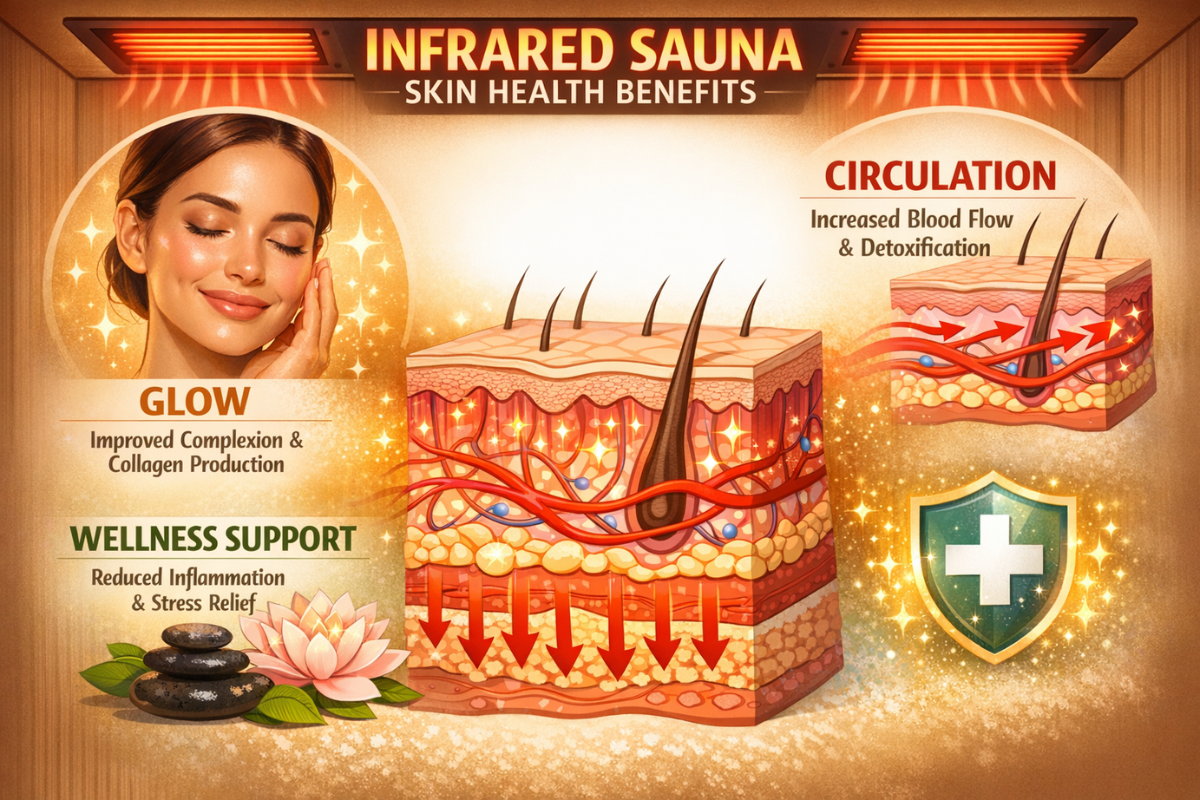
Infrared saunas benefit the skin in a uniquely comprehensive way. They work from the inside out—improving circulation and hydration—while simultaneously enhancing the skin’s natural cleansing and renewal processes. This dual action results in a clearer complexion, better texture, and a noticeable glow, especially after several weeks of consistent use.
Increased blood flow delivers nutrients, oxygen, and antioxidants to the skin’s surface layers. This helps support collagen remodeling, elasticity, and overall skin vitality. According to reviews referenced by Cleveland Clinic, near-infrared (NIR) wavelengths may also stimulate fibroblasts, the cells responsible for collagen production.
Skin Benefits Backed by Research
- Collagen support: UV-free thermal conditioning that promotes elasticity.
- Pore purification: Heat-induced sweating removes buildup and impurities.
- Improved texture: Regular sessions help soften rough patches and dryness.
- Better tone: Enhanced circulation gives the skin a brighter, more even appearance.
Many users with acne-prone or congested skin report fewer breakouts due to the improved turnover and pore flushing. While it’s not a cure-all, it’s a valuable addition to a holistic skincare and wellness routine.
For best results, drink water before and after your session, and cleanse the skin gently afterward to remove sweat-borne impurities.
Benefit #5: Better Sleep & Recovery

Sleep quality is one of the most profound areas where infrared saunas make a difference. The body’s natural sleep process is influenced by shifts in core temperature: as it rises and then gently falls, your brain recognizes this as a signal to prepare for rest. Infrared saunas enhance this cycle by elevating warmth in a deep, soothing way that encourages the transition into a calmer, sleep-ready state.
Research from NIH-backed journals has found that passive heat exposure can increase slow-wave sleep—the most restorative stage of the sleep cycle. This phase supports tissue repair, immune function, and hormonal balance. When combined with infrared’s ability to reduce muscle tension and evening stress, the effect on sleep can be significant.
How Infrared Supports Better Sleep
- Lowers nighttime cortisol to quiet the mind
- Relaxes muscle tension for deeper comfort in bed
- Supports melatonin rhythm through improved circadian cues
- Improves heart-rate variability (HRV)—a marker of recovery
Many people report falling asleep faster, staying asleep longer, and waking with more energy after 2–3 weeks of including infrared sauna sessions in their evening routine. For even better results, pair it with light stretching, reading, or meditation.
How the 5 Key Benefits Compare
The most powerful part of infrared therapy is how the benefits reinforce each other. Better circulation supports detoxification, lower stress improves sleep, and improved skin health often follows from both. This table breaks down each benefit so you can quickly compare which outcomes align with your goals.
| Benefit | Primary Effects | Best For |
|---|---|---|
| Circulation | Warmer extremities, oxygen delivery, tissue recovery | Stiffness, low energy, desk workers |
| Detoxification | Deep sweating, impurity removal, lymphatic support | Skin clarity, heavy sweat needs, vitality boost |
| Stress Relief | Parasympathetic activation, mindfulness, muscle relaxation | High stress, anxiety patterns, emotional fatigue |
| Skin Health | Collagen support, glow, pore cleansing | Anti-aging, acne-prone skin, radiance |
| Sleep Quality | Deeper rest, tension reduction, circadian alignment | Insomnia, evening stress, recovery needs |
If more than one category speaks to you, that’s completely normal—infrared sauna therapy is most effective when used as a holistic health tool rather than for a single isolated goal.
How to Turn Infrared Sauna Benefits into Daily Routines
Understanding the infrared sauna benefits is only half the picture. The other half is weaving those benefits into a routine that fits your lifestyle and builds results over time. The most successful users treat their sauna like a gym membership or meditation practice—something they do consistently, not occasionally. Small, steady habits always outperform long, irregular sessions.
Below are three evidence-informed sauna routines aligned to circulation, detox, stress relief, and sleep. These examples are flexible, so feel free to adjust them to your comfort level and weekly schedule.
Circulation & Morning Warm-Up Routine
- Schedule: Morning, 10–15 minutes, 3–4 days per week
- Temperature: 115–125°F
- Actions: Gentle ankle circles, shoulder rolls, and slow breathing
- Why it works: Boosts circulation, loosens tight muscles, supports energy levels
Many people who sit for long portions of the day find this routine decreases mid-day stiffness and improves natural joint lubrication through increased blood flow.
Detox, Skin, & Midday Glow Routine
- Schedule: Midday or afternoon, 20–25 minutes, 2–3 times weekly
- Temperature: 120–135°F
- Actions: Calm breathing, light hydration beforehand, thorough rinse afterward
- Why it works: Encourages a deeper sweat and supports skin renewal and clarity
After a few weeks, many users notice an earlier onset of sweating—indicating stronger heat tolerance and improved thermoregulation.
Stress Relief & Sleep Routine (Evening)
- Schedule: Evening, 15–20 minutes, 2–4 days per week
- Temperature: 110–120°F for a soothing, spa-like session
- Actions: Low lights, device-free space, slow diaphragmatic breathing
- Why it works: Reduces evening cortisol, relaxes muscles, primes the mind for rest
Over time, many people stack complementary habits—like magnesium, stretching, journaling, or meditation—onto their sauna sessions to enhance these benefits even more.
For additional protocols and weekly layouts, visit the Infrared Sauna Blog, where we explore recovery programs, seasonal routines, and performance-focused sequences.
When Are Infrared Sauna Benefits Truly Worth It?
An infrared sauna can be transformative, but the value depends on how well it matches your goals, lifestyle, and space. Understanding when infrared therapy is genuinely worth the investment can help you make a confident decision without second-guessing.
You’ll Benefit Most If You:
- Experience chronic stress or difficulty relaxing at the end of the day
- Struggle with stiffness, muscle tightness, or circulation issues
- Have sleep challenges and want a nighttime routine that reliably works
- Prefer gentle, accessible wellness methods over high-intensity protocols
- Value having a private recovery tool you can use without scheduling appointments
Many people also choose a sauna because they want more control over their wellness. Instead of relying on external spa visits, they can regulate the time, temperature, and frequency of their sessions—helping build habits that last months or years.
Questions to Ask Before You Purchase
- Space: Do you have a dedicated area for a dome, tent, or cabin?
- Routine: Can you realistically commit to 3–5 sessions per week?
- Budget: Would a portable model help you begin your routine sooner?
- Health: Have you consulted your provider if you have heart, blood pressure, or heat-related considerations?
- Timeline: Are you ready to commit for 8–12 weeks to see measurable change?
If the answer to most of these questions is yes, you’re positioned to experience meaningful infrared sauna benefits quickly and consistently.
Safety, Hydration, and Practical Tips for Maximizing Benefits
Infrared saunas are generally well tolerated, but safe, consistent habits make a huge difference in both short- and long-term results. Think of your sauna as a training tool: the right preparation, pacing, and hydration amplify every benefit from circulation to sleep.
Safety Essentials
- Start with shorter sessions, especially if you’re new to heat exposure.
- Avoid alcohol before sessions and wait at least 1–2 hours after intense exercise.
- Exit immediately if you feel dizzy, lightheaded, or unusually fatigued.
- Consult a healthcare provider if you have cardiovascular, kidney, or blood pressure concerns.
Hydration & Electrolytes
- Drink a full glass of water 30–60 minutes before your session.
- Rehydrate afterward, especially if your session produces a heavy sweat.
- Use electrolytes if you sauna more than 4–5 times per week or sweat easily.
- Include hydrating foods (cucumber, citrus, coconut water) to support recovery.
Comfort & Experience Upgrades
- Use dedicated sauna towels or mats to keep your space clean and comfortable.
- Keep a cool towel nearby for your face or neck, especially in higher temperatures.
- Add soothing elements like soft music, salt lamps, or essential oil diffusers (outside the heater zone).
- Experiment with session timing—some prefer energizing morning heat while others thrive with evening relaxation.
If you have safety questions or want guidance on choosing a sauna type that fits your needs, our contact page is always open for personalized support and additional resources.
A Simple 4-Step Framework to Get the Most Infrared Sauna Benefits
You don’t need complicated systems to get the most out of your infrared sauna. In fact, the best results come from a clear goal, a realistic routine, and steady consistency. This four-step framework turns the science into a weekly practice you can sustain.
Step 1 – Identify Your Primary Wellness Goal
Are you most focused on stress relief, sleep, detox, circulation, or skin health? Your goal determines your ideal time of day, frequency, and temperature. For example, evening users may benefit from lower heat and calmer routines to support sleep, while morning users may prefer higher temperatures for circulation and energy.
Step 2 – Match the Right Sauna Type to Your Needs
Each sauna type delivers benefits slightly differently:
- Domes: Ideal for deep FIR heat and full-body coverage while lying down.
- Tents: Excellent for beginners and budget-friendly setups.
- Cabins: Best for full-spectrum use, multi-person sessions, and long-term consistency.
For deeper comparisons, explore the Infrared Sauna Buyer’s Guide and the Best Infrared Sauna Domes roundup.
Step 3 – Build a Routine Around Frequency, Not Intensity
Start with two or three shorter sessions per week, then work up to three to five. Think long-term: most studies showing improvements in sleep, skin, stress, or circulation reflect consistent use over 8–12 weeks, not single sessions.
Step 4 – Track Small Wins Over 30–60 Days
Look for changes in:
- Energy patterns throughout the day
- Muscle recovery and soreness after activity
- Skin clarity and hydration
- Evening calmness and sleep onset
Reviewing these changes every few weeks helps you adjust your routine and see just how much these infrared sauna benefits add up over time.
Putting Infrared Sauna Benefits into Practice
You now have a complete, evidence-informed overview of the top infrared sauna benefits—including circulation support, detoxification, stress relief, skin health, and better sleep. What matters most from this point forward is building a rhythm that helps these benefits compound. Infrared therapy works best when it becomes a predictable part of your week, not an occasional experiment.
Most research cited by the Cleveland Clinic, Mayo Clinic, and the NIH shows meaningful change over 8–12 weeks of consistent use. This is why pairing a realistic schedule with proper hydration, rest, and gradual intensity increases can be so transformative. As circulation improves, stress decreases, and sleep stabilizes, most people naturally increase their sauna frequency because it simply makes them feel better throughout the day.
If you’re exploring which sauna style fits your goals and home setup, the best next step is to visit our 2025 Infrared Sauna Buyer’s Guide. It breaks down domes, tents, and cabins with recommendations and next steps. You can also browse focused roundups—like our Best Infrared Sauna Domes—if you’re comparing body positioning, heat profiles, or price ranges.
And if you ever want personalized recommendations or guidance, feel free to reach out via the Sauna Sage contact page. We’re here to help you build a practical, enjoyable, and research-backed infrared routine that supports your long-term wellbeing. 🌿