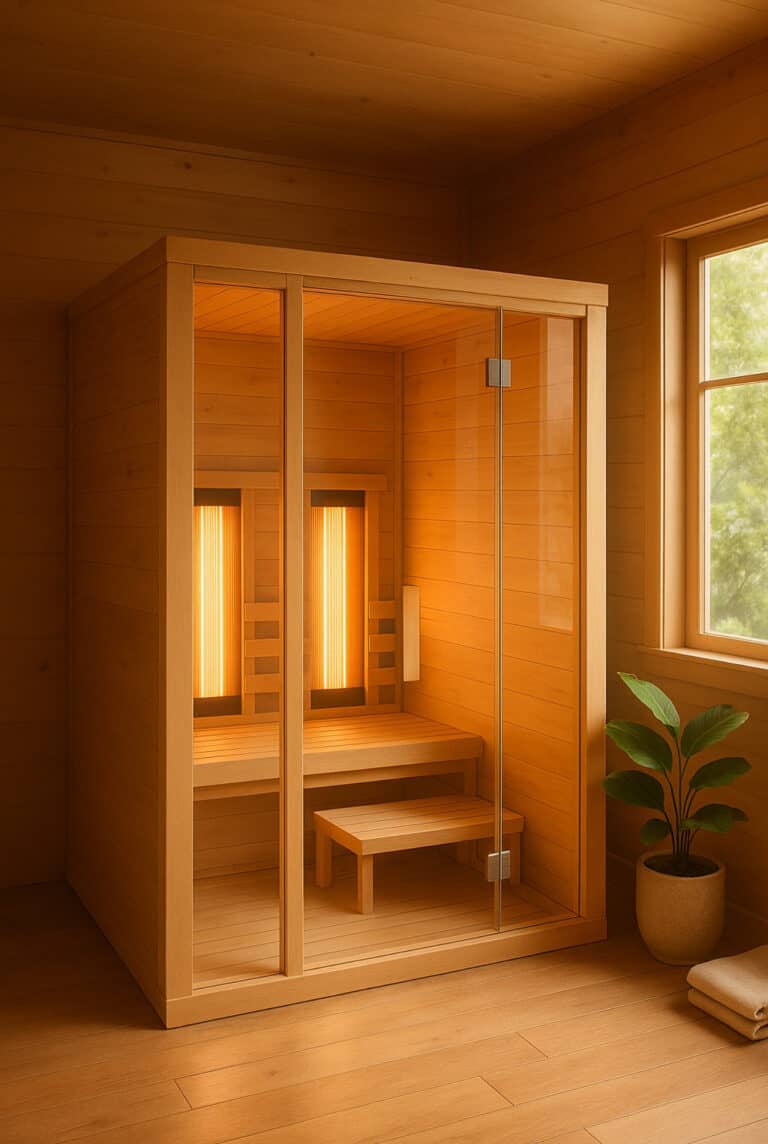
Infrared Sauna for Autoimmune Conditions: Can Heat Therapy Support Immune Regulation?
Published: October 20, 2025
Last updated: December 14, 2025

If you’re researching infrared sauna for autoimmune conditions, you’re probably asking a smart, careful question: can heat therapy support comfort and recovery without aggravating immune-related symptoms? ✅
Autoimmune conditions are complex—what helps one person may flare another. So this guide focuses on mechanisms, practical guardrails, and safe experimentation (not hype). We’ll cover what “immune regulation” really means, why heat can feel helpful, and when you should pause and get medical input.
Throughout, we’ll keep this grounded in the “supportive wellness” lane: stress response, circulation, heat shock proteins, and recovery routines—not claims of cure or disease treatment.
Want a product starting point?
If you’re deciding between cabins, domes, and tents, start here: 2025 Infrared Sauna Buyer’s Guide →
Quick note: This is educational content, not medical advice. If you have active flares, significant heat sensitivity, cardiovascular concerns, or are on immune-modulating medications, it’s worth checking with your clinician before changing heat exposure habits. 🙏
Autoimmune conditions and “immune regulation” (what that phrase actually means)
Autoimmune diseases occur when the immune system attacks the body’s own tissues by mistake—often creating cycles of inflammation, fatigue, pain, skin changes, or organ involvement depending on the condition. (For a plain-language overview, see Cleveland Clinic’s guide to autoimmune diseases.)
When people say “immune regulation,” they usually mean helping the body shift out of a chronic ‘alarm state’—supporting calmer signaling, better sleep, reduced stress load, and improved tolerance for daily activity. Importantly, that’s different from “boosting” immunity. In autoimmunity, more immune activation is not always better.
Where infrared sauna may fit (realistic expectations)
- Comfort support: warmth can feel soothing for stiffness and muscle tension.
- Stress-load reduction: relaxation and parasympathetic “downshift” may matter as much as the sweat.
- Better recovery routines: consistency + gentle pacing often beat “hard sessions.”
- Not a cure: sauna is best viewed as a supportive tool alongside clinician-directed care.
If you want the broader research-backed wellness context (sleep, stress, circulation, recovery), start with our benefits hub: Infrared Sauna Benefits →
Next, let’s look at why heat changes how you feel—and which mechanisms are most relevant for immune balance.
Why heat can change immune-related symptoms (stress response + heat shock proteins)

Infrared sauna is a form of passive heat therapy. You’re applying a controlled heat stressor—then letting your body recover. That “stress → recovery” cycle is the entire point 🔁.
Three mechanisms that show up repeatedly in the research
- Heat shock response: heat can stimulate protective cellular pathways, including heat shock proteins (HSPs), which help cells manage stress and protein stability. (See a PubMed review on heat shock proteins and immunity.)
- Inflammation signaling: regular sauna bathing has been discussed in relation to inflammation pathways and oxidative stress in clinical reviews (e.g., Clinical Effects of Regular Dry Sauna Bathing).
- Circulation + autonomic shift: heat increases blood flow and can encourage a “downshift” toward relaxation, which may matter for symptom perception and sleep quality.
One helpful mental model: think “tolerance-building,” not “immune boosting.” With autoimmune conditions, the best outcomes usually come from gentle, repeatable sessions that your body can recover from—especially during stable periods.
If you want more posts that break down mechanisms, protocols, and expectations, browse: Infrared Sauna Blog Index →
Safety first for autoimmune conditions: heat sensitivity, flares, and “stop signals”
With autoimmune conditions, your biggest variable isn’t willpower—it’s heat tolerance on that day. Some people run “hot,” have dysautonomia-like symptoms, or notice heat aggravates fatigue, dizziness, or headaches. Others find warmth calming. Both can be true.
When to avoid or pause sauna sessions
- Active flare or fever: don’t stack heat on top of an already stressed system.
- New/worsening symptoms: chest pain, fainting, severe dizziness, or unusual shortness of breath = stop.
- Dehydration risk: vomiting/diarrhea, poor oral intake, or already low blood pressure.
- Medication considerations: some meds affect heat tolerance, hydration, or blood pressure—ask your prescriber if unsure.
It can also help to understand the underlying condition basics. For example, Mayo Clinic notes that rheumatoid arthritis is an autoimmune condition where the immune system attacks body tissues by mistake: Mayo Clinic overview →
Simple “sauna-safe” rules that reduce risk
- Start cooler + shorter: especially if you’re new or returning after time off.
- Exit early: leaving at the first sign of “too much” is a success, not a failure.
- Hydrate deliberately: water + electrolytes can matter more than you think.
- Track patterns: note time, temp, and next-day symptoms to find your personal sweet spot.
If you’d like, you can tell us what you’re using (cabin vs dome vs tent) and your primary goal (sleep, stiffness, stress, recovery). We’ll point you to the most relevant protocols: Contact Sauna Sage →
How often, how hot, and how long? A conservative sauna framework for autoimmune conditions
When autoimmune conditions are part of the picture, more is not better. The goal is to find a level of heat exposure that supports relaxation and recovery without
A cautious starting framework (adjust based on tolerance)
- Frequency: 1–3 sessions per week (not daily at first)
- Temperature: Lower end of infrared ranges (often ~110–130°F)
- Session length: 10–20 minutes initially
- Progression: Increase one variable at a time (time OR frequency, not both)
This approach aligns with how clinicians often discuss heat exposure in general—gradual, symptom-guided, and reversible. The National Institutes of Health (NIH) has discussed how heat stress can influence physiological systems, emphasizing adaptation over overload: NIH overview on heat stress and adaptation.
Many people find that shorter, consistent sessions outperform long, sporadic ones—especially for sleep quality and perceived stress reduction. If your primary goal is relaxation or winding down the nervous system, less intensity often works better.
For a broader view on session timing, frequency, and heat levels across different wellness goals, see: How infrared sauna sessions are typically structured →
Circulation, stiffness, and pain perception: why warmth can feel relieving

One of the most commonly reported benefits of infrared sauna—across many populations—is a temporary reduction in stiffness and discomfort. This isn’t unique to autoimmune conditions, but it can be especially noticeable when joints or muscles feel guarded.
What may be happening physiologically
- Vasodilation: heat encourages blood vessels to widen, improving local circulation.
- Muscle relaxation: warmth can reduce protective muscle tension.
- Pain gating: thermal input may alter how pain signals are perceived.
Cleveland Clinic notes that heat therapy is often used to help relax muscles and improve blood flow for comfort support: Cleveland Clinic on when to use ice vs. heat for pain relief .
For autoimmune-related discomfort, the key is short-lived relief without delayed payback. If warmth feels good during a session but leads to next-day exhaustion, that’s a sign to reduce time or temperature.
This is also why many people with autoimmune conditions prefer infrared heat over very hot traditional saunas—it often feels gentler and easier to exit early.
Stress load, sleep quality, and the nervous system connection

Stress doesn’t cause autoimmune disease—but it can amplify symptoms. One reason infrared sauna shows up in wellness routines is its ability to encourage a parasympathetic (“rest and digest”) shift.
Why this matters for autoimmune conditions
- Sleep disruption can worsen fatigue and pain sensitivity.
- Chronic stress signaling may aggravate symptom perception.
- Predictable relaxation rituals help the nervous system feel safer.
Mayo Clinic has written about the relationship between stress, the nervous system, and physical symptoms: Mayo Clinic on stress and the body.
Many people find that evening infrared sauna sessions—kept gentle and brief—fit well into a wind-down routine. Pairing sauna with breathwork, light stretching, or a calm transition afterward often matters more than pushing heat intensity.
If your main goal is sleep support rather than sweating, prioritize:
- Lower temperatures
- Earlier exits
- Cool-down time before bed
Potential benefits vs. common risks of infrared sauna for autoimmune conditions
| Potential Support | Why It May Help | Common Cautions |
|---|---|---|
| Relaxation & stress relief | Encourages nervous system downshift | Overheating can worsen fatigue |
| Temporary pain relief | Heat improves circulation & muscle relaxation | Relief may be short-lived |
| Sleep routine support | Predictable calming ritual | Late, intense sessions may disrupt sleep |
| Gentle detox pathways | Sweating supports normal elimination | Hydration & electrolytes are critical |
This balance—possible comfort support vs. individual sensitivity—is why experimentation should always be slow and reversible. If you’re comparing sauna types or setups to reduce risk, our Buyer’s Guide breaks down which formats are easiest to control: Compare sauna types and heat profiles →
Real-life use scenarios: how people integrate infrared sauna with autoimmune conditions
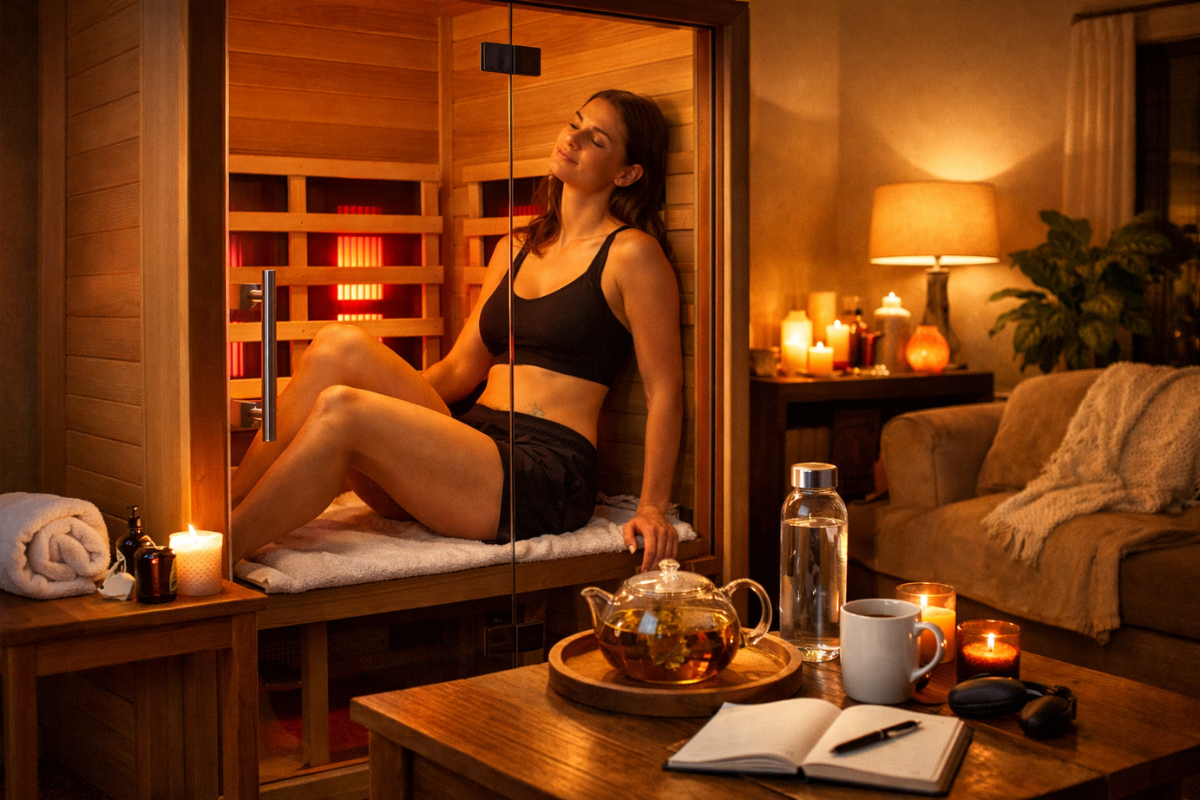
In practice, most people who do well with infrared sauna and autoimmune conditions don’t treat it as a performance tool. Instead, it becomes a low-pressure wellness ritual—something that supports consistency rather than intensity.
Common routines that tend to be better tolerated
- Evening wind-down sessions: Short, gentle heat followed by quiet recovery time.
- Post-mobility sessions: Light stretching or yoga before sauna, not after.
- Non-consecutive days: Allowing a full recovery day between sessions.
- Seated or reclined positions: Reducing orthostatic stress and dizziness.
People who run into trouble often report stacking too many stressors—hard workouts, long sauna sessions, poor hydration—into the same day. With autoimmune conditions, load management matters.
If your home setup is part of the decision, different formats offer different levels of control. This is where domes, portable tents, and cabins can feel very different in day-to-day use: See sauna formats compared →
Who should consider infrared sauna—and who should skip it
Infrared sauna isn’t an automatic “yes” or “no” for autoimmune conditions. It’s a conditional tool—helpful for some, neutral or counterproductive for others.
You may be a reasonable candidate if:
- Your condition is relatively stable (not in an acute flare)
- You tolerate warmth well in daily life
- Your main goals are relaxation, sleep, or stiffness relief
- You’re comfortable starting conservatively and adjusting slowly
You should be cautious or skip sauna use if:
- You experience frequent heat intolerance or dizziness
- You’re currently flaring or febrile
- Heat reliably worsens fatigue or neurological symptoms
- Your clinician has advised avoiding heat exposure
The National Institute of Arthritis and Musculoskeletal and Skin Diseases (NIAMS), part of NIH, emphasizes individualized management strategies for autoimmune and inflammatory conditions—there is no single intervention that fits everyone: NIH overview of autoimmune diseases.
Think in terms of experiments, not commitments. You can always scale back—or stop entirely—without losing ground.
Hydration, electrolytes, and simple ways to make sessions safer

For people with autoimmune conditions, hydration isn’t just a comfort issue—it’s a tolerance issue. Even mild dehydration can amplify fatigue, headaches, and post-session “crash.”
Practical tips that reduce downside risk
- Hydrate before: Don’t wait until you’re already sweating.
- Use electrolytes: Especially if you sweat easily or have low blood pressure.
- Cool-down time: Sit or lie down for 5–10 minutes after exiting.
- Track next-day effects: Delayed fatigue is a useful signal.
Some people also pair sauna sessions with calming practices—slow breathing, gentle music, or dim lighting—to reinforce the relaxation response. The goal is nervous system support, not pushing detox narratives.
For a broader look at safe usage habits and recovery principles, see: Infrared sauna safety and usage basics →
A simple decision framework: is infrared sauna worth trying for you?
If you’re still on the fence, this quick framework can help clarify whether infrared sauna is a reasonable experiment—or something to postpone.
- If your goal is stress reduction or sleep: Try short, low-heat evening sessions.
- If your goal is joint or muscle comfort: Keep sessions brief and track next-day response.
- If heat reliably worsens symptoms: Skip sauna and consider non-thermal relaxation tools.
- If you’re unsure: Discuss heat exposure with your clinician before starting.
Many people find that infrared sauna works best as a supportive layer—not a primary therapy. When used thoughtfully, it may complement broader wellness strategies without becoming another source of physiological stress.
If you want help choosing a setup that prioritizes control and ease of use, our Buyer’s Guide walks through the safest starting options: Start with the Infrared Sauna Buyer’s Guide →
Infrared sauna for autoimmune conditions: supportive tool, not a silver bullet
When it comes to using an infrared sauna for autoimmune conditions, the most reliable outcomes come from respecting variability. Autoimmune systems don’t respond well to extremes—and that applies just as much to wellness tools as it does to training or stress.
Infrared sauna may support comfort by encouraging relaxation, circulation, and recovery-oriented routines. For some people, that translates into better sleep, reduced stiffness, or a calmer nervous system. For others, heat is simply too taxing. Both responses are valid.
The common thread among people who tolerate sauna well is not intensity—it’s self-regulation:
- Short, predictable sessions
- Lower temperatures
- Non-consecutive days
- Clear exit points at the first sign of overload
If you’re exploring sauna as part of a broader wellness plan, treat it as an experiment you can stop, not a commitment you must push through. Supportive tools should make your life feel more manageable—not more demanding.
Next steps: If you want help comparing sauna formats that prioritize control and ease of use—or you’re deciding whether a dome, tent, or cabin makes the most sense—start with our comprehensive Buyer’s Guide: Best Infrared Saunas 2025 →
You can also explore related educational guides anytime in the blog, or reach out if you want a conservative starting recommendation: Infrared Sauna Blog → | Contact Sauna Sage →