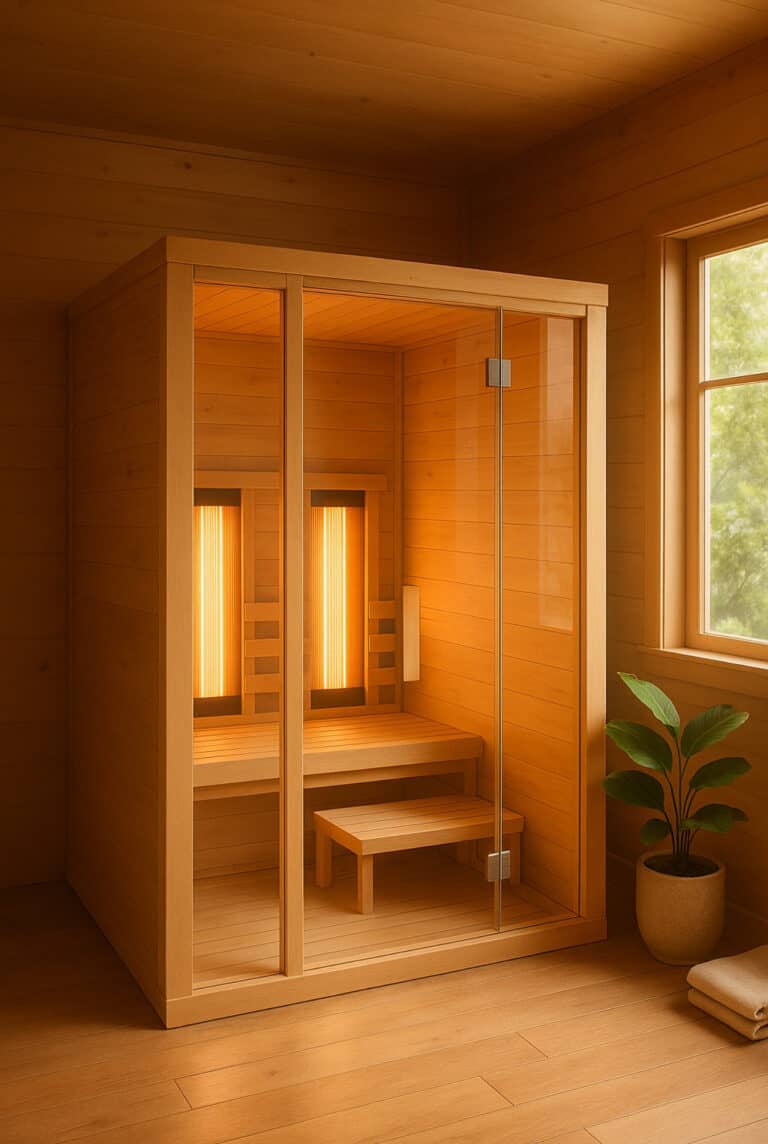
Infrared Sauna for Women’s Health: Hormones, Skin, and Circulation Explained (2025 Guide)
Published: October 5, 2025
Last updated: December 16, 2025

If you’re searching for infrared sauna for women’s health, you’re usually not looking for “biohacks.” You’re looking for something practical: steadier energy, calmer stress response, clearer skin, warmer hands and feet, better circulation, and a routine that supports you through real life (work, parenting, training, perimenopause, chronic stress, and everything in between) 💛.
This guide explains what infrared heat can realistically support—especially around hormone-related symptoms, skin, and circulation—and where the claims get exaggerated. You’ll also learn how to use sessions in a way that’s gentle on the nervous system (and not secretly draining), plus what “normal” adaptation feels like as your body gets used to heat over time.
Important note: This is educational, not medical advice. Heat can be supportive, but it’s not a substitute for diagnosis, labs, or treatment—especially for thyroid conditions, anemia, heavy menstrual bleeding, fertility concerns, pregnancy, or cardiovascular issues.
As you read, keep one framing in mind: infrared sauna supports physiology best when it’s consistent, not extreme. The goal is a routine you can sustain—without crashes, dizziness, or “pushing through” signals your body is giving you.
Quick next step (if you’re choosing a sauna)
If you’re still deciding which type fits your space and comfort level, start with our 2025 Infrared Sauna Buyer’s Guide →
Women’s Hormones + Heat: What Infrared Can (and Can’t) Do
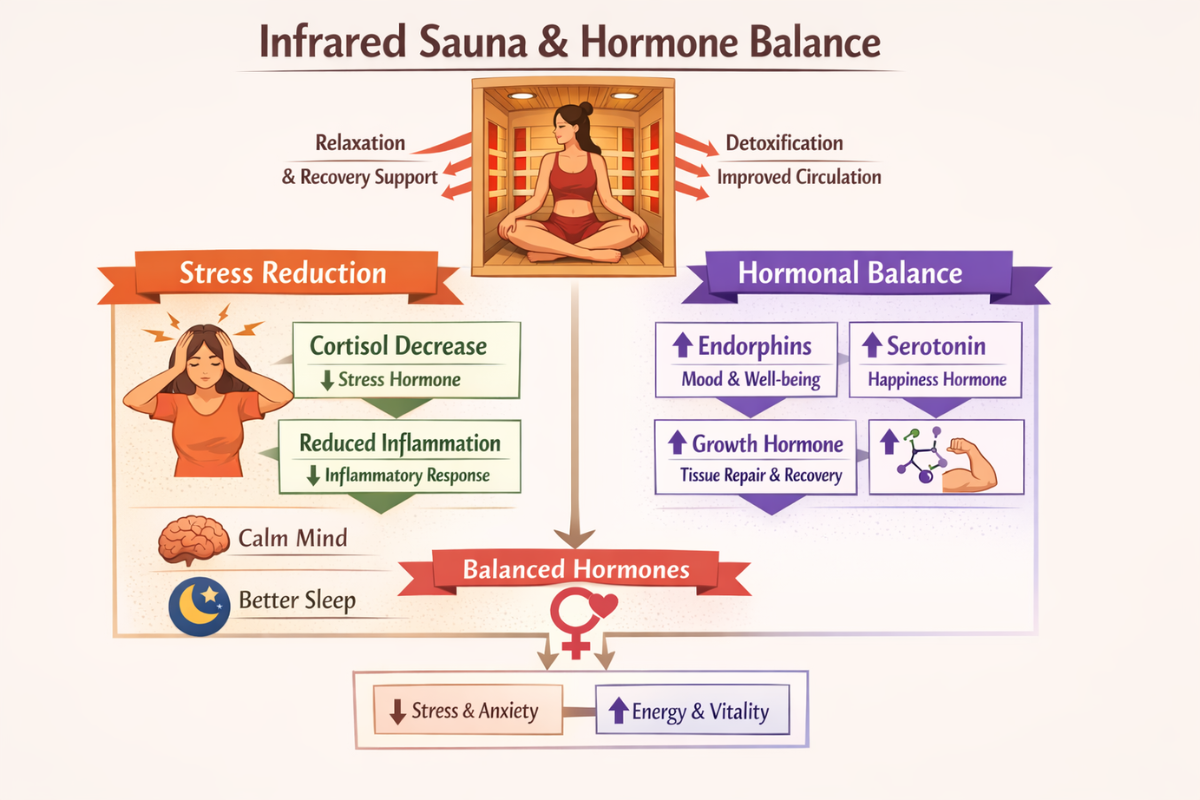
Let’s get specific: an infrared sauna doesn’t “balance hormones” in the way a supplement label might imply. What it can do is influence systems that interact with hormones—especially stress physiology, sleep quality, circulation, and inflammation signaling. Those upstream levers can matter a lot for how you feel day-to-day.
Where women often notice changes (realistic, not magical)
- Stress reactivity: heat can feel like a “nervous system downshift,” especially when paired with slow breathing
- Sleep support: a warm session earlier in the evening can help some people fall asleep faster (timing matters)
- Fluid shifts + bloat perception: sweating and vasodilation can change how “puffy” you feel short-term
- Warmth + circulation: many women report warmer extremities and less “cold all the time” feeling
Where the internet overpromises
- “Detoxing estrogen” as a guaranteed outcome
- “Fixing thyroid” or “boosting metabolism” without context (thyroid + heat tolerance is individual)
- “Curing PMS/PMDD”—some people feel support, but it’s not a universal solution
From an evidence-based angle, the most defensible benefits are tied to heat exposure and cardiovascular/vascular responses (vasodilation, heart rate elevation similar to light exercise in some contexts). For broader background on sauna and cardiovascular-related outcomes, see an overview from the Cleveland Clinic on sauna safety and effects.
If you want a simple way to think about it: infrared sauna supports women’s health best as a recovery tool—a consistent routine that reduces stress load and improves sleep/circulation habits—rather than as a hormone “hack.” For a broader science-first foundation, you can also review our main infrared sauna benefits guide →
The “Adaptation Curve”: What Women Typically Feel in the First 2–4 Weeks
Infrared sauna often feels different in the beginning than people expect. Heat exposure is a physiological stimulus, and your body adapts to it over time. For women, that adaptation can vary depending on cycle phase, stress load, sleep quality, and baseline hydration.
- Cycle phase: Heat sensitivity may be higher in the luteal phase
- Sleep debt: Sauna can amplify fatigue if recovery is already low
- Iron status: Low iron can make heat feel more draining
- Perimenopause: Heat tolerance may fluctuate week to week
Week 1: Early sensations
- Heavy or relaxed limbs
- Increased thirst later in the day
- Mild sleepiness or mental calm
- Lower tolerance than expected if sessions are too hot
Weeks 2–4: Easier recovery
As adaptation occurs, many women notice quicker sweating, smoother recovery, and less post-session fatigue. This is also when sleep quality or evening calm may become more consistent—provided sessions remain moderate.
Key takeaway: Repeated exhaustion is a dosage issue, not a failure. Adjusting temperature, duration, or frequency usually restores benefits.
Need help troubleshooting?
If you’re unsure what’s normal vs. not, reach us here: Contact Sauna Sage →
Infrared Sauna for Skin: Glow, Barrier Support, and Inflammation (Realistic Expectations)
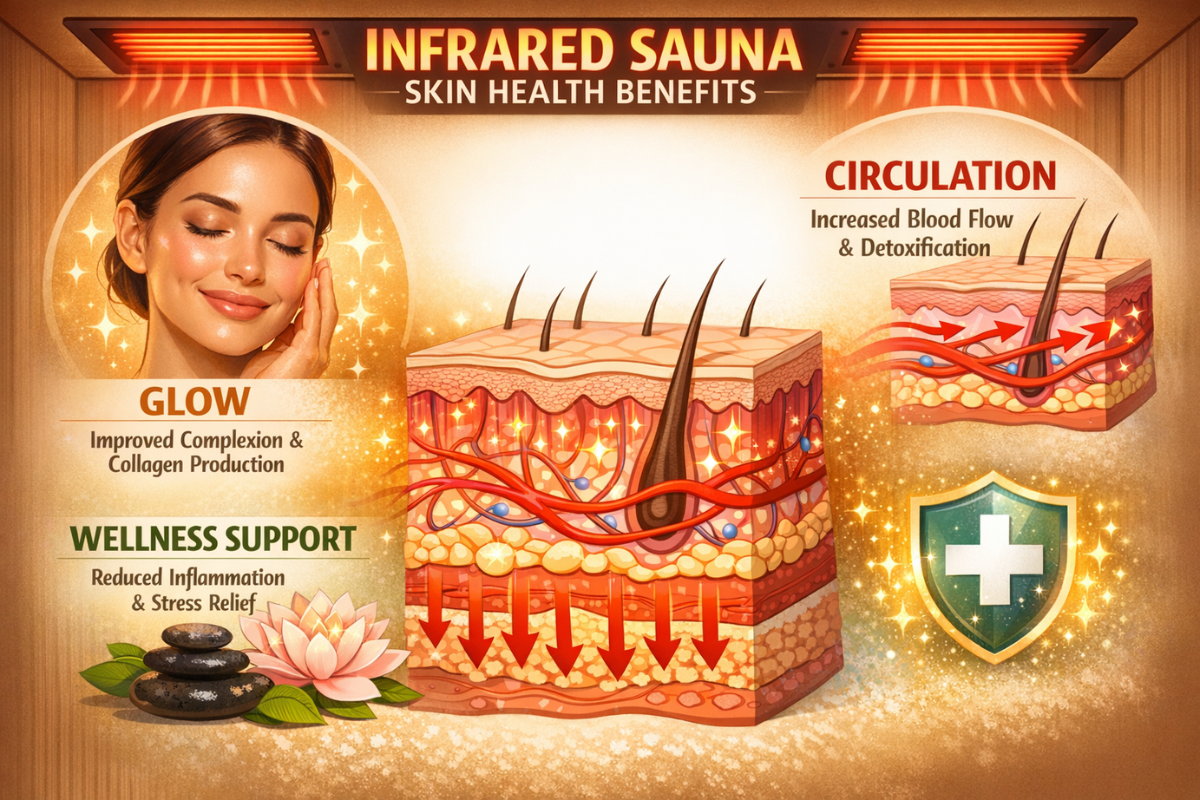
Skin is one of the most common reasons women try infrared in the first place. The best framing is this: heat doesn’t “purge toxins” from your skin, but it can support skin appearance through circulation, stress reduction, and recovery routines.
What women often notice (and why it happens)
- Post-sauna “glow”: increased surface blood flow can temporarily brighten complexion
- Less stress-triggered flare feeling: when sauna becomes a calming ritual, some people report fewer stress-linked skin swings
- Softer skin: warm sessions + hydration + consistent moisturization can improve how skin feels (routine synergy matters)
Where you should be cautious
- Rosacea / heat-triggered redness: too-hot sessions can worsen flushing
- Active eczema flares: sweat + heat can irritate if you don’t shower/rinse promptly
- Acne: sauna doesn’t cause acne directly, but heavy occlusive products + sweat + not cleansing after can
Two simple best practices that protect your skin barrier:
- Rinse soon after (lukewarm shower or rinse) to remove sweat + residue
- Moisturize within 10–15 minutes after drying to support barrier recovery
For safety context (especially around dehydration and overheating), Cleveland Clinic provides a helpful overview of Cleveland Clinic on the health benefits of saunas . And if you’re choosing a setup that matches your comfort level (cabin vs. dome vs. portable), use the Buyer’s Guide as your map: See the full sauna types breakdown →
Circulation, Cold Hands & Feet, and Cardiovascular Support

One of the most consistently reported benefits women notice with infrared sauna use is improved circulation—especially if you’re prone to cold hands and feet, stiffness after sitting, or that sluggish, heavy feeling late in the day.
Infrared heat gently raises skin and core temperature, prompting vasodilation (widening of blood vessels). That increased blood flow helps deliver oxygen and nutrients more efficiently to tissues and can temporarily reduce the sensation of tightness or chill.
What improved circulation often feels like
- Warmer fingers and toes during and after sessions
- A relaxed, loose feeling in the legs and lower back
- Reduced “end-of-day heaviness,” especially if you sit or stand for long periods
- A mild, steady heart-rate increase similar to very light cardio
Why this matters for women’s health
- Desk work + caregiving demands can limit daily movement
- Hormonal shifts can influence vascular tone and temperature regulation
- Stress can keep blood flow shunted away from the periphery
Population-level research links regular sauna use with cardiovascular benefits, though most studies focus on traditional saunas and long-term patterns rather than single sessions. Still, the underlying principle—heat-induced vascular response—is relevant across sauna types. For a high-level clinical overview, see this Cleveland Clinic summary on sauna use and heart health.
If circulation support is a top priority for you, consistency and comfort matter more than max heat. Choosing a sauna style you’ll actually use is key—our Buyer’s Guide breaks down which formats tend to feel gentlest for regular sessions.
Stress, Cortisol, and the Nervous System: The Hidden Lever

Many hormone-related complaints are actually stress-expression symptoms: poor sleep, tension that never fully releases, or feeling wired but tired. Infrared sauna doesn’t directly regulate hormones, but it can influence the nervous system patterns that affect how those symptoms feel.
Moderate heat acts as a controlled stressor. When sessions are short and comfortable, many women experience a rebound toward parasympathetic (rest-and-digest) activity afterward—especially when breathing is slow and the environment is quiet.
Signs you’re using the right intensity
- Calm or grounded feeling afterward
- Breathing slows naturally by session end
- Improved sleep later that night
Signs intensity is too high
- Lingering heart rate elevation
- Anxiety or restlessness post-session
- Difficulty sleeping despite fatigue
This is why more heat isn’t better—especially during periods of chronic stress or hormonal transition. Cleveland Clinic emphasizes that sauna benefits depend on safe duration and individual tolerance, not extremes ( Cleveland Clinic on the health benefits of saunas ).
If nervous-system support is your primary goal, gentler formats and shorter sessions are often the most sustainable. You’ll find real-world usage patterns throughout the Sauna Sage blog.
Infrared Sauna Across Life Stages: PMS, Perimenopause, Menopause

Heat tolerance and perceived benefits can shift significantly across life stages. Understanding these patterns helps you adjust sauna use without forcing a routine that no longer fits.
PMS / luteal phase
- Gentle heat may ease tension and stress
- Shorter sessions often feel better than pushing duration
Perimenopause
- Heat sensitivity may vary week to week
- Lower temperatures often feel more restorative
Menopause
- Some women find sauna deeply relaxing
- Others prefer morning or midday sessions to avoid night sweats
There’s no universal protocol. The most effective approach is flexible—adjusting timing, temperature, and frequency based on current symptoms. Sauna should remain a comfort practice, not a stressor.
For general safety context across these stages, refer back to our infrared sauna benefits guide.
At-a-Glance Comparison: Benefits vs. Common Pitfalls
| Area | Potential Support | Common Pitfall |
|---|---|---|
| Hormone-related symptoms | Stress reduction, improved sleep routines | Expecting direct hormone “fixes” |
| Skin appearance | Temporary glow, relaxation-driven improvements | Overheating or skipping post-sauna skincare |
| Circulation | Warmer extremities, reduced stiffness | Pushing heat without hydration |
| Nervous system | Calming, parasympathetic rebound | Too-hot, too-long sessions increasing stress |
This comparison highlights the core theme of women’s sauna use: benefits are real, but they’re context-dependent. The same session that feels restorative one week can feel draining the next if sleep, nutrition, or stress load changes.
Choosing the right sauna type—and using it conservatively—makes a big difference. If you’re weighing domes, portable tents, or full cabins, our 2025 Buyer’s Guide walks through the pros and cons with real-world use in mind.
Real-Life Use: Building a Women-Centered Sauna Routine
The most effective infrared sauna routines for women aren’t extreme—they’re repeatable. Instead of chasing sweat volume or max temperature, think in terms of rhythm: sessions that fit naturally into your week and leave you feeling better afterward.
A simple, sustainable baseline
- Frequency: 2–4 sessions per week
- Session length: 20–35 minutes
- Temperature: Warm, not overwhelming (you should be able to breathe comfortably)
- Timing: Late afternoon or early evening for relaxation; morning for circulation and stiffness
Common placement patterns that work
- After work as a transition from “doing” to resting
- Post-workout on lighter training days
- Early evening followed by a shower and low-stimulation time
What matters most is how you feel after the session and the next day. Consistent calm, improved sleep onset, and steady energy are good signs. Repeated fatigue or irritability usually means dialing back.
If you’re experimenting with different setups or locations in your home, our infrared sauna blog includes real-world placement and routine examples across sauna types.
Safety Considerations Especially Relevant for Women
Infrared sauna is generally well tolerated, but certain considerations come up more often for women due to physiology, life stage, and baseline nutrient status.
Be cautious or seek medical guidance if you:
- Are pregnant or trying to conceive
- Have heavy menstrual bleeding or known anemia
- Have thyroid disease or heat intolerance
- Experience frequent dizziness, fainting, or heart rhythm issues
- Are on medications that affect blood pressure or hydration
Foundational safety practices
- Hydrate before and after sessions; include electrolytes if you sweat heavily
- Stand up slowly after sessions to avoid lightheadedness
- End sessions early at the first sign of nausea, dizziness, or chest discomfort
- Cool down gradually—avoid ice-cold exposure immediately after
The Mayo Clinic emphasizes that sauna use should always be adapted to the individual, especially for those with underlying health conditions (source). Sauna should support your health, not test your limits.
For broader, non-alarmist guidance on safe usage, review our infrared sauna benefits and safety overview.
Simple Enhancements That Improve Comfort and Results
Small adjustments can dramatically change how sauna sessions feel—especially for women who are sensitive to heat or already managing a high stress load.
Low-effort upgrades that help
- Electrolytes: A pinch of sodium or a balanced electrolyte drink post-session
- Breathing: Slow nasal breathing or extended exhales to keep the nervous system calm
- Lighting: Dim or warm lighting to avoid stimulation
- Post-sauna ritual: Shower, skincare, and a few minutes of quiet before re-entering your day
These enhancements don’t make sessions “stronger”—they make them easier to recover from. That’s what allows consistency, which is where long-term benefits actually come from.
If you’re pairing sauna with other wellness tools (light movement, breathwork, stretching), think synergy—not stacking stressors. Less intensity, more regularity.
A Simple Decision Framework for Women Considering Infrared Sauna
If you’re still deciding whether infrared sauna fits your lifestyle, this quick framework can help clarify expectations.
- If you want relaxation and stress support → prioritize comfort, lower temperatures, and shorter sessions
- If circulation is your main goal → focus on consistency over heat intensity
- If skin support matters most → pair sauna with hydration, gentle cleansing, and post-session skincare
- If you’re heat-sensitive → start with domes or lower-temp options and build gradually
- If symptoms are unpredictable → treat sauna as optional support, not a fixed prescription
The right choice is the one you’ll actually use without dread or recovery debt. For a clear comparison of sauna types, footprints, and comfort levels, use the Infrared Sauna Buyer’s Guide as your reference point.
Conclusion: Supporting Women’s Health with Realistic Expectations
Infrared sauna can be a valuable supportive practice for women’s health when it’s used with the right expectations and dosage. Its strongest contributions tend to come through stress reduction, circulation support, sleep-friendly routines, and the simple act of creating consistent recovery time in a busy life.
What it doesn’t do is override biology. It won’t “fix” hormones, replace medical care, or work the same way for every woman at every life stage. And that’s okay. The real value shows up when sauna use is gentle, repeatable, and responsive to how your body feels week to week.
If your sessions leave you calmer, warmer, and more rested the next day, you’re likely on the right track. If they leave you drained, anxious, or depleted, that’s useful feedback—not failure. Adjusting temperature, timing, or frequency often makes all the difference.
Next steps: If you’re still deciding whether to add infrared sauna to your routine—or which type fits your space, heat tolerance, and lifestyle—use our Buyer’s Guide as a practical reference rather than a sales pitch.
Explore your options
Compare sauna types, comfort levels, and real-world use cases in our 2025 Infrared Sauna Buyer’s Guide →