
Infrared Sauna for Detox: Myth or Miracle? (2025 Guide)
Published: July 13, 2025
Last updated: December 9, 2025

Does an infrared sauna “detox” you—or is it just a wellness buzzword? If you’ve ever searched infrared sauna for detox, you’ve probably seen bold claims about “sweating out heavy metals,” “clearing your liver,” or “flushing toxins fast.” 😅
Here’s what we’ll do in this guide: we’ll define what detox actually means in human biology, separate marketing myths from reasonable benefits of heat exposure, and give you a safe, realistic sauna protocol that supports recovery—without pretending your sweat is a magic drain for “toxins.”
Quick spoiler: your body already has an elite detox system (liver, kidneys, lungs, skin, gut). An infrared sauna can be a helpful supportive tool for things like relaxation, circulation, and recovery—but it’s not a replacement for organs that actually do the heavy lifting.
Want a “safe-first” sauna setup?
If you’re deciding which style of sauna fits your goals (detox claims included), start with our buyer’s framework and safety basics. See the 2025 Infrared Sauna Buyer’s Guide →
And if you’re still building your foundation, you’ll also want to read: Infrared sauna benefits → and browse related science posts here: Sauna Sage blog index →.
Let’s get clear on what “detox” is supposed to mean—then we’ll map sauna claims to real physiology.
What “Detox” Actually Means (Biology vs. Marketing)
Before we judge whether an infrared sauna for detox is a myth or a miracle, we need to define the word itself. In medicine and physiology, detoxification is not a vibe—it’s a process.
Your body removes waste and harmful substances through a coordinated system involving:
- Liver – chemically transforms toxins into substances that can be excreted
- Kidneys – filter blood and excrete waste via urine
- Gastrointestinal tract – eliminates metabolic byproducts through stool
- Lungs – remove volatile compounds (like carbon dioxide)
- Skin – plays a minor role via sweat
This matters because most “detox” marketing ignores the liver and kidneys entirely—the two organs doing the vast majority of the work.
According to a clinical overview from the Mayo Clinic, detox products and protocols rarely improve toxin elimination in healthy individuals. Your organs already do that job continuously.
So where does sweating fit in?
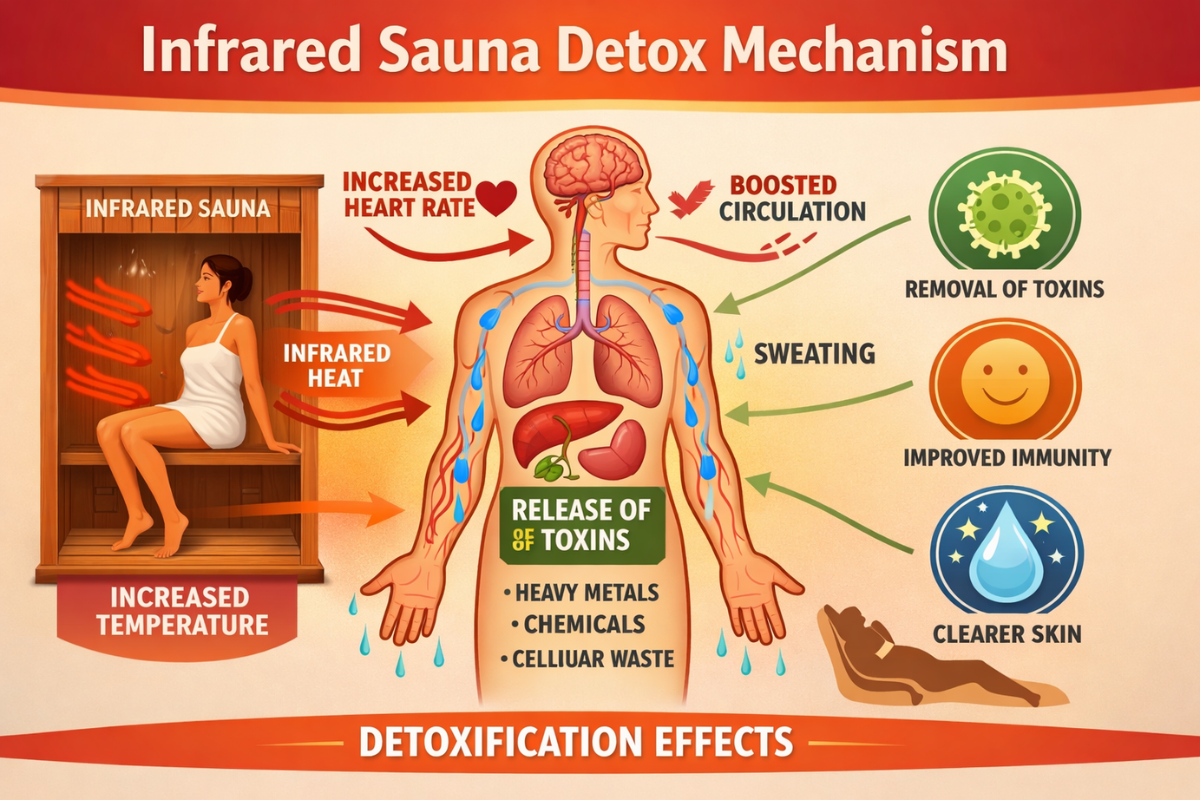
Sweat is composed mostly of water and electrolytes. Trace amounts of certain substances can appear in sweat, but this is not the primary detox pathway. Calling sweat a “detox system” is like calling a car’s windshield wipers the engine. 🚗
Why Sweating Feels Like Detox (Even When It Isn’t)
If sweating doesn’t meaningfully detox the body, why does it feel so convincing?
Because heat exposure triggers real, noticeable physiological changes—just not the ones usually advertised.
During an infrared sauna session, your body responds by:
- Increasing circulation to the skin
- Activating the sympathetic nervous system
- Producing sweat to regulate temperature
- Releasing endorphins after the session ends
This combination can create a powerful post-sauna “reset” feeling—lighter, calmer, clearer. Many people interpret that sensation as “toxins leaving the body.”
In reality, what you’re experiencing is:
- Temporary fluid loss
- Muscle relaxation
- Stress reduction
- A parasympathetic rebound after heat stress
Researchers at the National Institutes of Health (NIH) describe heat exposure as a form of mild hormetic stress—something that challenges the body and then promotes adaptation and recovery.
That’s real. That’s beneficial. It’s just not the same as flushing toxins.
This distinction matters, especially if you’re deciding how often to sauna or whether detox claims justify extreme protocols.
Can Infrared Saunas Remove Toxins Through Sweat?
This is where the detox debate usually gets heated. 🔥
You’ll often see claims that infrared saunas can eliminate:
- Heavy metals
- Environmental chemicals
- Plastics or “stored toxins”
Here’s the evidence-based reality:
Yes, small amounts of certain substances (like heavy metals) can be detected in sweat. However, multiple reviews note that:
- The quantities are extremely small
- They do not meaningfully reduce total body burden
- The kidneys and liver still account for the vast majority of elimination
A review indexed on PubMed found that while sweat analysis is useful for environmental exposure research, it does not support sauna sweating as a primary detox strategy.

In short:
- ✔ Infrared saunas increase sweating
- ✔ Sweat may contain trace substances
- ✖ Sweat does not replace liver or kidney detoxification
- ✖ “Sweating out toxins” is an oversimplification
If detox is your main concern, lifestyle factors like hydration, sleep, nutrition, and alcohol moderation matter far more than sauna frequency.
Where Infrared Saunas Do Support the Body
Calling detox a myth doesn’t mean infrared saunas are useless. It means we should credit them for what they actually do well.
Evidence-supported benefits of infrared sauna use include:
- Improved circulation through vasodilation
- Relaxation and stress reduction
- Muscle recovery after exercise
- Sleep quality support when used earlier in the evening
The Cleveland Clinic notes that infrared heat may help with relaxation and recovery, but cautions against exaggerated detox claims.
Think of an infrared sauna as a supportive wellness tool—not a cleansing machine.
This is why we recommend pairing sauna use with:
- Proper hydration and electrolytes
- Reasonable session lengths
- Consistency over intensity
If you’re new to sauna use, it’s worth grounding yourself in the fundamentals first: How infrared saunas actually benefit the body →
Common Infrared Sauna Detox Myths (Debunked)
Detox marketing thrives on half-truths. Let’s clear out the most common myths so you can use an infrared sauna with realistic expectations. 🧠
- “Sweat equals toxin removal”
Sweat is primarily water and electrolytes. While trace substances may appear, this does not meaningfully reduce toxin load. - “The darker your sweat, the more toxins you’re releasing”
Sweat color changes are usually related to hydration status—not detox efficiency. - “Infrared heat reaches fat and melts stored toxins”
Infrared heat penetrates tissue to a limited depth. It does not liquefy fat or purge stored chemicals. - “More heat = more detox”
Excessive heat increases dehydration risk without improving outcomes.

When detox is framed as a quick purge, it encourages unsafe behaviors—long sessions, extreme temperatures, or poor hydration. None of those improve wellness.
If you ever feel dizzy, nauseous, or wiped out after a session, that’s not detox—it’s a sign to stop.
How Infrared Sauna Use May Indirectly Support Detox Organs
While infrared saunas don’t detoxify you directly, they may support the systems that do—when used correctly.
Here’s the nuance most detox claims miss:
- Circulation support may help deliver nutrients and oxygen to tissues
- Stress reduction can lower cortisol, which indirectly benefits liver function
- Improved sleep supports nightly repair and metabolic cleanup
These effects are contextual. They work best when sauna use is combined with:
- Consistent hydration
- Protein-adequate nutrition
- Reasonable alcohol intake
- Regular sleep-wake cycles
This is why we frame sauna use as supportive recovery, not detox therapy.
If you’re still evaluating which type of sauna aligns with your health goals, start here: Compare infrared sauna types and safety factors →
Detox Claims vs. Reality (At a Glance)
| Claim | What Actually Happens |
|---|---|
| “Sweat flushes toxins” | Sweat regulates temperature; detox occurs primarily via liver and kidneys |
| “Infrared heat cleanses fat” | Heat increases circulation but does not remove stored toxins |
| “Longer sessions detox better” | Long sessions increase dehydration risk without added benefit |
| “You need extreme heat” | Moderate, consistent sessions are safer and more sustainable |
This framework helps explain why some people feel great using a sauna—while others feel worse when chasing detox extremes.
What a Safe, Supportive Sauna Routine Looks Like
If your goal is overall wellness—not detox theater—this is what evidence-aligned sauna use tends to look like:
- Temperature: Moderate infrared heat, not maxed-out settings
- Session length: 20–40 minutes depending on tolerance
- Frequency: 2–4 sessions per week
- Hydration: Water before and after; electrolytes if sweating heavily

This approach supports relaxation, circulation, and recovery—without stressing your system.
If you’re unsure whether sauna use is appropriate for you, or want guidance tailored to your situation, reach out: Contact Sauna Sage →
Who Infrared Sauna Use Makes Sense For (and Who Should Skip It)
Infrared saunas can be a useful wellness tool—but only for the right reasons and the right people.
You may benefit if you:
- Want relaxation and stress relief
- Enjoy gentle heat for muscle recovery
- Use sauna sessions as part of a broader wellness routine
- Prefer moderate, consistent sessions over extremes
You should be cautious or skip sauna use if you:
- Are pursuing sauna use solely to “flush toxins”
- Have trouble staying hydrated
- Feel lightheaded, nauseous, or unwell during heat exposure
- Have medical conditions that make heat unsafe without guidance
The key takeaway: saunas support wellness habits—they don’t replace foundational health behaviors.
Why “Detox” Is a Misleading Wellness Goal
The biggest issue with framing infrared sauna use around detox isn’t just scientific accuracy—it’s behavioral.
When people believe they are “cleansing toxins,” they often:
- Ignore hydration and electrolyte balance
- Push session length beyond comfort
- Use excessive heat instead of consistency
- Overlook foundational habits like sleep and nutrition
This can backfire. Dehydration, dizziness, and post-session fatigue are not signs of successful detox—they’re signs of physiological stress without recovery.

A more accurate mindset is this:
- Your body is always detoxifying
- Saunas do not replace organs
- Heat works best as a supportive stressor, not a purge
When sauna use is framed around relaxation, circulation, and recovery, people tend to use it more safely—and feel better long term.
This reframing alone often makes infrared sauna use more sustainable, more enjoyable, and more aligned with real health outcomes.
How to Use an Infrared Sauna Without Falling for Detox Hype
If you enjoy sauna sessions, these practical tips help you get the benefits—without the myths:
- Hydrate before and after every session
- Stop early if you feel unwell—comfort matters more than duration
- Pair sauna use with sleep, not late-night overstimulation
- Track how you feel, not how much you sweat
Many people feel best when sauna use becomes a calming ritual, not a punishment or purge.
If you want a deeper understanding of how infrared heat fits into long-term wellness, revisit: our full infrared sauna benefits breakdown →
Infrared Sauna & Detox: A Simple Decision Guide
- If you want relaxation and recovery → Infrared sauna can be a great fit
- If you want medical detox → Saunas are not the solution
- If you enjoy gentle heat routines → Use sauna consistently and moderately
- If you’re chasing extreme sweat → Reconsider your approach
This framework keeps expectations grounded—and outcomes positive.
Infrared Sauna for Detox: Myth or Miracle?
The honest answer is neither extreme.
Infrared saunas do not detoxify your body in the way marketing claims. Your liver and kidneys already handle that job with remarkable efficiency.
However, infrared saunas can support relaxation, circulation, stress reduction, and recovery—benefits that often make people feel cleaner, calmer, and more balanced.
The magic isn’t in sweating out toxins. It’s in using heat intentionally, safely, and consistently.
If you’re ready to explore infrared sauna options with realistic expectations and safety-first guidance, start here:
Next Step: Choose the Right Sauna
Compare types, safety factors, and real-world use cases in our comprehensive guide. See the 2025 Infrared Sauna Buyer’s Guide →