
Infrared Sauna for Detox Pathways: Liver, Kidneys, and Skin Health Explained
Published: August 25, 2025
Last updated: December 20, 2025

If you’ve spent any time in wellness circles, you’ve probably heard bold claims about “sauna detox.” Some say that a single infrared session can “flush toxins” through your sweat, while others insist that only the liver and kidneys really matter. So what’s actually true about infrared sauna detox pathways? 🤔
This guide walks through how your liver, kidneys, and skin actually help your body process and eliminate waste — and where an infrared sauna can realistically fit into that picture. We’ll keep the focus on physiology, not hype, so you can enjoy the relaxing heat without unrealistic expectations or risky “detox” experiments.
By the end, you’ll understand:
- How your core detox organs work day-to-day
- What changes during an infrared sauna session
- Why sweat plays a much smaller detox role than many people think [oai_citation:0‡Cleveland Clinic](https://my.clevelandclinic.org/health/body/sweat?utm_source=chatgpt.com)
- How to build a safe, sustainable sauna routine that supports overall wellness
If you’d like a broader overview of benefits while you read, you can also open the Infrared Sauna Benefits page in a new tab and refer back to it as needed.
How Your Body’s Detox Pathways Actually Work
Your body is running “detox” 24/7 — but not in the juice-cleanse sense. The main detox pathways are your liver, kidneys, gut, lungs, and skin. They work together to filter, transform, and excrete substances so you can stay in balance.
At a high level:
- Liver: Processes and transforms many compounds (hormones, medications, alcohol, metabolic byproducts) into forms your body can excrete. [oai_citation:1‡Mayo Clinic Health System](https://www.mayoclinichealthsystem.org/hometown-health/speaking-of-health/10-nutrition-myths-debunked?utm_source=chatgpt.com)
- Kidneys: Filter your blood and remove water-soluble waste into urine.
- Gut: Packages waste and unabsorbed substances into stool.
- Lungs: Exhale carbon dioxide and some volatile compounds.
- Skin: Produces sweat, which is mostly water plus electrolytes and small amounts of other molecules. [oai_citation:2‡Cleveland Clinic](https://my.clevelandclinic.org/health/body/sweat?utm_source=chatgpt.com)
Most “detox work” is handled by liver and kidneys, not sweat. Saunas can still support overall physiology by changing circulation, heart rate, and fluid balance — but that’s different from directly “sweating toxins out” in a dramatic way.
Keeping this bigger picture in mind will make the infrared sauna feel like one supportive tool in a larger lifestyle, rather than a magical reset button.
Infrared Saunas and Heat-Induced Detox Physiology
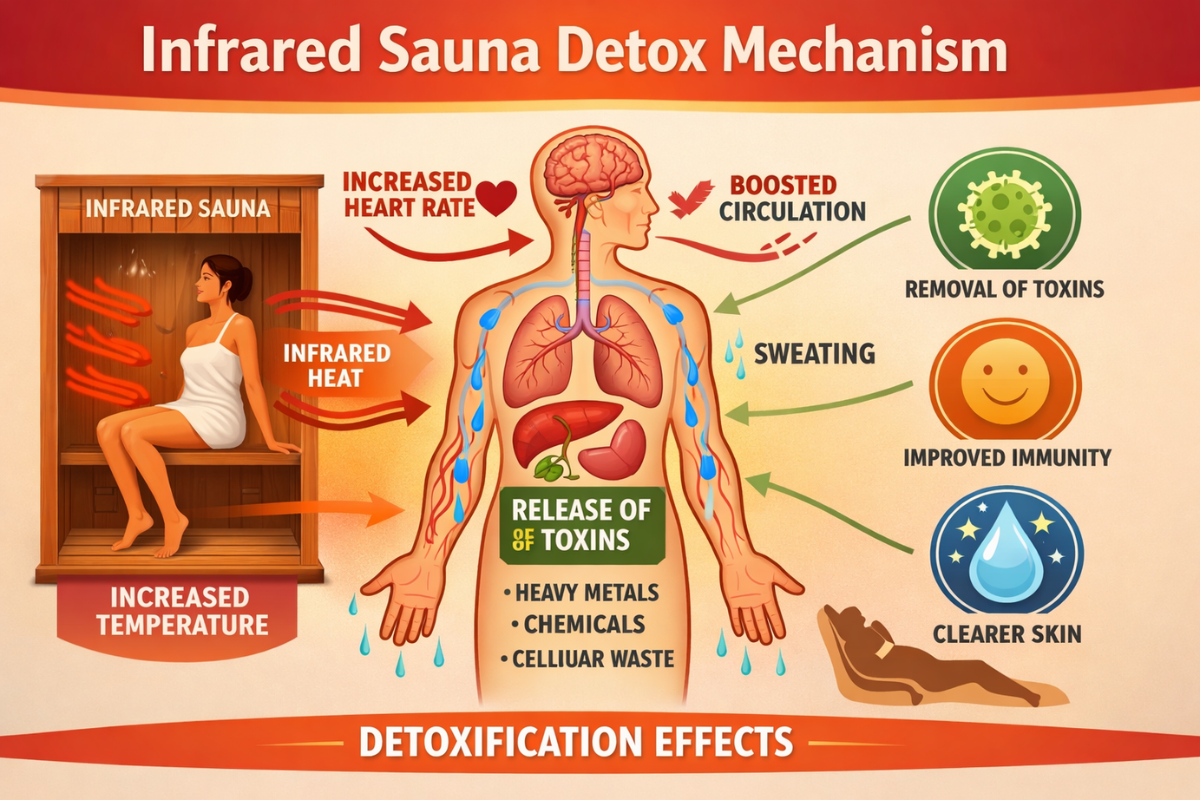
Infrared saunas work by using light in the infrared spectrum to gently heat your body directly, rather than just heating the air. As your core temperature rises slightly, your cardiovascular and thermoregulatory systems respond:
- Your heart rate increases, similar to low-to-moderate intensity exercise. [oai_citation:3‡PubMed](https://pubmed.ncbi.nlm.nih.gov/34954348/?utm_source=chatgpt.com)
- Blood vessels in your skin dilate, increasing circulation to the surface.
- Sweat glands activate to help cool you through evaporation.
- Fluid shifts from your bloodstream into sweat.
These changes can feel like a “cleanout” because you’re sweating, your heart is working a bit harder, and you may feel lighter afterward. But from a detox perspective, the most important effects are:
- Improved circulation that may support delivery of blood to the liver and kidneys
- Temporary shifts in fluid balance that encourage hydration and electrolyte attention
- Stress reduction and better sleep, which indirectly support metabolic and liver health [oai_citation:4‡Cleveland Clinic](https://health.clevelandclinic.org/infrared-sauna-benefits?utm_source=chatgpt.com)
The key idea: infrared saunas influence your environment and physiology in ways that can support existing detox systems, but they don’t replace them.
Liver Detox: What Infrared Saunas Can and Cannot Do
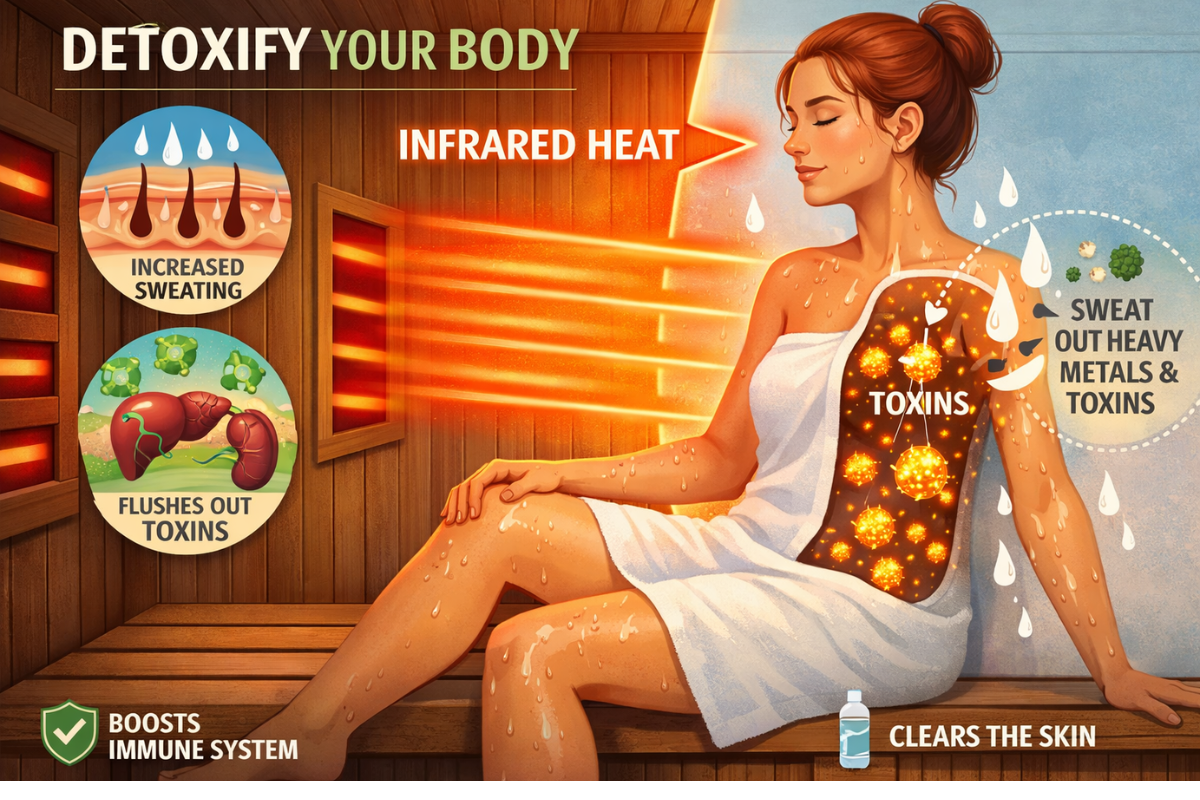
Your liver is your body’s primary biochemical filter, transforming compounds into forms you can excrete. It handles hormones, medications, alcohol, and many metabolic byproducts.
Infrared saunas may support liver health indirectly by influencing stress, circulation, and metabolic markers. Relaxation and improved sleep patterns may also help reduce chronic sympathetic stress, which can influence inflammation and metabolic load.
However, infrared heat does not replace liver function or cleanse the liver directly. It cannot reverse alcohol damage, heal liver disease, or eliminate toxins stored in tissues. Meaningful detox still occurs through liver-kidney pathways, not sweat alone.
For readers with known liver conditions or elevated enzymes, medical clearance is recommended before intensive heat exposure. Light to moderate sessions paired with hydration and healthy habits are a safer approach.
Kidneys, Hydration, and What Happens in the Sauna
Your kidneys filter blood continuously, concentrating water-soluble waste into urine. Sauna sessions cause fluid loss through sweat, temporarily altering kidney workload.
During heat exposure, blood volume decreases slightly as fluid shifts into sweat, and urine may darken as kidneys conserve water. After proper rehydration, kidney filtration returns to normal range. This is expected physiology, not a detox shortcut.
Infrared saunas do not bypass kidney filtration or “rest” the kidneys. Hydration remains essential; without it, dehydration stress increases. People with existing kidney or blood pressure concerns should obtain medical guidance before regular sauna use.
Skin, Sweat, and the “Sweating Out Toxins” Myth
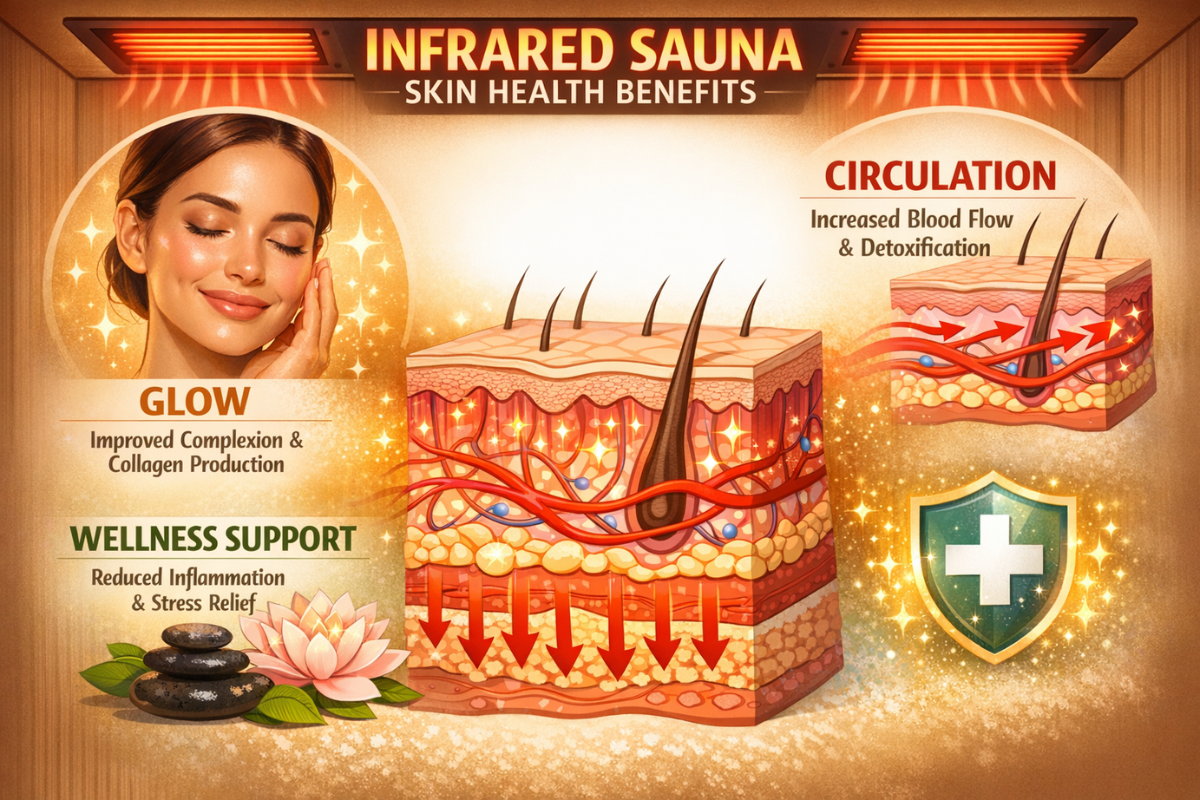
Sweat is primarily water and electrolytes, not a high-volume toxin pathway. While trace compounds may appear in sweat, research shows liver and kidneys remain the dominant detox organs.
Infrared saunas stimulate sweat and increase skin blood flow, which may support clarity and circulation. Think of sweating as thermoregulation, not toxin removal. Keeping expectations realistic prevents overusing heat sessions or assuming sweat replaces core detox organs.
Infrared Sauna vs. Popular Detox Practices
When people talk about “detox,” they might mean juice cleanses, supplement kits, infrared saunas, or even extreme fasting. It helps to compare these ideas to what your body is already doing on its own.
- Detox diets and cleanses: Evidence is limited, and major medical centers emphasize that your liver, kidneys, and GI tract already handle detox without special cleanses. [oai_citation:11‡Mayo Clinic Health System](https://www.mayoclinichealthsystem.org/hometown-health/speaking-of-health/10-nutrition-myths-debunked?utm_source=chatgpt.com)
- Supplements: Some may support nutrient status, but claims about “pulling out toxins” are usually stronger than the research.
- Exercise: Improves circulation, metabolic health, and insulin sensitivity, which can indirectly support liver and kidney health.
- Infrared sauna: Offers passive heat exposure that can mimic some cardiovascular effects of light exercise, encourage relaxation, and produce a satisfying sweat. [oai_citation:12‡PubMed](https://pubmed.ncbi.nlm.nih.gov/34954348/?utm_source=chatgpt.com)
Instead of choosing one “detox hack,” many people benefit from combining realistic tools: gentle sauna sessions, movement, sleep, nutrition, and stress management.
If you’d like more educational topics beyond detox, you can explore the broader Infrared Sauna Blog index to see how detox fits into the bigger wellness picture.
Detox Pathways vs. Sauna Effects: Side-by-Side Comparison
To keep all of this straight, it can help to see how the main detox pathways compare — and where infrared saunas influence (and don’t influence) each one.
| Pathway | Primary Detox Role | What Infrared Sauna Influences | What It Doesn’t Do | Key Takeaway |
|---|---|---|---|---|
| Liver | Transforms and packages many compounds for excretion via bile or urine | May benefit indirectly from better circulation, stress reduction, and improved cardio-metabolic health | Does not “flush” the liver or replace medical care for liver disease | Support with lifestyle; don’t rely on sauna as a liver cure |
| Kidneys | Filter blood and concentrate water-soluble waste into urine | Alters fluid balance and electrolytes, which increases hydration needs | Does not bypass or “rest” the kidneys; they still do the real filtration | Hydrate well before and after any sauna session |
| Skin | Produces sweat, which contains mostly water and electrolytes | Strongly increases sweating and skin blood flow | Does not turn sweat into a major toxin-excretion route | Enjoy sweat for temperature regulation and skin benefits, not miracle detox |
| Gut & Stool | Eliminates bile-bound substances and unabsorbed material | May benefit indirectly if sauna use encourages movement, hydration, and better habits | Does not replace fiber, hydration, or regular bowel movements | Keep nutrition and bowel regularity front and center for real detox support |
Looking at the table, you can see that infrared saunas are best viewed as a supportive environment for detox organs, not a substitute for their normal function.
How to Build a Safe Infrared Sauna “Detox” Routine

A simple infrared sauna routine can support hydration, circulation, and relaxation. For many adults, 2–4 short sessions weekly, starting at 10–15 minutes and building comfortably, is realistic and effective.
Drink water before and after sessions, and consider electrolytes if sweating heavily. Avoid extreme “detox marathons”; consistency matters more than intensity. Your Buyer’s Guide offers deeper comparisons of sauna types and layouts: Explore sauna options →
For broader benefit context, review core advantages here: Infrared sauna benefits →
Safety, Contraindications, and When Not to Push Detox
Because infrared saunas feel relaxing, it can be easy to forget that they impose genuine stress on your body — especially your cardiovascular and fluid-balance systems. Most healthy people tolerate saunas well, but there are important safety guardrails. [oai_citation:13‡Cleveland Clinic](https://health.clevelandclinic.org/infrared-sauna-benefits?utm_source=chatgpt.com)
- Stop immediately if you feel dizzy, nauseated, confused, or short of breath.
- Avoid or seek medical guidance if you are pregnant, have uncontrolled blood pressure, heart disease, kidney disease, or fainting history.
- Skip “marathon detox” sessions: Longer is not always better; piling on heat stress can backfire.
- Be careful with medications: Some drugs affect blood pressure, heart rate, or thermoregulation — ask your prescriber if sauna use is appropriate.
Saunas are usually framed as a wellness upgrade, but your safety threshold always comes first. If you have questions about whether your specific health history is compatible with sauna use, it’s smart to talk with a clinician. You can also use the Sauna Sage contact page to submit non-medical site questions or ask where a question may be better directed to a licensed professional.
Safety First, Detox Second
Consider a check-in with your healthcare professional before starting any intense heat routine, especially if you have cardiovascular, metabolic, or kidney concerns.
Supporting Detox Organs Outside the Sauna

Infrared sauna sessions can be a motivating anchor in your week, but the heavy lifting for detox still happens in your everyday habits. Think of your sessions as a complementary tool layered on top of basic liver, kidney, and skin support.
- Hydration: Aim for steady water intake across the day, not just right before and after the sauna.
- Nutrition: Emphasize whole foods, fiber, lean protein, and healthy fats rather than extreme “detox diets.” [oai_citation:14‡Mayo Clinic Health System](https://www.mayoclinichealthsystem.org/hometown-health/speaking-of-health/10-nutrition-myths-debunked?utm_source=chatgpt.com)
- Sleep: Good sleep supports hormone balance, immune function, and metabolic health — all of which help your detox pathways work smoothly.
- Movement: Regular walking or exercise works alongside sauna sessions to support circulation and metabolic health.
- Skin care: Shower after heavy sweating, use gentle cleansers, and moisturize to support the skin barrier.
When your daily routine supports liver and kidney function, an infrared sauna becomes a pleasant nudge in the right direction instead of a desperate “fix” for deeper lifestyle issues.
Is an Infrared Sauna Detox Plan Right for You?
Not everyone needs or benefits from the same approach. A simple decision framework can help you decide how heavily to lean on sauna use as part of your detox-support strategy.
Quick decision guide
- If you want relaxation, stress relief, and gentle cardiovascular support: A moderate infrared sauna routine (a few times per week) is a reasonable option to explore.
- If you’re hoping to “sweat toxins out” to fix serious health problems: It’s better to reframe expectations and talk with your healthcare professional about root-cause evaluation instead.
- If you already have liver, kidney, or heart disease: Medical clearance is essential before starting regular heat exposure.
- If you love the sauna but feel wiped out afterward: Scale back session length or temperature and prioritize hydration, electrolytes, and recovery.
Common questions
Does sweat remove toxins from the body?
Sweat can carry trace amounts of various compounds, but most detoxification happens through your liver, kidneys, and gut, not through sweat alone. [oai_citation:15‡Cleveland Clinic](https://my.clevelandclinic.org/health/body/sweat?utm_source=chatgpt.com)
Can an infrared sauna “cleanse” my liver?
No single sauna session can cleanse or repair the liver. Your liver protects and regenerates itself through ongoing metabolic processes, supported by overall lifestyle and medical care. [oai_citation:16‡Mayo Clinic McPress](https://mcpress.mayoclinic.org/healthygut/lifestyle-dos-and-donts-when-managing-masld-mash-and-liver-health/?utm_source=chatgpt.com)
Is it safe to do back-to-back “detox” sessions?
For many people, daily or very long sessions can be too aggressive, especially without adequate hydration or if medical conditions are present. A moderate, sustainable routine is usually safer than extremes. [oai_citation:17‡Cleveland Clinic](https://health.clevelandclinic.org/infrared-sauna-benefits?utm_source=chatgpt.com)
Infrared Sauna Detox Pathways: The Bottom Line
Infrared saunas can absolutely become a cornerstone of a soothing, health-supportive routine — but they work with your detox pathways, not instead of them. Your liver and kidneys still do the heavy detox work, your gut still carries waste out in stool, and your sweat remains mostly a cooling mechanism with only a minor role in excretion.
When you see infrared sauna use through this lens, the goal shifts from “sweating toxins out” to creating a consistent, sustainable environment where your detox organs can do what they already do best. That means combining heat sessions with hydration, nutrition, sleep, and stress management rather than depending on any single tool.
If you’re ready to explore which type of infrared sauna might fit your home and health goals, your next stop is the 2025 Infrared Sauna Buyer’s Guide. For a broader look at science-backed applications — from cardiovascular support to stress relief — you can continue reading through the Infrared Sauna Benefits page and browse additional topics via the Infrared Sauna Blog index.
Used thoughtfully, an infrared sauna isn’t a magic detox button — but it can be a powerful ally in a realistic, science-informed wellness routine. 🔥💧
Next Step: Compare Sauna Types
Not sure whether a dome, tent, or cabin style best supports your goals? Start with the structured comparisons inside the Infrared Sauna Buyer’s Guide →