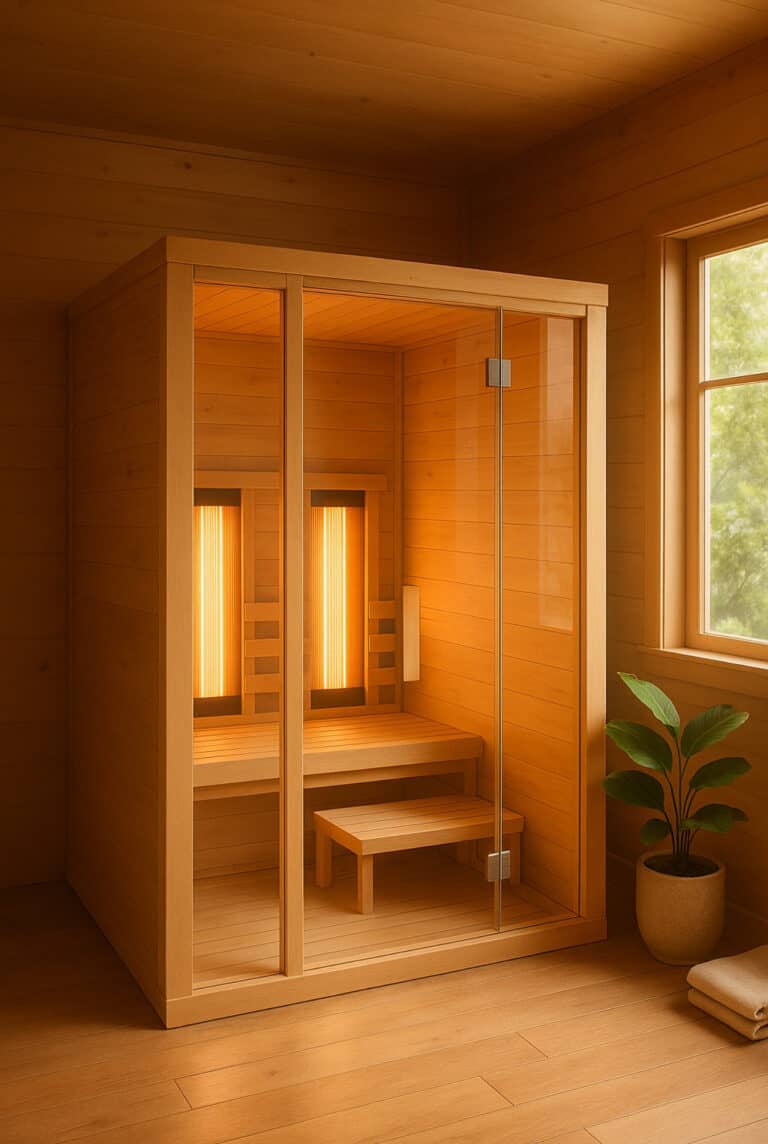
Infrared Sauna for Athletes: Performance, Recovery, and Endurance Benefits
Published: September 26, 2025
Last updated: December 17, 2025

More athletes are adding an infrared sauna to their training routine, not just for relaxation, but for performance, recovery, and endurance. From weekend runners to competitive lifters and team-sport athletes, heat-based recovery has moved from “spa luxury” to a serious part of the training conversation.
This guide breaks down how an infrared sauna may support:
- Performance – power, mobility, and warm-up quality
- Recovery – soreness, stiffness, and nervous system reset
- Endurance – heat adaptation and cardiovascular efficiency
You’ll also see how to fit sauna sessions into your week, what’s realistic to expect, and when to back off or ask a professional for guidance.
New to infrared saunas?
Start with the big picture in our science-backed infrared sauna benefits guide →
How Infrared Saunas Affect an Athlete’s Body

Infrared saunas use infrared wavelengths to heat your body directly rather than just heating the air. For athletes, that means a deep but usually gentler heat compared with very hot traditional saunas.
Key responses that matter for performance and recovery
- Increased blood flow: Heat helps widen blood vessels (vasodilation), which can support oxygen and nutrient delivery to working or recently trained muscles.
- Cardiovascular challenge: Your heart rate often rises to levels similar to light–moderate exercise, offering a “passive cardio” stimulus.
- Sweating and fluid shifts: Heavy sweating changes plasma volume and electrolyte balance, which can affect how you feel in later training sessions.
- Nervous system shift: Many people report a sense of calm or relaxation after an infrared sauna, which may help athletes unwind after high-intensity training days.
These responses don’t automatically guarantee better performance. Instead, they create a physiological environment that can either support or interfere with training, depending on how you structure your sessions and recovery.
Performance: Warm-Up, Power, and Mobility
For many athletes, the most immediate benefit of an infrared sauna is as a deep warm-up tool. Warmer muscles and connective tissue can feel more supple, which may support power output and reduce perceived stiffness.
How heat can support performance
- Improved tissue elasticity: Warm tissue generally moves more comfortably through range of motion, which may help with squats, sprints, or overhead movement patterns.
- Reduced “cold start” feeling: Short, well-timed sessions before training can help athletes who feel sluggish at the beginning of a workout.
- Mental readiness: Some athletes use the calm, focused environment of a sauna to mentally switch into “training mode.”
However, too much heat right before maximal efforts can leave you feeling drained. For most people, it’s safer to treat the infrared sauna as a light warm-up or a separate conditioning tool, not as a replacement for dynamic movement, mobility drills, or sport-specific warm-ups.
If your primary goal is peak power or heavy lifting, keep pre-training sauna time modest and pay close attention to how your body responds session by session.
Recovery: Soreness, Stiffness, and Nervous System Reset

Recovery is where many athletes hope an infrared sauna will shine. After hard training, games, or races, the goals often include less soreness, more mobility, and higher-quality sleep.
What athletes commonly report
- Perceived reduction in muscle stiffness when sessions are used later the same day or the day after intense training.
- Subjective improvement in relaxation and sleep quality, which indirectly supports recovery.
- Mental “off switch” after competition or high-pressure training days.
Some research on sauna bathing suggests potential benefits for cardiovascular health, circulation, and stress modulation, which can all influence how quickly you feel ready to train again. However, responses are highly individual—what feels amazing for one athlete might feel draining for another.
Tracking your soreness, sleep, and performance markers (such as session RPE, heart rate trends, or simple training logs) can help you decide whether post-training infrared sessions are moving you toward or away from your performance goals.
Endurance & Heat Adaptation for Athletes

Endurance athletes are particularly interested in how repeated heat exposure might support heat tolerance and cardiovascular efficiency. Traditional sauna research suggests that regular sessions after training may increase plasma volume and support endurance adaptations over time.
Potential endurance-related benefits
- Improved heat tolerance: Getting used to feeling warm and sweaty in a controlled setting can make hot races or games feel less overwhelming.
- Cardiovascular training effect: Elevated heart rate during infrared sauna sessions can act as a low-impact conditioning stimulus on lighter days.
- Support for post-session blood flow: Maintaining circulation after training may help clear metabolic byproducts associated with fatigue.
These effects are best viewed as potential complements to well-designed endurance training—not replacements. Your long runs, intervals, and sport practice still do the heavy lifting. The sauna is an additional tool you layer on carefully, especially close to races or key competition phases.
If you are already training at a high volume, introduce heat exposure gradually so it does not push you into overreaching or chronic fatigue.
Where Infrared Sauna Fits in a Training Week
The best place for an infrared sauna session in your training week depends on your sport, schedule, and how quickly you recover. Instead of following a one-size-fits-all protocol, think in terms of training load, goals, and feedback from your body.
Common placement patterns
- Easy or moderate days: Many athletes place sauna sessions on lower-intensity days to avoid adding stress to already heavy sessions.
- Post-training (later in the day): Some prefer using the sauna several hours after a workout to support relaxation and sleep.
- Off days: A short session on a rest day can provide a “circulation check-in” without mechanical load on joints.
Pay attention to:
- How you feel in the next 24–48 hours
- Whether your legs feel heavier or lighter at your next session
- Whether your sleep and mood trend up or down
If your performance metrics or perceived energy consistently drop after adding sauna time, reduce either session frequency, duration, or temperature and reassess.
Safety, Hydration, and When to Be Cautious

For athletes, safety is not just about avoiding extremes—it’s about protecting long-term performance capacity. Heat exposure adds stress to your body. Managed well, that stress may be adaptive. Managed poorly, it can contribute to dehydration, fatigue, and overtraining.
Practical safety guidelines
- Hydrate before and after: Drink water and consider electrolytes, especially in hot climates or heavy training blocks.
- Avoid stacking too many stressors: Back-to-back intense training, calorie deficits, poor sleep, and long sauna sessions are a tough combination.
- Listen for warning signs: Dizziness, nausea, chest discomfort, severe headache, or feeling unusually weak are all reasons to stop a session early.
- Medical conditions: If you have cardiovascular disease, blood pressure issues, or other medical concerns, talk with a qualified clinician before adding sauna sessions.
Infrared saunas are not a substitute for medical care, cardiac rehabilitation, or professional treatment plans. They are a supportive tool that should be used conservatively and adjusted based on your individual response.
Infrared Sauna vs. Other Recovery Tools for Athletes

Infrared saunas are just one piece of the recovery toolkit. Many athletes also use cold plunges, traditional saunas, compression garments, or simple active recovery sessions. The goal is not to use everything at once, but to select the tools that fit your body and your sport.
| Tool | Main Sensation | Primary Focus | Best Timing | Common Use Case |
|---|---|---|---|---|
| Infrared Sauna | Deep, gentle heat | Circulation, relaxation, heat adaptation | Later in the day or on easier days | General recovery, heat acclimation, relaxation |
| Traditional Sauna | Very hot air | Intense heat stress, cardiovascular load | After training or on separate sessions | Heat adaptation, stress relief |
| Cold Plunge / Ice Bath | Rapid cold exposure | Acute relief, perceived soreness reduction | After hard sessions or games | Short-term soreness relief, mental reset |
| Active Recovery | Light movement | Blood flow without extra heat stress | Next day after hard efforts | Low-intensity cycling, walking, mobility |
Most athletes do best by picking one or two primary tools and using them consistently, rather than jumping between every new recovery trend. If infrared sauna sessions leave you feeling calmer, looser, and ready for your next training day, that is a meaningful result—even if it looks different from someone else’s routine.
Real-World Use Cases: Runners, Lifters, and Team-Sport Athletes

Every sport has its own demands. The way a powerlifter uses an infrared sauna will look different from a soccer player, CrossFit athlete, or triathlete. Here are a few common patterns athletes report:
Endurance athletes
- Short post-run sessions on moderate training days to support relaxation and heat adaptation.
- Reduced or skipped sessions in the final days before a race to avoid extra fatigue.
Strength and power athletes
- Gentle infrared sessions on rest or accessory days to reduce stiffness without loading joints.
- Avoiding long, very hot sessions immediately before maximal lifting attempts.
Team-sport athletes
- Using the sauna after games for a mental and physical cooldown.
- Relying on feedback from athletic trainers and medical staff, especially in congested schedules with frequent games or travel.
Whatever your sport, it helps to track a few simple markers—such as training log notes, sleep, and perceived fatigue—when you introduce infrared sessions. That way you can see patterns instead of guessing.
How to Build a Simple Infrared Sauna Routine
Instead of copying a complex protocol, most athletes do well starting with a simple, low-dose routine and adjusting based on how they feel over several weeks.
General starting framework (non-medical, adjust as needed)
- Frequency: 1–3 sessions per week to start, not on your heaviest training days.
- Duration: Shorter sessions at first (for example, 10–20 minutes), with breaks if needed.
- Intensity: Moderate sauna temperatures rather than extremes, especially in the beginning.
- Hydration: Drink water before and after; consider electrolytes if you sweat heavily.
Pair this with a basic check-in routine:
- Note your sleep and soreness the next morning.
- Notice whether your next workout feels better, worse, or neutral.
- Adjust duration, timing, or frequency if you feel consistently worn down.
If you are unsure how sauna fits alongside your specific training or health history, consider discussing it with a sports medicine provider or qualified coach who understands both heat exposure and your sport’s demands.
Infrared Sauna FAQs for Athletes
How soon after a workout can I use an infrared sauna?
Many athletes wait at least 1–3 hours after training before using an infrared sauna. This allows heart rate and core temperature to settle and gives you time to rehydrate. Some prefer to use it later in the day, treating it as an evening relaxation and recovery tool rather than an immediate post-workout step.
Can an infrared sauna replace a recovery run or easy workout?
No. An infrared sauna can provide a passive cardiovascular and heat stress stimulus, but it does not replace the movement, technique practice, and mechanical loading of an easy run or low-intensity session. For most athletes, sauna works best alongside—rather than instead of—active recovery.
Is it okay to use an infrared sauna every day during heavy training?
Daily use can be too much for some athletes, especially during high-volume or high-intensity blocks. Watch for signs like unusual fatigue, poor sleep, or declining performance. If these show up after adding frequent sauna sessions, scale back and see whether you feel better with fewer, shorter, or cooler sessions.
If you have underlying health conditions or a history of heat-related illness, speak with a healthcare professional before using an infrared sauna regularly.
Decision Framework: Is Infrared Sauna a Good Fit for You?
If you’re an athlete considering an infrared sauna, a simple decision framework can keep you from overcomplicating things. Start with your primary goal and match it to how you plan to use heat.
Choose infrared sauna if you want:
- Gentler heat than a traditional sauna, often more comfortable for longer sessions.
- Support for relaxation, stress relief, and sleep after intense training blocks.
- Complementary heat exposure to layer onto existing endurance or team-sport training.
Be cautious or reconsider if:
- You already feel chronically fatigued or overtrained.
- You struggle with adequate hydration or have a history of heat illness.
- You have cardiovascular or medical conditions that make heat exposure risky without medical guidance.
Ask yourself:
- Does this help me show up fresher for my next session?
- Does it improve my sleep and mood?
- Do my training logs show stable or improving performance over several weeks?
If the answers trend positive, infrared sauna sessions may be a useful long-term recovery habit in your training toolkit.
Bringing It All Together: Heat, Performance, and Longevity in Sport
Infrared saunas are not magic shortcuts for performance. Instead, they offer a structured, repeatable way to add gentle heat stress, circulation support, and relaxation into an athlete’s routine. When used thoughtfully, this can translate into better sleep, improved comfort between sessions, and greater resilience during long seasons or training blocks.
The key is to treat the sauna like any other training tool: start small, monitor your response, adjust based on data (and how you feel), and always keep long-term health and performance at the center of your decisions.
Ready to go deeper on sauna selection?
Learn how different infrared sauna types compare—and which styles fit athletes best—in our 2025 Infrared Sauna Buyer’s Guide →
For a broader look at how infrared heat fits into overall wellness, including immunity, stress, and long-term health, explore the full infrared sauna benefits breakdown and browse the latest posts on the Sauna Sage blog.
If you have questions about safety, setup, or how sauna fits into your specific training situation, you can always reach out via the Sauna Sage contact page so you can make informed, confident decisions about using heat in your athletic journey.