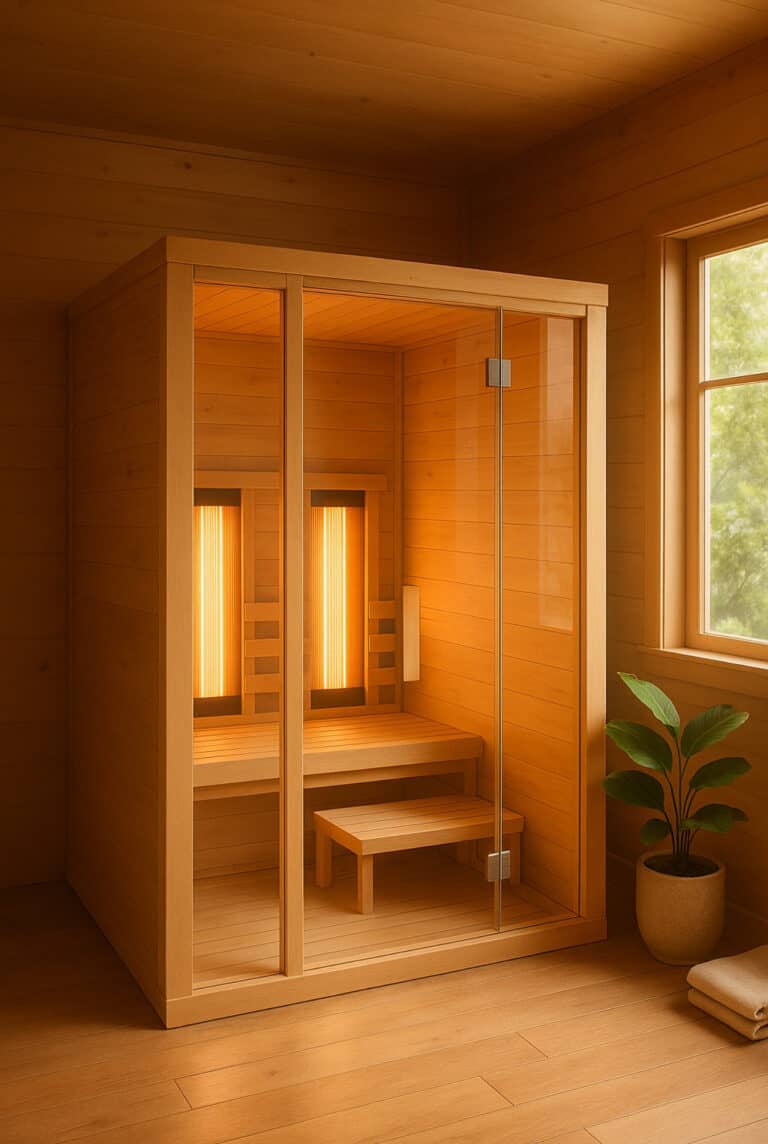
Best Portable Infrared Saunas
Published: November 22, 2025
Last updated: December 28, 2025

Portable infrared saunas are the “low-friction” entry point into heat therapy 🔥—especially if you want:
- Fast setup (no remodel, no dedicated room)
- Strong sweat response in a smaller footprint
- A routine you can actually stick with (because it’s easy)
But “portable” can mean different things. Some products are zip-up tent-style saunas you sit in, while others are personal portable systems designed for tighter spaces or simpler storage.
This roundup is built for decision clarity ✅. We’ll compare:
- Heat feel (how intense it typically feels in real-world use)
- Setup + storage (how annoying it is to live with day-to-day)
- Safety factors (hydration, heat tolerance, contraindications)
- Who each option is best for (and who should skip)
Important: Portable sauna sessions still raise body temperature and increase sweating. Conservative hydration guidance is a must—especially if you’re new to sauna use. For a medical overview on heat safety and dehydration risk, see guidance from Mayo Clinic and Cleveland Clinic.
👉 If you want the full category-by-category comparison (domes, cabins, outdoor models), start here:
What “best portable infrared sauna” really means (beyond hype)
Most people don’t fail at sauna routines because they “lack discipline.” They fail because the setup is annoying 😵💫.
So for this roundup, “best” means a portable sauna that scores well on three practical realities:
- 1) Heat performance you can feel — steady warmth that supports consistent sweating without feeling unsafe.
- 2) Routine compliance — quick setup, reasonable storage, minimal friction.
- 3) Safety + comfort — breathable feel, stable seating posture, and realistic session guidance.

Portable isn’t automatically “better”—it’s better for certain people
Portable models tend to shine when you want:
- Low footprint (apartment, small home, shared space)
- Lower upfront cost than cabins
- Frequent sessions (shorter, more consistent routines)
But they’re not ideal if you’re chasing the full “spa cabin” experience. If that’s you, jump to:
Best Indoor Infrared Sauna Cabins →
Safety note: If you have cardiovascular concerns, blood pressure issues, or are on medications that affect heat tolerance, review your risk factors first. NIH resources on heat stress and dehydration are a good baseline reference: NIH.
Top pick (tent-style): Momentum98 Relax FIR Tent (Black Tent Edition)
If you want a true tent-style portable infrared sauna that’s widely discussed for strong heat feel and fast routine adoption, this is the one that consistently fits the “best overall” profile ✅.
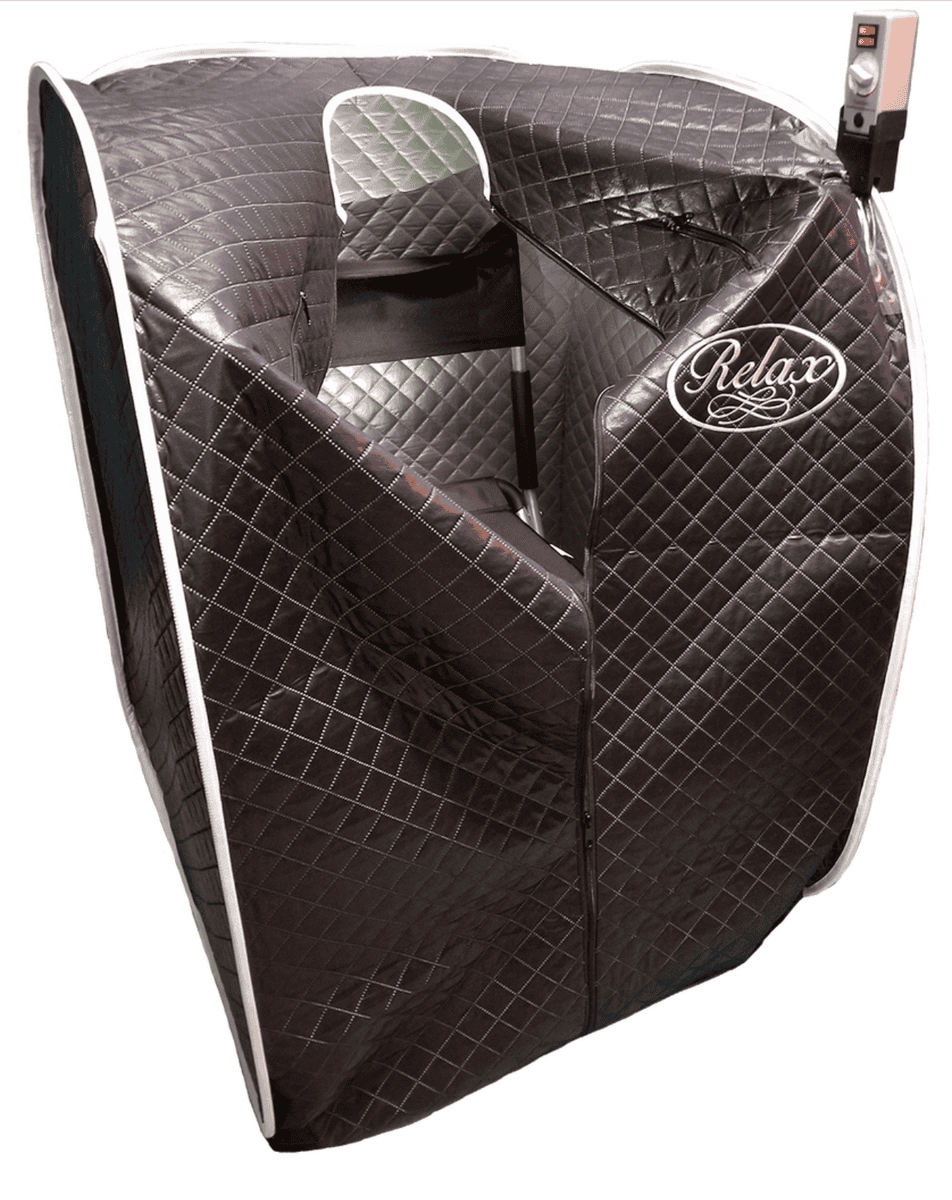
Why it earns the #1 spot:
- ⚡ Routine-friendly: straightforward setup and predictable sessions
- 🔥 Heat intensity: often described as a “real sweat” experience for a portable unit
- 🏠 Home fit: ideal when you want portable performance without committing to a cabin
Best for: people who want a consistent sweat routine 3–5x/week, have limited space, and want a portable unit that still feels “serious.”
Skip if: you dislike seated sessions, need a more spacious feel, or strongly prefer a rigid cabin environment.
Quick CTA
Want to see current pricing and specs for the Relax FIR Tent? Shop Momentum98 →
📌 Deep dive next: read the full review here:
Also worth considering: Therasage Thera360 Plus (portable personal sauna option)
Not everyone wants a tent. Some people want a portable personal infrared system that’s easier to store, simpler to use, and still supports frequent sessions.
The Therasage Thera360 Plus fits that “portable but structured” lane—especially if your top priority is a consistent routine with minimal friction.
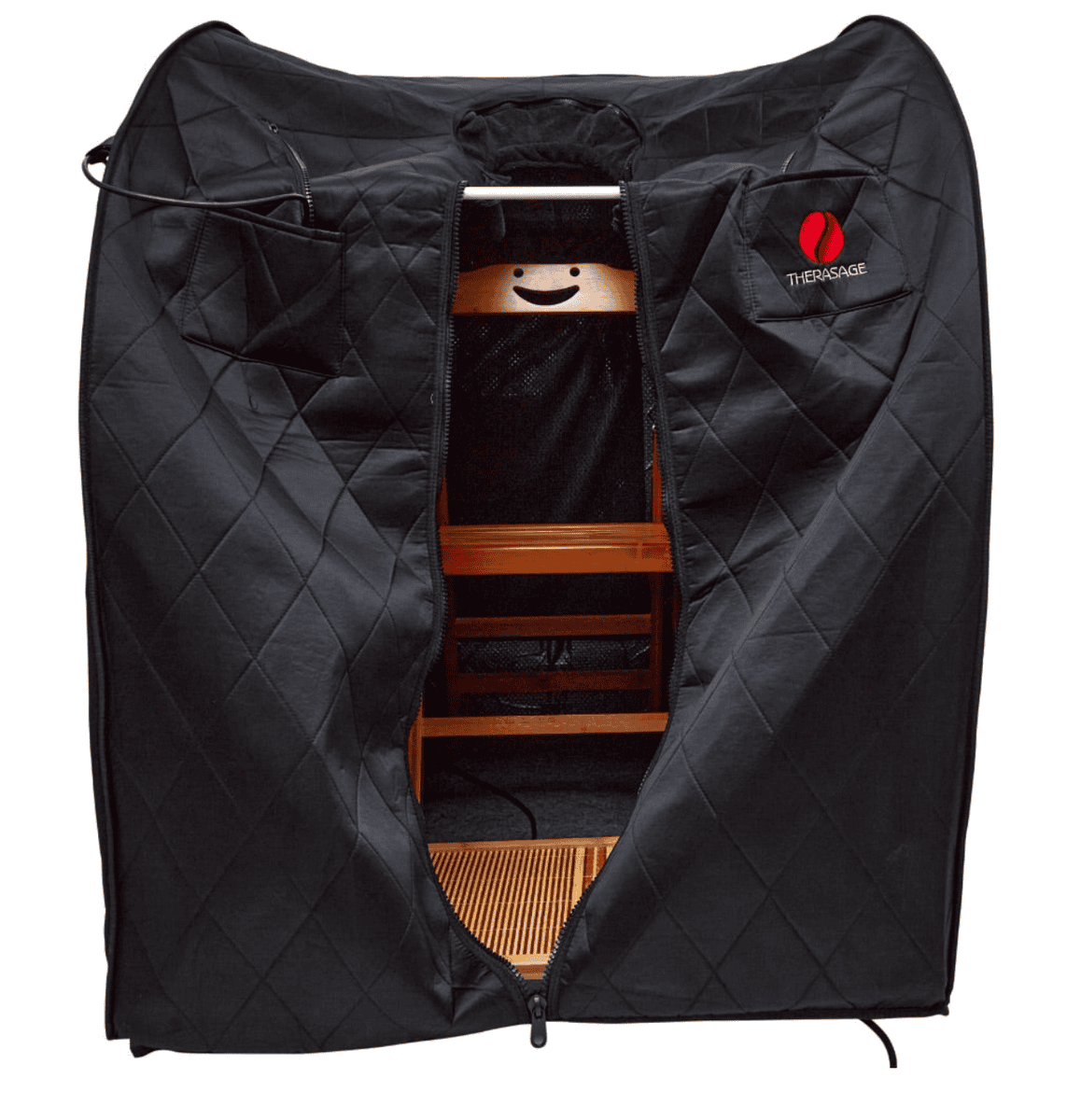
Why it makes sense in a portable roundup:
- 🧩 Space-conscious: typically easier to integrate into a small home routine
- 🗓️ Consistency-first: designed for repeat sessions without feeling like a “project”
- 🧠 Predictable user experience: fewer variables than some tent setups
Exclusive Offer
Use code SAUNASAGE20 for Therasage savings: Shop Therasage →
Next, we’ll cover the key decision factors that separate “great portable pick” from “impulse buy you stop using.”
Heat feel + sweat response: what to expect (and what’s normal)
Portable infrared saunas often feel deceptively gentle at first — especially compared to traditional saunas — but that doesn’t mean they’re ineffective. What matters most is consistency over time, not how overwhelming the first session feels.
Most users follow a fairly predictable adaptation curve:
- Sessions 1–3: warmth is noticeable, but sweating may be light or delayed.
- Sessions 4–7: sweat response becomes more reliable as circulation and thermoregulation adapt.
- Weeks 2–3: sessions feel easier to tolerate, and sweat onset typically happens sooner.
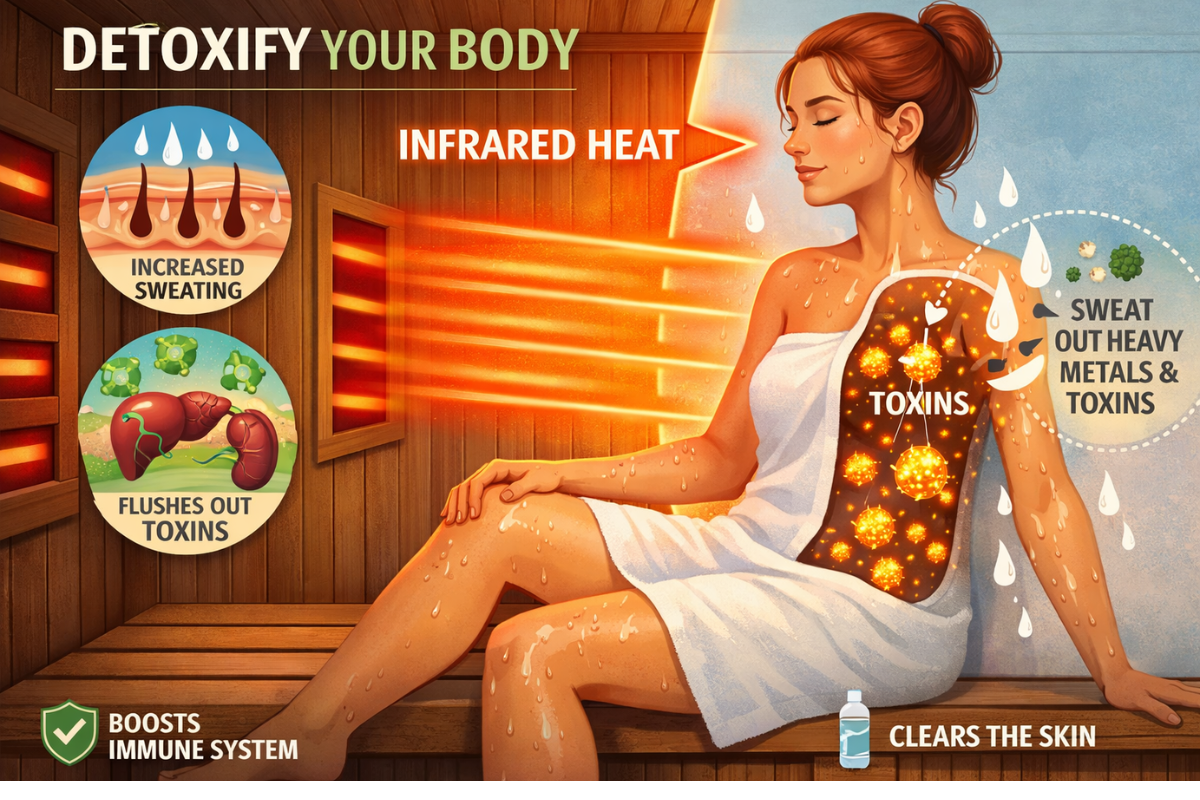
Why sweating varies so much between people
Sweat response is influenced by more than just temperature:
- Baseline hydration (chronic under-hydration delays sweating)
- Electrolyte balance (imbalances can blunt or exaggerate response)
- Ambient room temperature (cold rooms reduce perceived heat)
- Clothing and airflow inside the tent or enclosure
It’s common for beginners to assume “I’m not sweating enough” means something is wrong. In reality, adaptation takes time, and pushing intensity too early often backfires.
Safety reminder: dizziness, nausea, headache, or confusion are signals to end the session immediately. General heat-illness guidance from the NIH and cardiovascular context from PubMed provide helpful background for understanding these limits.
Setup + storage reality check: the “friction test” that predicts long-term use
Portable infrared saunas succeed or fail based on one factor most buyers overlook: daily friction. The more steps between “I should use this” and “I’m sitting inside,” the lower long-term compliance tends to be.
- Storage friction: Do you have to move furniture or clear a room?
- Setup friction: How many steps before the session actually begins?
- Cleanup friction: Is post-session cleanup quick or annoying?

Why friction matters more than specs
High-performing hardware doesn’t help if it lives in a closet unused. Most people underestimate how quickly inconvenience erodes motivation.
Portable users who stick with their routine usually:
- Keep the sauna in a semi-permanent location
- Have towels, water, and seating ready in advance
- Minimize “decision fatigue” before each session
For a deeper walkthrough on room selection, airflow, and day-to-day placement strategy, see:
Safety + hydration protocol: the non-negotiables for portable sauna use
Portable saunas are often used more frequently than cabin models, which makes hydration and recovery habits especially important. The most common issue new users run into is cumulative dehydration, not single-session overheating.

A conservative hydration baseline most people tolerate well
- Before: water + optional electrolytes if you sweat heavily
- During: sip water during longer sessions
- After: rehydrate until urine is pale yellow
People who benefit most from adding electrolytes include:
- Heavy sweaters
- Those doing sessions 4–6x per week
- Anyone combining sauna use with exercise
Stop-session warning signs (do not push through these)
- Lightheadedness or dizziness
- Nausea or unusual fatigue
- Pounding headache
- Chest discomfort or shortness of breath
General medical guidance from Cleveland Clinic and Mayo Clinic emphasizes conservative pacing, especially for beginners and those with medical conditions.
Comparison table: best portable infrared sauna picks (quick snapshot)
If you want the fast answer, this table gives you the “decision snapshot” 🧠. Then we’ll follow it with a simple framework so you can choose confidently.
| Option | Type | Heat Feel | Setup Friction | Best For | Start Here |
|---|---|---|---|---|---|
| Momentum98 Relax FIR Tent | Tent-style portable | Strong (portable category) | Low–Moderate | Consistent sweat routine in small footprint | Read review → |
| Therasage Thera360 Plus | Portable personal sauna | Steady + predictable | Low | Simple routine, minimal storage hassle | See in Buyer’s Guide → |
| Need a different style? | Domes / Cabins | Varies | Varies | Higher comfort or different body positioning | Dome roundup → |
Next up: the simple “choose this if…” framework (the part that prevents second-guessing).
Real-life use cases: how people fit portable saunas into daily routines
One of the biggest benefits of portable infrared saunas is that they adapt to different lifestyles. Below are a few real-world ways people actually use them — not hypotheticals.
1) Busy mornings before work
Short, focused sessions (15–25 minutes) while listening to a podcast or planning the day. Great if you struggle to find evening time.
2) After exercise cooldown
Heat after a strength or cardio session can feel restorative. Pairing with a gentle stretch and hydration afterward helps your body reset.
3) Evening wind-down routine
A portable sauna before bedtime can support relaxation and sleep preparation — especially when combined with calming music or meditation.
Pro tip: Leave your hydration station (water + electrolytes) right next to your sauna setup. Little cues like that help turn a one-time experiment into a weekly habit.
If you’re curious about infrared sauna effects on sleep, check out:
Simple decision framework: which portable sauna should you pick?
Here’s a quick way to decide without overthinking it:
- If space and storage convenience matter most → go for a portable personal sauna (like Therasage Thera360 Plus).
- If you want the strongest heat feel in a portable form → choose a tent-style unit (like Momentum98 Relax FIR Tent).
- If you imagine wanting *more room* or a more immersive experience later → consider stepping up to a cabin model.
📌 All portable options require hydration and safety mindset — not just gear. If you want the full general sauna safety guide:
Here’s a quick reminder of the main trade-offs:
- Heat intensity vs ease of setup
- Routine consistency vs session comfort
- Cost vs long-term ownership experience
Portable infrared saunas vs other at-home heat options: a clear, no-hype decision analysis
If you’re still undecided at this point, it usually isn’t because portable infrared saunas are unclear — it’s because you’re subconsciously comparing them to other heat experiences without separating marketing from real-world tradeoffs.
This section exists to resolve that tension.
Rather than asking “Is a portable infrared sauna good?”, the more useful question is:
“Compared to the other realistic options I’m considering, does a portable infrared sauna fit my life, my space, and my willingness to stay consistent?”
Below, we break this down carefully and conservatively.
Portable infrared saunas vs full-size infrared cabins
This is the most common internal comparison — and also the one that causes the most buyer’s remorse when misunderstood.
Infrared cabins offer:
- More physical space and comfort
- A more immersive, spa-like experience
- Longer, more relaxed sessions
- Less perceived “constraint” during use
Portable infrared saunas offer:
- Lower upfront cost
- Minimal space commitment
- Faster setup and teardown
- Higher likelihood of frequent use
The mistake many buyers make is assuming these are interchangeable experiences. They are not.
A cabin sauna excels when sauna use is a destination activity — something you plan, schedule, and linger in. Portable saunas excel when sauna use is a habit activity — something you fold into daily or near-daily life.
If you realistically see yourself using a sauna 4–6 times per week for shorter sessions, portability and ease often matter more than luxury.
If you imagine one or two long, immersive sessions per week and value spacious comfort above all else, a cabin may be the better long-term fit.
For a full category comparison across cabins, domes, and outdoor models, this is where that decision should ultimately be made:
Best Infrared Saunas 2025 – Buyer’s Guide →
Portable infrared saunas vs traditional (steam or dry) saunas
Traditional saunas and infrared saunas are often grouped together, but physiologically and practically, they are quite different.
Traditional saunas rely on heating the surrounding air, which:
- Creates intense surface heat quickly
- Can feel overwhelming for beginners
- Often requires dedicated ventilation and construction
- Encourages shorter sessions for heat-sensitive users
Infrared saunas use radiant heat that penetrates tissue more gradually, which:
- Often feels more tolerable at lower ambient temperatures
- Allows longer or more frequent sessions for some users
- Fits more easily into residential spaces
- Requires less structural modification
Portable infrared saunas magnify this convenience advantage. They are rarely chosen by people who love extreme heat; they are chosen by people who want a repeatable, manageable routine.
If your past experience with saunas involved “pushing through” discomfort, infrared — especially portable infrared — often feels more approachable.
Portable infrared saunas vs domes and personal infrared systems
Another important distinction is between tent-style portable saunas and dome or personal infrared systems.
Tent-style portable saunas:
- Enclose more of the body
- Often generate a stronger sweat response
- Require seated posture
- Take slightly more space when deployed
Dome-style or personal systems:
- Offer more open positioning
- Can feel less claustrophobic
- Often integrate more easily into small spaces
- May feel less intense but more comfortable
This is not a matter of “better” or “worse.” It’s a matter of tolerance, comfort preference, and how you envision yourself actually using the equipment.
People who value simplicity and consistency often gravitate toward personal systems. People who prioritize sweat intensity within a portable footprint often prefer tent-style units.
Why consistency matters more than intensity
From a long-term wellness perspective, the most important variable is not how intense a single session feels — it’s how consistently sessions occur over months and years.
Portable infrared saunas tend to perform well here because:
- They lower the barrier to entry for each session
- They reduce decision fatigue
- They fit into imperfect, busy schedules
Many owners of larger, more expensive setups quietly stop using them — not because the technology failed, but because the friction became too high.
Portable units succeed precisely because they make “good enough” sessions easy to repeat.
Who portable infrared saunas are ideal for
Portable infrared saunas tend to be an excellent fit if you:
- Live in an apartment or smaller home
- Want a non-permanent setup
- Prefer shorter, more frequent sessions
- Are new to sauna use and want a gentler learning curve
- Value routine compliance over luxury aesthetics
Who should think twice before choosing portable
You may want to pause and reassess if:
- You strongly dislike seated or enclosed postures
- You want a shared, multi-person experience
- You view sauna time as a long, immersive ritual
- You already know you want a permanent installation
In those cases, jumping straight to a cabin or outdoor sauna may ultimately be more satisfying, even if it requires a higher upfront investment.
The most important question to ask yourself
Before choosing any sauna — portable or otherwise — ask yourself this:
“Will this setup still feel easy to use on my most tired, busy, distracted days?”
If the answer is yes, you’re likely choosing well.
If the answer is no, no amount of technical superiority will save the purchase.
This is why we always recommend stepping back and reviewing the full landscape before committing:
Accessories & enhancements that improve portable sauna sessions
Whether you pick a tent or a personal portable sauna, a few simple accessories make the experience smoother:
- Comfortable foldable chair — helps posture and reduces fatigue.
- Quality towel set — one to sit on, one to wipe sweat.
- Hydration station — reusable bottle + electrolyte powder.
- Non-slip mat — helps with safety around sweat and condensed water.

These “small additions” don’t dramatically change performance, but they *do* change whether you actually love using your sauna — and that’s the real difference in the long run.
Quick takeaways + when to upgrade to a larger sauna
Here’s what we want you to remember:
- Portable saunas are best when they help you build a consistent habit.
- Hydration and safety are non-negotiable every session.
- Ease of setup predicts long-term usage more than brand name.
When to consider upgrading
Upgrade from “portable” to “cabin” if:
- You want more room or a more immersive heat experience.
- You’re hosting sessions for multiple people.
- You want added features like integrated lighting, benches, or enhanced insulation.
Indoor cabins unlock an experience that portable units simply can’t match — and if that’s you, start with:
One final realism check before you decide
Before making a final choice, it helps to zoom out and think in terms of behavioral reality, not idealized routines.
Ask yourself:
- Will I realistically use this on weekdays, not just weekends?
- Does this setup still feel reasonable when I’m tired or short on time?
- Am I choosing based on how I want sauna use to feel — or how it will actually fit into my life?
Portable infrared saunas tend to succeed when they reduce friction and decision-making. The easier it is to start a session, the more likely it becomes part of a long-term routine rather than a short-lived experiment.
If you’re still torn between categories, the smartest move is to re-check the broader landscape and confirm you’re choosing the right class of product — not just the right brand.
Elevate your routine with the right portable sauna choice
Portable infrared saunas are uniquely positioned to help you establish regular heat therapy sessions — if you pick the right one for your space and goals. From quick hydration habits to setup flow, the right gear + routine makes all the difference.
If you want a broader comparison across all infrared sauna categories (domes, cabins, outdoor models), start with the Buyer’s Guide:
Best Infrared Saunas 2025 – Buyer’s Guide →
Thanks for reading — may your sessions be warm and your routines consistent!