Momentum98 Relax Far Infrared Sauna (Black Tent) Review (2025)
Published: November 28, 2025
Last updated: December 26, 2025

Momentum98 Relax Far Infrared Sauna review time — specifically the Black Tent Edition that’s become a go-to option for people who want a portable infrared setup with stronger heat feel, solid sweat response, and a simpler “zip in and go” routine at home.
If you’ve been comparing tents vs domes vs full cabins, this review is designed to answer the real questions: How hot does it feel? How fast does it heat up? What’s the footprint, power needs, and day-to-day usability? And in 2025, does it make more sense than a dome or stepping up to a cabin?
Quick navigation (so you can jump around): this post links up to the full lineup in our Best Infrared Saunas 2025 – Buyer’s Guide and the category comparisons in our Best Portable Infrared Saunas (Tents) roundup.
Quick Take
If you want a portable FIR tent that supports consistent sweat sessions without a permanent install, this is one of the simplest “high-heat feel” options to shortlist. 🔥
What the Momentum98 Relax FIR (Black Tent) is
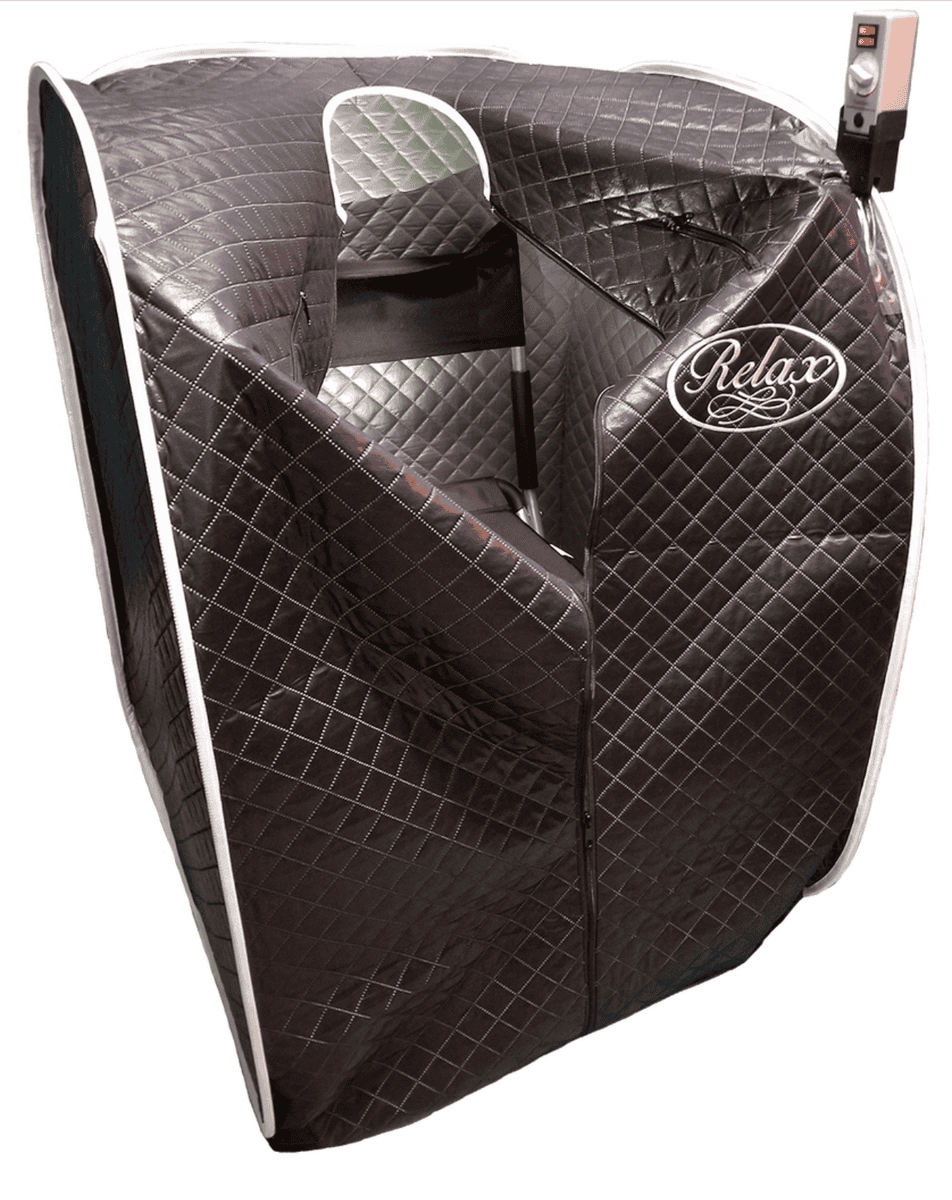
The Relax Far Infrared Sauna (Black Tent Edition) is a portable infrared sauna tent designed for seated sessions. The draw is straightforward:
- Portability (foldable / moveable footprint)
- Fast routine (set up → heat → sweat → wipe down)
- Heat feel that many users prefer over “light warmth” tents
- Lower commitment than a full cabin buildout
From a site architecture standpoint, this Review is a Level 3 node in the canonical system, so it links upward only (Buyer’s Guide + its Roundup). For broader comparisons across all types, start here: Best Infrared Saunas 2025 – Buyer’s Guide.
Check current pricing
See the current Momentum98 listing here: View Relax FIR Black Tent →
Setup, footprint, and electrical basics
Portable tents win on one thing: frictionless consistency. If the sauna is easy to set up and easy to clean, you use it more. That matters more than “perfect specs” for most people.
What to expect (typical home reality)
- Footprint: similar to a small chair area + a little buffer for airflow/zip access
- Power: standard household outlet for most tent-style systems (no special wiring for typical setups)
- Routine: preheat → session → towel wipe-down → air out
If you’re building a full home sauna corner, also bookmark our placement guide (coming soon in the map) and use the “what type fits your home” breakdown inside the Buyer’s Guide.
Safety reminder: heat exposure affects hydration and cardiovascular load. If you’re newer to heat therapy, review general safety guidance from a major medical source like Mayo Clinic’s overview of sauna use and start conservatively.
Heat feel & sweat response: what most people notice first

Most buyers don’t care about marketing jargon — they care about the lived reality: Does it feel hot enough to sweat? And does it feel comfortable enough to repeat 3–5 times a week?
What “strong heat feel” usually means in practice
- You reach a steady sweat without needing an extreme session length
- The warmth feels deeper than “space-heater warm”
- You feel looser afterward (especially after training days)
- You recover faster from stiffness when you keep the habit consistent
About “detox”: sweating is real, and it’s a valid wellness goal for many people, but the strongest evidence-based framing is heat + circulation + relaxation rather than miracle claims. When you want a science-first approach, PubMed is a better anchor than influencer summaries. Example: you can browse research on heat therapy and physiologic effects via PubMed.
For the plain-English benefits overview across the site, use: Infrared Sauna Benefits.
Comfort: seated sessions, routine flow, and small details that matter
Portable tent saunas are a “habit product.” So comfort is less about luxury — and more about whether it’s easy to do this repeatedly without annoyance.
Comfort checklist to evaluate (before you buy)
- Seating: stable chair height that doesn’t strain hips/knees
- Heat tolerance: ability to scale sessions up gradually
- Head-out vs full enclosure: some people prefer the head-out style for comfort
- Ease of entry/exit: zippers, openings, and towel placement
If you’re comparing tents in general (not just this one), the tent category roundup is your “big picture” hub: Best Portable Infrared Saunas (Tents).
And if you’re deciding between a portable tent and a dome, start with the category breakdown in the Buyer’s Guide (it lays out the “who each type is for” logic).
Hydration & recovery: the part most people underdo

Infrared sauna sessions can feel amazing — but the “crash” afterward is usually a hydration problem, not the sauna itself. If you treat hydration as part of the product experience, your sessions get more consistent. 💧
Simple heat-session hydration framework
- Before: water + a light electrolyte approach if you’re a heavy sweater
- During: sip if needed (don’t force huge volumes)
- After: water + salt/minerals + a cool-down period
For conservative medical guidance on sauna safety considerations, Cleveland Clinic is a reliable starting point: Cleveland Clinic’s sauna overview.
If you want more “how-to” content like this, the blog hub is here: Infrared Sauna Blog.
Cleaning & maintenance: keeping a portable sauna usable (and not gross)
The tent sauna lifestyle is simple: you sweat, you wipe, you air out. If you skip those steps, portability becomes a downside (odors, moisture, and frustration).
Low-effort maintenance routine
- Use a towel barrier (seat + floor area where sweat lands)
- Wipe down after each session (especially high-contact spots)
- Air out the tent (zip open for a short period)
- Weekly reset: deeper wipe + check seams/zippers
When you’re comparing long-term ownership across sauna types (tent vs dome vs cabin), the “friction factor” is a big part of the buying framework inside our: Buyer’s Guide.
Best practice
If you want a portable sauna you’ll still enjoy in 6 months, treat cleanup as part of the session — it takes minutes and protects the habit.
How this tent compares (portable category context)

This table is not meant to replace a full roundup — it’s a quick decision aid so you can sanity-check whether a tent sauna matches your expectations.
| Decision factor | What to expect with this tent | If that’s not you… |
|---|---|---|
| Space | Small footprint, flexible placement | Consider a compact cabin if you want a permanent wellness corner |
| Setup friction | Simple routine; most users can keep it consistent | A cabin can be “walk-in ready” if you prioritize convenience |
| Heat feel | Often described as strong for a portable | If you want the “spa cabin” feel, go cabin; if you want full body enclosure, consider a dome |
| Best use case | Recovery, sweat sessions, consistent weekly routine | If you want multi-person sessions, cabins win |
For the complete portable tent shortlist and how tents compare against other portable options, use: Best Portable Infrared Saunas (Tents).
Real-life routine: a simple weekly protocol (beginner → consistent)

Most people succeed with infrared sauna when the plan is boring (in a good way). Here’s a common ramp that keeps sessions doable and avoids the “I overdid it” mistake.
Simple 3-phase weekly rhythm
- Week 1–2: shorter sessions, focus on comfort + hydration
- Week 3–4: increase session length gradually if you feel good afterward
- Month 2+: consistency over intensity (3–5 sessions/week for many people)
If you have medical conditions, medications, or heat sensitivity, take a conservative approach and use NIH as a general research hub: NIH. For individualized guidance, it’s always appropriate to talk to your clinician.
If you want to ask a “does this setup make sense for my home?” question, reach out here: Contact Sauna Sage.
Decision criteria: who this is perfect for (and who should skip it)
Choose the Relax FIR Black Tent if…
- You want a portable sauna without permanent installation
- You value consistent sweat sessions more than luxury aesthetics
- You want an easy recovery tool that fits into a 30–60 minute routine (including cool-down)
- You’re building a home wellness stack and want sauna now, cabin later
Skip it (or reconsider) if…
- You want a multi-person experience (cabins win)
- You dislike seated sessions or you want a different body position option
- You’re looking for a “showpiece” sauna room aesthetic (again: cabins win)
If you’re still deciding between types, don’t guess — use the full comparison logic in: Best Infrared Saunas 2025 – Buyer’s Guide.
CTA: See it on Momentum98
If the portable tent category matches your needs, check current availability here: Relax FIR Black Tent (Momentum98) →
Long-term fit: where this sauna makes sense over time
One of the most overlooked questions when buying a portable infrared sauna is not “Is this good?” — but “Where does this fit in my wellness setup 6–24 months from now?”
The Momentum98 Relax FIR Black Tent works best when viewed as a foundational or transitional sauna, not a dead-end purchase.
Common long-term ownership paths
- Entry → consistency: many users start here to build a real sauna habit before upgrading
- Primary recovery tool: some users keep this long-term because portability fits their lifestyle
- Supplemental sauna: even after upgrading to a cabin, tents often remain useful for travel, garages, or secondary spaces
This is especially relevant if you’re unsure how often you’ll realistically use a sauna. A portable tent lowers the psychological and logistical barrier to getting started — which often matters more than peak specs.
When an upgrade usually makes sense
- You want multi-person sessions with family or a partner
- You prefer a walk-in, no-setup experience
- You want a more permanent wellness room aesthetic
- You’ve already proven you’ll use sauna consistently
At that point, many users step into an indoor cabin or outdoor model. Until then, a portable sauna like this often functions as the “proof phase” that justifies a larger investment later.
If you want to see how this fits into the bigger product ecosystem — tents, domes, indoor cabins, and outdoor saunas — the full framework lives here: Best Infrared Saunas 2025 – Buyer’s Guide .
Accessories & small upgrades that improve the experience
You don’t need a “sauna cart” to make this work — but a few basics dramatically reduce friction.
- Two-towel system: one for sitting, one for wiping
- Electrolytes: especially if you sweat heavily
- Simple timer: consistency beats guessing
- Post-session cool-down: chair + calm breathing for 5 minutes
Quick FAQ
How often should I use a portable infrared sauna?
Many people do well with 3–5 sessions per week, but it’s smart to ramp up gradually and prioritize hydration and recovery signals.
Is sweating the main benefit?
Sweating can be part of the appeal, but a more conservative, evidence-minded framing is overall heat exposure effects: relaxation, circulation support, and recovery routines.
Should I do sauna on workout days?
Often yes — but intensity matters. Post-workout sessions can be relaxing, while overly aggressive heat exposure can feel draining if hydration is not dialed in.
Where do I learn the “full system” (types, prices, best picks)?
Use the Buyer’s Guide as your hub — it’s built to compare domes, tents, indoor cabins, and outdoor models in one place: Best Infrared Saunas 2025 – Buyer’s Guide.
A simple decision framework (fast path)
If you want a quick, no-overthinking answer, use this mini decision tree. ✅
- If you want portability + consistent use → tents are a strong starting point (this Momentum98 model is one to shortlist).
- If you want full-body enclosure + lounging comfort → consider a dome category option (see our dome roundup inside the Buyer’s Guide).
- If you want a “walk-in sauna room” vibe → consider an indoor cabin (higher commitment, higher permanence).
- If your home setup is tight → portable options keep the routine alive without remodeling.
To stay within the internal linking architecture, this Review points you back to its category roundup: Best Portable Infrared Saunas (Tents) and the full site hub: Best Infrared Saunas 2025 – Buyer’s Guide.
If you want more educational posts like this one, browse: Infrared Sauna Blog.
Conclusion: is the Momentum98 Relax FIR Black Tent worth it in 2025?
If you want a portable sauna you can realistically use week after week, the Momentum98 Relax Far Infrared Sauna (Black Tent Edition) is a compelling category pick because it focuses on what matters most: repeatable sessions, strong heat feel for many users, and a routine that fits real life.
It’s not a “luxury cabin replacement,” and it shouldn’t be judged as one. It’s a portable recovery + sweat tool that can live in a normal home without a remodel — and for many people, that’s exactly the point.
Next steps:
- Compare tents side-by-side here: Best Portable Infrared Saunas (Tents)
- See how tents stack up vs domes/cabins/outdoor models here: Best Infrared Saunas 2025 – Buyer’s Guide
- If you want help choosing based on your space and goals, reach out: Contact Sauna Sage
CTA: Check current pricing
View the Momentum98 listing here: Relax FIR Black Tent →