
Infrared Sauna for Thyroid Health: Can Heat Therapy Support Metabolism and Hormonal Balance?
Published: October 25, 2025
Last updated: December 22, 2025

Thyroid health plays a central role in energy levels, metabolic rate, temperature regulation, and overall hormonal balance. When thyroid function is suboptimal, people often experience fatigue, weight changes, cold sensitivity, or mood shifts — symptoms that can ripple across daily life. As interest in non-pharmaceutical wellness tools grows, many readers ask whether infrared sauna therapy can meaningfully support thyroid health, metabolism, or endocrine balance.
This guide examines the question carefully and conservatively. Rather than making medical claims, it explores how infrared heat affects circulation, stress physiology, inflammation, and metabolic signaling — all systems that indirectly interact with thyroid function. Understanding these mechanisms helps clarify what infrared sauna use may support, what it cannot replace, and where caution is warranted.
Importantly, thyroid conditions such as hypothyroidism, hyperthyroidism, Hashimoto’s thyroiditis, or Graves’ disease require individualized medical care. Infrared sauna use is best viewed as a complementary wellness practice, not a treatment. Throughout this article, you’ll find science-backed explanations, realistic expectations, and safety considerations to help you decide whether infrared sauna sessions fit into a thyroid-conscious routine.
For readers seeking a broader overview of sauna options and heat technologies, our 2025 Infrared Sauna Buyer’s Guide provides detailed comparisons, while our infrared sauna benefits overview explains how heat therapy influences the body more broadly.
Thyroid health 101: what your thyroid actually controls
The thyroid is a small gland with a large role in regulating how your body uses energy. Thyroid hormones — primarily T4 and T3 — influence metabolic rate, heart function, digestion, temperature regulation, and aspects of mood and cognition.
This distinction matters for sauna discussions: thyroid hormones set baseline metabolism, while lifestyle tools like infrared sauna influence metabolism indirectly through circulation, stress signaling, sleep quality, and inflammation balance.
Common thyroid-related patterns
- Hypothyroid patterns: fatigue, cold sensitivity, slower digestion, brain fog, weight changes.
- Hyperthyroid patterns: heat intolerance, palpitations, anxiety, insomnia, tremor.
- Autoimmune patterns: fluctuating symptoms tied to stress, sleep, or inflammatory triggers.
Because sauna use alters body temperature, circulation, and cardiovascular load, its effects may feel supportive for some and overstimulating for others. Pattern, dose, and stability matter more than the modality itself.
For medical grounding on thyroid conditions and testing, NIH MedlinePlus provides a clear, patient-focused overview: NIH MedlinePlus overview of thyroid diseases
How infrared sauna changes physiology: heat is a whole-body signal
Infrared sauna sessions act as a controlled physiological stressor. Rather than targeting a single system, heat exposure triggers coordinated responses across circulation, cardiovascular load, sweating, and nervous system signaling.
Typical responses during a session
- Gradual core temperature rise following skin warming.
- Vasodilation, increasing blood flow to skin and extremities.
- Elevated heart rate comparable to light physical activity.
- Sweat-driven fluid loss, increasing hydration needs.
- Post-session relaxation as the nervous system downshifts.
For thyroid-conscious users, these effects matter most through stress modulation, circulation, and recovery quality. Sauna use does not change thyroid hormone production, but it may influence how thyroid-related symptoms are experienced.

Cleveland Clinic offers accessible guidance on sauna physiology and safety considerations: Cleveland Clinic on the health benefits of saunas
Additional beginner-friendly sauna education is available in our Infrared Sauna Blog .
Thyroid, stress, and the nervous system: where sauna may help indirectly
One of the most practical ways to think about “infrared sauna for thyroid health” is through the stress axis. Thyroid function doesn’t exist in isolation — it interacts with the hypothalamic-pituitary-thyroid (HPT) axis and also with stress regulation systems. When stress is chronic, people often notice worsened fatigue, disrupted sleep, and increased sensitivity to symptoms — regardless of thyroid diagnosis.
Heat exposure can act as a short-term “positive stressor” (a hormetic stimulus). The potential upside is that a well-dosed sauna routine may: support relaxation after the session, encourage better sleep onset, and reduce the feeling of being “stuck in high alert.” The downside is that too much heat, too long, or too intense can feel overstimulating — especially for people prone to palpitations, anxiety, or heat intolerance.
What a thyroid-friendly sauna dose often looks like
- Lower heat (especially at first) with a gradual ramp-up over weeks.
- Shorter sessions (think 10–20 minutes) until you know your response pattern.
- More recovery days if you’re in a flare, poor-sleep phase, or feeling run-down.
- Hydration + electrolytes prioritized before and after (sweat loss can hit harder than expected).

If stress and sleep are your main “thyroid symptom amplifiers,” you’ll likely get the most value from a routine that emphasizes calm recovery rather than “pushing heat.” For readers who want a structured overview of benefits (including stress and sleep), see our infrared sauna benefits page .
For a high-level view of sauna use, risks, and who should be cautious, Mayo Clinic’s general guidance on heat exposure and cardiovascular strain is a useful anchor point. Mayo Clinic discussion of sauna safety and considerations
Metabolism, heat exposure, and energy use: what actually changes
Metabolism is often oversimplified as “calories burned,” but from a thyroid perspective, it’s better understood as how efficiently your body produces and uses energy. Thyroid hormones set the baseline metabolic rate, while lifestyle factors influence day-to-day metabolic demand and recovery.
Infrared sauna sessions increase metabolic demand modestly by raising heart rate and core temperature. This does not replicate thyroid hormone action, but it can temporarily increase energy expenditure in a way similar to light physical activity. For some people with sluggish energy, this feels supportive; for others, especially those with heat sensitivity, it can feel draining.
How this connects to thyroid-related metabolism
- Short-term: heart rate and oxygen use rise during heat exposure.
- Post-session: many people experience a relaxation response that may support recovery and sleep.
- Longer-term: consistency (not intensity) matters most for tolerance and benefit.
Importantly, metabolic “boost” claims are often overstated. Clinical literature consistently shows that sauna use supports cardiovascular conditioning and stress resilience rather than directly altering endocrine output. This distinction helps set realistic expectations for thyroid-conscious users.

For readers comparing heat therapy to other metabolic-supportive habits, it’s helpful to frame sauna use as a supportive adjunct alongside nutrition, sleep, movement, and medical care — not a replacement.
Hormonal balance beyond the thyroid: cortisol, insulin, and sleep
Thyroid symptoms often worsen when other hormonal systems are out of balance. Cortisol (stress hormone), insulin (blood sugar regulation), and sleep-related hormones all influence how “thyroid symptoms” are experienced day to day.
Infrared sauna use may influence these systems indirectly. Post-session relaxation, improved sleep onset, and stress reduction are among the most commonly reported effects. These changes can make thyroid-related fatigue or brain fog feel more manageable — even if lab values remain unchanged.
Where sauna fits realistically
- Cortisol: gentle heat followed by recovery may support nervous system downshifting.
- Insulin sensitivity: heat exposure increases blood flow to muscle, similar to light activity.
- Sleep quality: evening sessions can help some people relax — but timing matters.

Sleep deserves special mention. Poor sleep can mimic or worsen hypothyroid symptoms. While not everyone tolerates evening heat, those who do often report deeper relaxation when sessions end at least 1–2 hours before bedtime.
If sleep disruption is a major concern, Mayo Clinic’s resources on sleep hygiene and recovery can provide helpful grounding guidance. Mayo Clinic overview of healthy sleep habits
Autoimmune thyroid conditions: special considerations
People with autoimmune thyroid conditions such as Hashimoto’s thyroiditis often experience fluctuating tolerance to stressors — including heat. In these cases, the question isn’t “Is infrared sauna good or bad?” but rather how much, how often, and when.
During stable periods, gentle sauna sessions may support relaxation, circulation, and mood. During flares, however, even mild heat can feel overwhelming. This variability is normal and underscores the importance of flexible routines rather than rigid schedules.
Practical guidance for autoimmune patterns
- Start with lower temperatures and shorter durations.
- Avoid sessions on days with pronounced fatigue, palpitations, or dizziness.
- Watch for delayed responses (next-day fatigue can signal overdoing it).
- Pair sauna use with adequate nutrition and hydration.

Research on sauna use in autoimmune populations remains limited. For evidence-based context on autoimmune thyroid disease itself, PubMed hosts multiple reviews outlining immune mechanisms and symptom patterns. PubMed review on autoimmune thyroid disease mechanisms
Infrared sauna and thyroid health: what the evidence actually suggests
At present, there is no direct clinical evidence showing that infrared sauna therapy improves thyroid hormone levels or treats thyroid disease. That distinction is critical. Claims that heat therapy “heals the thyroid” are not supported by current medical literature.
What is supported are indirect benefits that may matter to thyroid patients: improved circulation, cardiovascular conditioning, stress modulation, and sleep quality. These factors influence how thyroid symptoms are perceived and tolerated.
Summary of realistic takeaways
- Infrared sauna does not replace thyroid medication or medical care.
- Benefits, when present, are indirect and system-wide.
- Individual response varies widely based on thyroid pattern and stability.
- Lower, gentler dosing is often more sustainable.
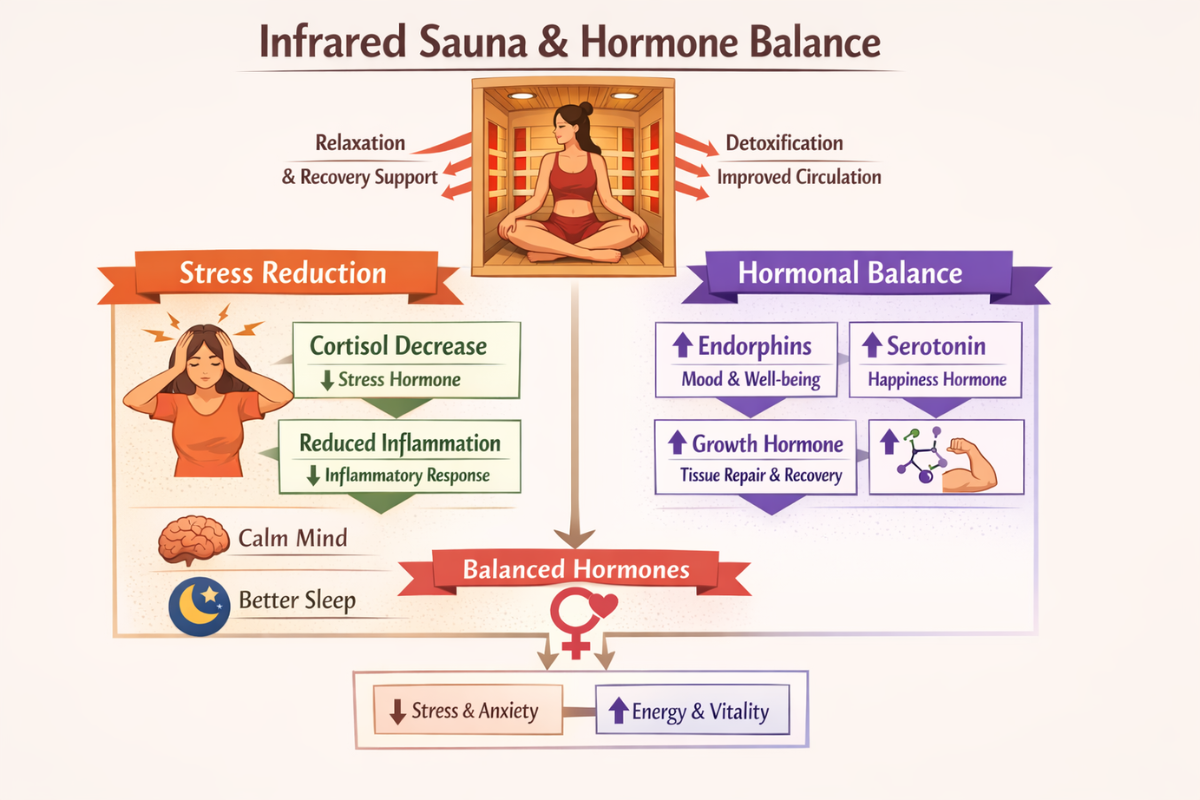
If you’re evaluating infrared sauna use as part of a broader wellness plan, our Buyer’s Guide can help you understand heat ranges, cabin styles, and comfort features that support gentler sessions.
Daily use scenarios: how thyroid-conscious users often incorporate sauna
For people managing thyroid health, the most sustainable sauna routines emphasize regulation and recovery rather than metabolic intensity. Comfort, consistency, and next-day resilience matter more than session length.
Common thyroid-friendly patterns
- Low-heat sessions: comfortable warmth rather than maximum temperature.
- Short durations: typically 10–20 minutes.
- Moderate frequency: 2–4 sessions per week with rest days.
- Earlier timing: afternoon or early evening to allow full cooldown.

Many users find it helpful to observe trends rather than single sessions — noting sleep quality, energy later that day, and next-day fatigue. This pattern-based approach aligns well with thyroid management best practices.
Who should be cautious — and when to skip sauna sessions
Infrared sauna therapy isn’t universally appropriate, and thyroid conditions can amplify sensitivity to heat. Knowing when to pause or modify sessions is a core part of using sauna responsibly.
The goal is not to avoid sauna entirely, but to recognize signals that indicate the body is under strain rather than benefiting from heat exposure.
Consider skipping or reducing sauna use if you experience:
- Uncontrolled palpitations or rapid heart rate
- Dizziness, lightheadedness, or faintness during or after sessions
- Persistent next-day fatigue that worsens over time
- Acute thyroid flares or medication changes still stabilizing
People with hyperthyroid tendencies or heat intolerance may need extra caution, as elevated baseline metabolism can compound heat stress. In these cases, shorter sessions or cooler temperatures are often more appropriate.
Cleveland Clinic’s general guidance on heat exposure reinforces the importance of avoiding dehydration and listening to cardiovascular signals. Cleveland Clinic on the health benefits of saunas
Practical tips to make infrared sauna sessions more thyroid-friendly
Small adjustments can make a meaningful difference in how sauna sessions feel — especially for people managing thyroid symptoms. These tips focus on reducing physiological stress while preserving comfort and consistency.
Supportive adjustments worth considering
- Hydration first: drink fluids before sessions, not just after.
- Electrolytes: light electrolyte support may help replace sweat losses.
- Cooling breaks: step out briefly if heart rate or heat feels overwhelming.
- Breathwork: slow nasal breathing can reinforce relaxation.
- Post-session rest: allow time to cool down before returning to activity.

These strategies align well with broader infrared sauna best practices. If you’re still evaluating sauna options or features that support gentler sessions, our Buyer’s Guide breaks down heat ranges, controls, and comfort considerations.
A simple decision framework for thyroid-conscious sauna use
If you’re weighing whether infrared sauna therapy fits into your thyroid wellness plan, this simplified framework can help clarify expectations and next steps.
Use sauna gently if:
- Your thyroid condition is stable and well-managed
- You tolerate warmth without palpitations or dizziness
- Your main goals are relaxation, circulation, or sleep support
Delay or avoid sauna if:
- You’re in an acute flare or medication adjustment period
- Heat consistently worsens anxiety or heart symptoms
- Recovery feels harder rather than easier
When in doubt, conservative dosing wins. Infrared sauna therapy works best when it supports recovery rather than competes with it.
If you have specific concerns or want help navigating sauna use alongside other wellness goals, our Contact page explains how to reach the Sauna Sage team.
Conclusion: where infrared sauna fits into thyroid-aware wellness
Infrared sauna therapy can be a supportive wellness practice for some people concerned with thyroid health — but only when expectations are grounded in physiology and safety. Heat exposure does not treat thyroid disease or replace medical care. Instead, its potential value lies in indirect effects: improved circulation, nervous system regulation, stress relief, and sleep support.
For individuals with stable thyroid conditions, gentle sauna sessions may complement an overall routine by supporting recovery and relaxation. For others — particularly those with heat intolerance, hyperthyroid symptoms, or autoimmune flares — caution, lower intensity, or avoidance may be the wiser choice.
The most consistent takeaway is this: dose matters more than intensity. Shorter sessions, lower heat, and adequate recovery often deliver more benefit than pushing physiological limits. Paying attention to patterns over time — energy, sleep, and next-day resilience — is key.
If you’re exploring infrared sauna use as part of a broader wellness strategy, take time to understand the differences between sauna types, heat ranges, and comfort features. Our Infrared Sauna Buyer’s Guide offers a comprehensive, science-backed overview to help you make informed, thyroid-conscious decisions.
Used thoughtfully, infrared sauna therapy can support recovery and calm — two foundations that matter deeply when managing thyroid-related symptoms.