Portable vs Full-Size Infrared Saunas: Which Is Right for Your Home?
Published: August 17, 2025
Last updated: December 22, 2025

Choosing between a portable infrared sauna and a full-size infrared sauna is one of the most common — and most confusing — decisions for first-time buyers. Both use infrared heat, both support wellness routines, and both can be used at home. Yet the experience, commitment, and long-term value are very different.
This guide breaks down the real-world differences between portable and full-size infrared saunas — not marketing claims. We’ll cover heat quality, space requirements, setup, comfort, cost, and who each option is actually best for.
If you’re deciding what fits your home, lifestyle, and wellness goals, this comparison will help you make a confident, informed choice without overspending or under-buying.
Looking ahead?
If you already know you want a deeper comparison across all sauna types, see our 2025 Infrared Sauna Buyer’s Guide →
What Is a Portable Infrared Sauna?

A portable infrared sauna is a lightweight, collapsible sauna designed for temporary or flexible home use. Most models resemble a seated tent or dome structure and are powered by standard household outlets.
These saunas are popular with people who want the benefits of infrared heat without committing permanent space or higher upfront costs.
Typical characteristics of portable infrared saunas
- Foldable or collapsible design
- Lower heat output compared to cabins
- Faster setup and teardown
- Usually accommodates one person
Portable saunas primarily use far-infrared heat, which penetrates tissues gently and is commonly used for relaxation, circulation support, and light detox routines. According to a clinical overview from the National Institutes of Health, far-infrared exposure is generally associated with lower ambient temperatures compared to traditional saunas.
These units are often chosen by renters, apartment dwellers, or anyone testing infrared sauna use before upgrading.
To understand how infrared heat supports wellness more broadly, see our infrared sauna benefits guide →
What Is a Full-Size Infrared Sauna?

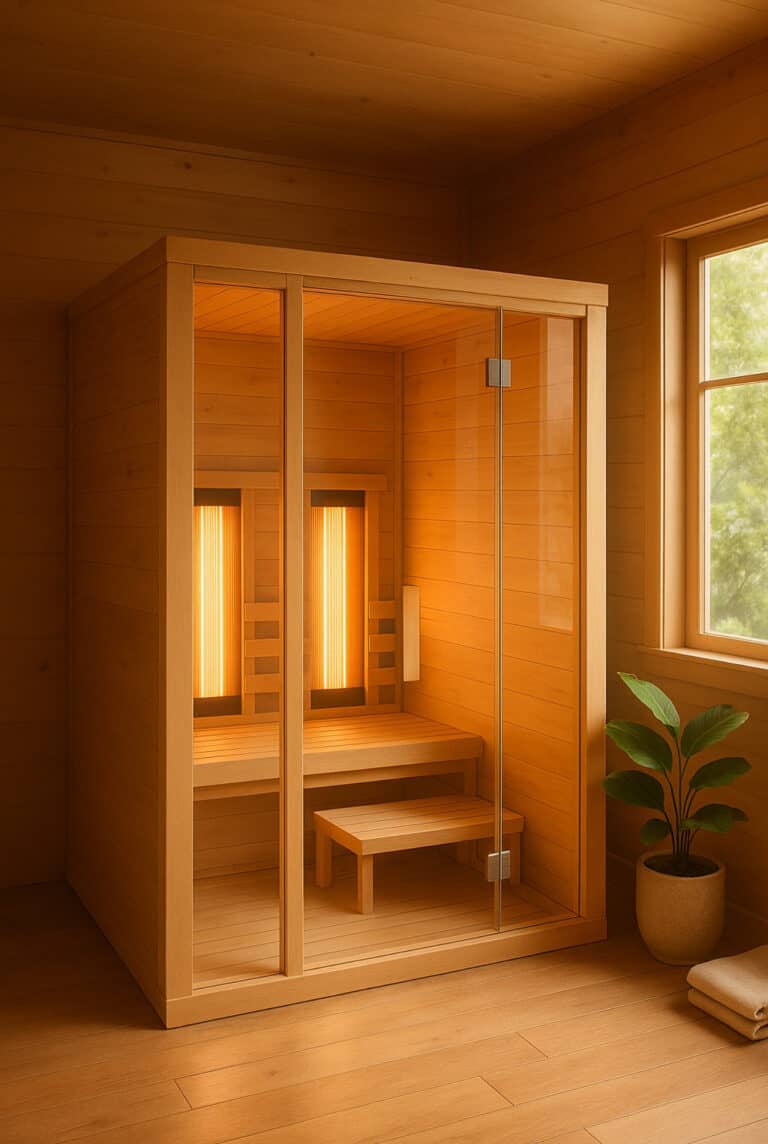
A full-size infrared sauna is a rigid, enclosed cabin designed for permanent or semi-permanent installation. These units are built with wood panels, integrated infrared heaters, and dedicated seating.
Unlike portable models, full-size saunas are designed to deliver a consistent, immersive heat environment that more closely resembles a traditional spa experience.
Common features of full-size infrared saunas
- Solid wood construction
- Higher and more stable heat output
- Multiple infrared emitter panels
- One- to multi-person capacity
Full-size infrared saunas often use a combination of near-, mid-, and far-infrared wavelengths, depending on the model. This multi-spectrum approach is frequently discussed in clinical and wellness literature for its potential effects on circulation, muscle recovery, and heat tolerance adaptation, including research indexed on PubMed.
Because of their size and power, these saunas require dedicated floor space and are best suited for homeowners or long-term wellness setups.
For a complete overview of current cabin options, explore our 2025 Infrared Sauna Buyer’s Guide →
Core Structural Differences That Actually Matter
While both options use infrared technology, the structure of the sauna plays a major role in comfort, heat consistency, and long-term satisfaction.
Portable vs full-size: structural realities
- Enclosure: Portable saunas rely on fabric insulation, while cabins use solid wood panels.
- Heat containment: Full-size units retain heat more evenly and predictably.
- Durability: Cabins are built for years of use; portable models prioritize flexibility.
Clinical guidance from institutions like the Cleveland Clinic notes that consistent heat exposure is a key factor in achieving reliable physiological responses during sauna use.
In practice, this means full-size saunas tend to feel more immersive and stable, while portable saunas excel at convenience and accessibility.
If you’re still deciding where to start, browse our infrared sauna education library →
Heat Experience and Performance: What You’ll Actually Feel

The most noticeable difference between portable and full-size infrared saunas is the quality, consistency, and distribution of heat during a session. While both rely on infrared energy rather than heated air, how that heat is delivered dramatically affects the experience.
Portable sauna heat characteristics
- Lower overall ambient temperature inside the enclosure
- Heat is often concentrated near a single panel or localized zone
- Warm-up times can vary from session to session
- Users may need to rotate or adjust posture to feel even exposure
Because portable saunas use fewer emitters and lighter insulation, heat tends to feel directional rather than enveloping. Many users report that sweating occurs, but often later in the session and with more variability day to day.
Full-size sauna heat characteristics
- More uniform heat across the body
- Multiple emitter panels targeting different body regions
- More predictable warm-up and session intensity
- Greater ability to maintain target temperature throughout the session
Full-size infrared saunas benefit from solid wood construction, which helps stabilize internal temperatures and reduce heat loss. This creates a more immersive environment that many users associate with deeper relaxation and easier session pacing.
According to a clinical overview from the Mayo Clinic, consistent heat exposure is a key variable influencing circulation response, comfort, and perceived effectiveness during sauna use.
In practical terms, this means full-size saunas tend to feel more forgiving and easier to settle into, especially for longer sessions. Portable saunas, by contrast, often work best for shorter, more intentional use where convenience matters more than immersion.
Space, Installation, and Home Compatibility
Beyond heat performance, where and how a sauna fits into your home often determines whether it gets used consistently or ends up stored away.
Portable infrared sauna space considerations
- Designed for tight or shared living spaces
- Commonly placed in bedrooms, offices, or multipurpose rooms
- Can be folded and stored when not in use
- No permanent footprint or structural commitment
Portable saunas are particularly attractive to renters, apartment dwellers, or anyone who anticipates moving. Because they plug into standard outlets and don’t require assembly beyond basic setup, they offer immediate usability with minimal planning.
Full-size infrared sauna space considerations
- Requires a dedicated, stable footprint
- Best suited for basements, home gyms, spare rooms, or garages
- Wood cabin construction creates a permanent presence in the home
- Some models may require dedicated electrical circuits
Full-size saunas reward commitment. Once installed, they naturally become part of a daily or weekly routine, especially when placed in a quiet, low-traffic area that supports relaxation.
From a practical standpoint, people who plan ahead for ventilation, flooring protection, and nearby hydration access often report higher long-term satisfaction with cabin-style saunas.
For guidance on matching sauna size to home layouts, our buyer’s guide breaks down space requirements by category →
Comfort, Posture, and Session Duration

Comfort plays a surprisingly large role in how often people actually use their sauna.
Portable sauna comfort considerations
- Usually seated-only posture
- Limited room for movement
- Shorter sessions are more common
Full-size sauna comfort advantages
- Bench seating with back support
- Room to stretch or adjust posture
- Longer, more relaxed sessions
Clinical guidance summarized by the National Institutes of Health suggests that comfort and heat tolerance influence how long individuals can safely remain in infrared environments.
In practice, people who value longer, meditative sessions often gravitate toward cabin-style saunas, while portable units work best for shorter, consistent routines.
Portable vs Full-Size Infrared Saunas: Side-by-Side Comparison
| Feature | Portable Infrared Sauna | Full-Size Infrared Sauna |
|---|---|---|
| Heat Consistency | Moderate | High |
| Space Required | Minimal | Dedicated room or area |
| Comfort | Basic seating | Bench seating, more room |
| Setup | Quick, temporary | Permanent or semi-permanent |
| Best For | Renters, beginners | Long-term home wellness |
This comparison highlights why neither option is “better” universally — the right choice depends on space, comfort expectations, and long-term use plans.
For deeper product-level comparisons within each category, explore more infrared sauna guides →
Real-World Use Scenarios and Daily Sauna Routines

Specifications matter, but real-world usability often determines whether a sauna becomes a consistent wellness tool or an occasional novelty.
How portable infrared saunas fit into daily life
- Often used for 20–30 minute sessions
- Integrated into busy schedules before work or after exercise
- Stored away between uses to reclaim living space
- Best suited for users who value flexibility over ritual
Portable sauna users frequently describe sessions as intentional and task-oriented. Because setup and teardown are involved, sessions tend to be planned rather than spontaneous. This can work well for people who prefer structured routines.
How full-size infrared saunas support long-term routines
- Encourage longer, more relaxed sessions
- Used as part of evening or recovery rituals
- More likely to be used consistently over months or years
- Often paired with breathwork, meditation, or stretching
Clinical guidance summarized by the Cleveland Clinic on infrared sauna benefits emphasizes that consistency and hydration are more important than session intensity when building a sustainable sauna routine.
In practice, people who build a dedicated wellness space tend to maintain habits more easily, while portable sauna users often cycle through periods of frequent use followed by breaks depending on schedule and motivation.
Cost, Longevity, and Long-Term Value
Upfront price is often the first comparison point, but the true cost of a sauna is better understood over years of use rather than at checkout.
Portable infrared sauna cost profile
- Lower initial purchase price
- No installation or construction expenses
- Lower replacement cost if needs change
- Materials designed for flexibility rather than decades of use
Portable saunas are frequently viewed as a low-risk entry into infrared therapy. For users who are unsure how often they will use a sauna, this lower commitment can feel reassuring. However, lighter materials and components may wear faster with frequent use.
Full-size infrared sauna value profile
- Higher upfront investment
- Built for repeated, long-term use
- Greater structural durability
- Potential to add perceived value to a home wellness space
While full-size saunas cost more initially, they are designed to withstand regular sessions over many years. For households that plan consistent use, the cost per session often decreases substantially over time.
From a long-term perspective, full-size infrared saunas tend to reward commitment, while portable saunas prioritize accessibility and flexibility. Neither approach is wrong — the better value depends on how realistically the sauna will be used.
To explore pricing tiers and long-term considerations across all categories, review our infrared sauna buyer’s guide →
Safety, Heat Tolerance, and Who Should Be Cautious

Safety considerations apply to both portable and full-size infrared saunas, especially for beginners.
General safety principles
- Start with shorter sessions
- Maintain hydration
- Exit immediately if dizziness occurs
The Mayo Clinic advises that individuals with cardiovascular conditions, pregnancy, or heat sensitivity should consult a healthcare professional before sauna use.
Portable saunas may feel more approachable for heat-sensitive users, while full-size saunas require more awareness of tolerance due to higher heat consistency.
For practical safety guidance, reach out with questions →
A Simple Decision Framework: Choosing the Right Sauna
If you’re still weighing your options, this simplified framework can help clarify the decision.
- Choose a portable infrared sauna if:
- You live in a rental or small space
- You want a lower upfront cost
- You plan shorter, flexible sessions
- Choose a full-size infrared sauna if:
- You want a permanent wellness setup
- You value comfort and immersion
- You plan frequent or long-term use
Both options can support infrared sauna wellness when used appropriately — the best choice is the one you’ll use consistently.
To explore specific models and categories, continue learning in our sauna education hub →
Portable vs Full-Size Infrared Saunas: Final Takeaway
Choosing between a portable and a full-size infrared sauna ultimately comes down to how you plan to use it, not which option looks better on paper.
Portable infrared saunas offer flexibility, lower cost, and easier integration into smaller or temporary living spaces. Full-size infrared saunas provide a more immersive heat experience, greater comfort, and better long-term durability for dedicated home wellness routines.
Neither option is inherently superior — the right choice is the one that aligns with your space, tolerance, budget, and consistency goals.
If you’re ready to explore specific models, categories, and real-world recommendations across all sauna types, the next step is to review our complete buying framework.
Next step
Compare top-rated portable, dome, and full-size cabin options in our 2025 Infrared Sauna Buyer’s Guide →