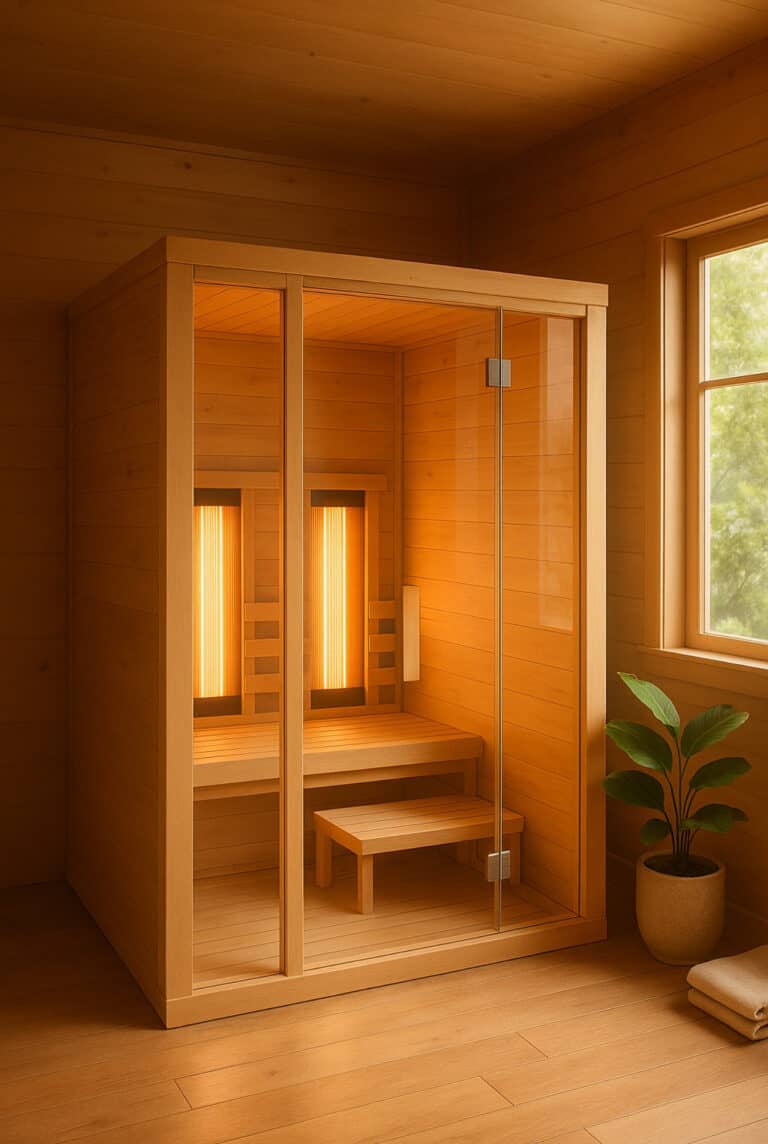
Sunray Burlington Outdoor Review
Published: December 2, 2025
Last updated: December 25, 2025

Disclosure: This review contains affiliate links. If you buy through our links, we may earn a commission at no extra cost to you.
If you’re shopping for an outdoor-capable infrared sauna, the Sunray Burlington is one of the most searched “backyard-friendly” options because it aims to combine cabin-style comfort with weather-exposed placement. In this Sunray Burlington outdoor infrared sauna review, we’ll walk through what matters most: real-world heat feel, outdoor practicality, footprint, maintenance, and who this sauna is truly best for.
Quick context: this is a Level 3 Review in the Sauna Sage hierarchy. It links up to our main guide and the outdoor roundup, so you can compare it against indoor cabins, tents, and domes without getting lost. ✅
Want the full comparison lineup first?
Start here for the big picture: Best Infrared Saunas 2025 – Buyer’s Guide →
Sunray Burlington Outdoor Review: what it is (and what it isn’t)
The Sunray Burlington is positioned as an outdoor infrared sauna cabin—a category that’s smaller than indoor-only cabins, but growing fast as homeowners try to create backyard wellness setups without needing a dedicated interior room.
What it’s trying to deliver:
- Cabin-style sitting space (more “sauna room” than “portable tent”)
- Outdoor placement flexibility for patios, decks, and covered areas
- Infrared heat experience designed for comfort and routine use
What it’s not: a “set-and-forget” backyard appliance. Any outdoor sauna—infrared included—still requires smart placement (drainage, wind protection, and a plan for moisture exposure).
For the full outdoor category context, this review links up to our roundup:
- Best Outdoor Infrared Saunas → (then come back here for the Burlington deep dive)
Also, if you’re still deciding between outdoor vs indoor or infrared vs traditional heat, our comparison explainer can help clarify expectations:
Outdoor placement reality: materials, moisture, and long-term durability
When a sauna is marketed for outdoor use, the real question isn’t “Can it go outside?”—it’s how well it handles repeated exposure cycles: humidity swings, temperature changes, rain splash, and UV. Even with an outdoor-rated design, placement strategy is the difference between “years of use” and “premature wear.”
Outdoor durability checklist (what you want in place):
- Covered location when possible (pergola, overhang, gazebo)
- Raised base or deck pad to prevent pooling and ground moisture
- Wind buffering (wind strips heat efficiency fast)
- Ventilation plan so moisture doesn’t get trapped after sessions
From a safety standpoint, any heat routine needs a conservative baseline—especially outdoors where dehydration can sneak up on you in warm months. For general heat safety guidance, see:
- Mayo Clinic guidance on safe exercise heat/hydration principles (useful context for sauna hydration routines too)
If your bigger concern is home setup logistics (room, wiring, airflow), our blog hub is the fastest way to find the right install article:
Heat feel & performance: what outdoor infrared sessions really feel like
Infrared sauna performance is often misunderstood because people expect it to behave like a traditional high-heat sauna. The Sunray Burlington delivers a deep, penetrating warmth rather than a blast of extreme ambient heat—and outdoors, that distinction matters even more.
Instead of judging sessions by temperature alone, it’s more accurate to evaluate how the heat builds, how comfortable breathing feels, and whether you can maintain sessions long enough to support sweating and circulation.
Typical heat progression during a session:
- First 5–10 minutes: gentle warmth, muscles begin relaxing
- 10–20 minutes: deeper heat penetration, noticeable increase in perspiration
- 20–30 minutes: steady-state warmth where most users experience their best sweat response
Outdoor variables change the experience—not negatively, but realistically. Cooler ambient temperatures may extend warm-up time slightly, while wind can reduce perceived heat if the cabin is exposed. This is why Burlington performs best when placed in a covered or semi-sheltered environment.
In mild or warm weather, most users report heat performance comparable to indoor cabins. In colder seasons, performance remains effective, but sessions may benefit from:
- Allowing a longer preheat period
- Blocking direct wind exposure
- Using consistent session timing rather than chasing maximum temperature

From a health perspective, research summarized by institutions like the Cleveland Clinic and NIH suggests that moderate, repeatable heat exposure—rather than extreme heat—is what supports circulation and cardiovascular adaptation for most users.
The takeaway: Burlington rewards consistency. If your goal is repeatable, comfortable sessions that you actually stick with, its heat profile aligns well with long-term use—especially outdoors.
Key specs that matter: size, seating, and electrical basics
In an outdoor-focused infrared cabin, the “specs that matter” aren’t just about the sauna itself—they’re about where it will live and how easily you can power it without turning your backyard into a construction project.
What to evaluate before you buy: ✅
- Footprint + door swing clearance (you want comfortable entry, not a tight squeeze)
- Bench comfort for your real use case (solo recovery vs two-person sessions)
- Electrical access (dedicated circuit needs vary by cabin class)
- Weather exposure (covered vs partially exposed placement)
And if you want the “big picture” view of how outdoor cabins compare to domes/tents/indoor cabins, start here:

Practical note: If you’re planning an outdoor install, prioritize protected airflow and dry-out time after sessions. That’s one of the easiest ways to keep interior wood and components healthier long-term.
Sunray Burlington outdoor review: core strengths and tradeoffs
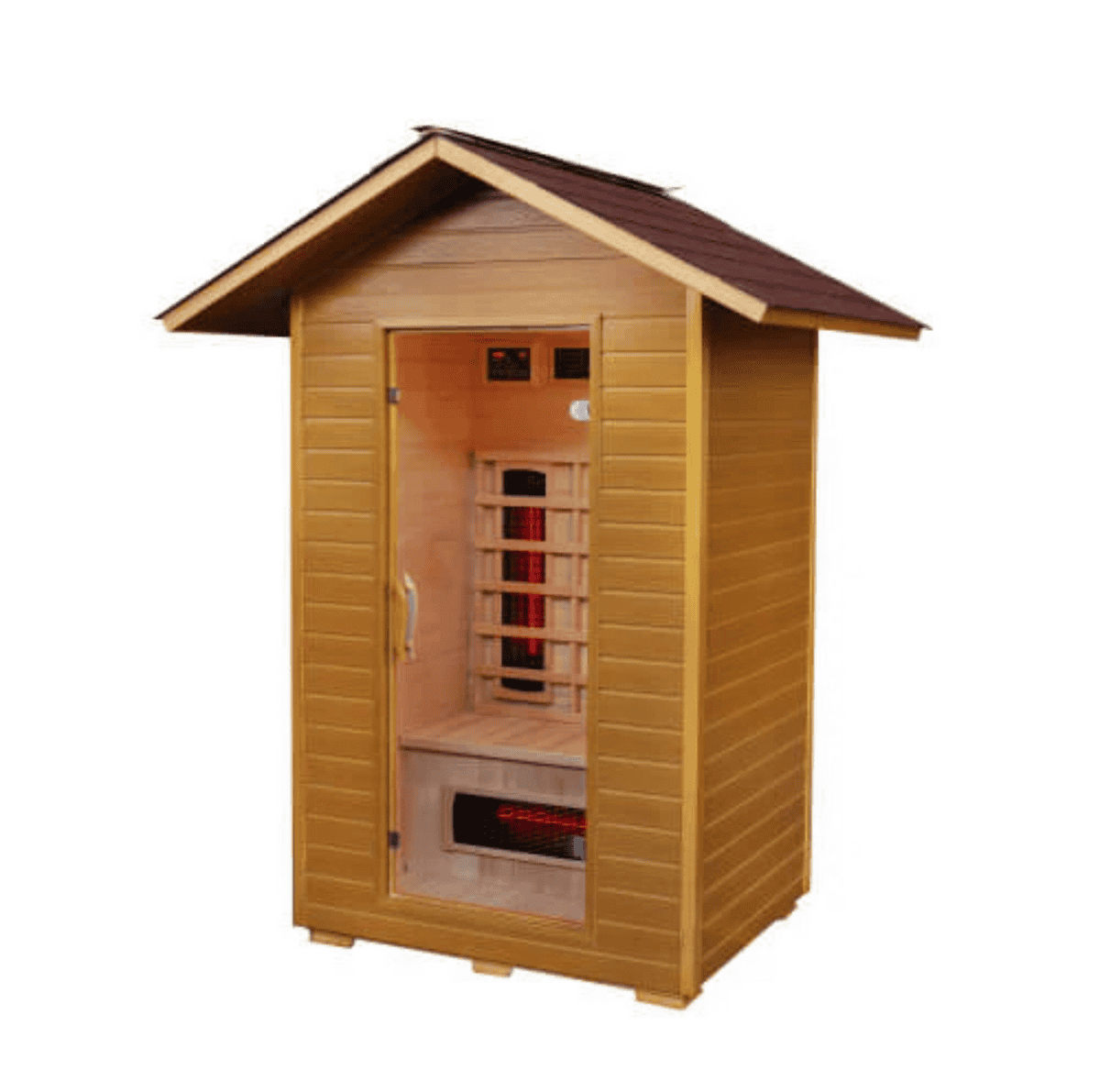
At a high level, the Burlington is compelling for people who want an outdoor-friendly cabin experience without moving up into much larger, higher-cost backyard builds.
What it tends to do well:
- Cabin-style comfort for repeated use (more relaxing than most “temporary” setups)
- Outdoor placement versatility (especially in a protected patio or covered deck environment)
- Routine-friendly heat feel that supports consistent sessions
Where you should be realistic:
- Outdoor exposure management still matters (coverage + drainage + airflow)
- Cold/windy conditions can reduce efficiency unless you buffer drafts
- Maintenance cadence is a real thing outdoors (not hard—just not optional)
Check current availability (Select Saunas)
If Burlington fits your space and outdoor setup plan: See Sunray Burlington options →
For full category context (and the alternatives you should compare before choosing), see:
Daily use & seasonal maintenance: keeping outdoor sauna life simple
The Sunray Burlington works best when it becomes part of a routine—not a special event. The more friction you remove from setup, hydration, and post-session care, the more likely you are to use it consistently.
A realistic, repeatable session rhythm:
- Preheat while preparing water or electrolytes
- Begin with moderate session length, especially during your first 2–3 weeks
- Focus on relaxation and breathing rather than pushing heat limits
- Cool down gradually and rehydrate immediately
Outdoor-specific maintenance habits matter. Moisture is the biggest long-term enemy of any outdoor cabin sauna—not heat. Fortunately, prevention is simple.
Best practices after each session:
- Crack the door for several minutes to release humidity
- Allow interior surfaces to dry before closing fully
- Wipe benches occasionally during high-use weeks

Seasonal considerations:
- Summer: Focus on hydration and airflow; shorter sessions may feel more intense
- Fall/Winter: Allow extra warm-up time; ensure moisture fully vents before closing
- Spring: Inspect seals, base, and surrounding drainage after wet months
Most long-term issues with outdoor saunas come not from design flaws, but from skipped dry-out routines. Five minutes of airflow after each session can extend the life of the cabin dramatically.
Quick comparison: Burlington vs the main alternatives you’re likely considering
This table is designed to help you decide category-first. The Burlington is an outdoor cabin, so you should compare it against (1) indoor cabins and (2) portability-first options like tents.
| Option Type | Best For | Outdoor Practicality | Routine Comfort | Maintenance Load |
|---|---|---|---|---|
| Sunray Burlington (Outdoor Cabin) | Backyard wellness setup, 1–2 people, consistent routine | High (best with covered placement) | High (cabin feel) | Moderate (outdoor cycles require a plan) |
| Indoor Cabin Sauna | Dedicated interior room, “set it and forget it” convenience | Low (not intended for outdoor exposure) | High | Low–Moderate |
| Portable Tent Sauna | Budget-first, flexibility, small spaces | Variable (often best indoors/garage; outdoor use depends on protection) | Moderate | Low–Moderate |
| Dome Sauna | Deep warmth feel, compact footprint, quick setup | Low–Variable (usually not a primary outdoor solution) | Moderate–High | Low |
How to use this: If your #1 goal is “outdoor placement with cabin comfort,” Burlington stays in the conversation. If your #1 goal is “lowest maintenance,” indoor cabins may win. If your #1 goal is “lowest price,” tents often dominate.
To compare the full lineup (all categories), go here:
And for the outdoor shortlist specifically:
Real-life use cases: how Burlington performs in everyday settings
The best test of any sauna is whether you’ll use it. Context matters — especially outdoors. Below are scenarios where the Burlington excels, and a few where expectations should be tempered.
🏆 Best fits
- Covered patio or deck placement: Protected from rain and wind, sessions feel warmer and more efficient.
- Regular wellness routine: If you plan 3–4 sessions/week, the cabin feel + space makes consistency easier.
- Shared wellness with a partner: Two-person seating is comfortable and practical.
⚠️ Less ideal situations
- Fully exposed in harsh weather: Not a deal-breaker, but requiring more buffering and weatherproofing.
- Small decks with no cover: Heat efficiency drops in wind or cold — you’ll need thoughtful placement.
- Minimal electrical access: If dedicated circuits are hard to add, you may end up with limited session times.
Overall, Burlington users tend to report the best experience when they treat the sauna like an outdoor room — not a standalone gadget. That may sound obvious, but it changes how comfortable a routine feels over months and seasons.
Who the Sunray Burlington is built for — and who should look elsewhere
This sauna shines when expectations align with reality. Below are the most common buyer profiles Burlington fits well.
✔ Ideal buyer profiles
- The Backyard Wellness Builder: Wants a dedicated outdoor space that feels intentional, not temporary
- The Consistency-Seeker: Plans 3–5 sessions per week and values comfort over extremes
- The Shared-Use Household: Two-person seating makes regular partner sessions practical
✘ Who should consider alternatives
- The Budget-First Shopper: Portable tents usually win on price
- The Zero-Maintenance Buyer: Outdoor placement always involves some upkeep
- The Fully Exposed Install: If shelter is impossible, durability tradeoffs increase
If you’re still undecided between cabin, dome, or portable options, it’s worth stepping back and comparing categories first:
Accessories & enhancements that make outdoor sauna life easier
Outdoor cabins like the Burlington benefit most from a few thoughtful additions that reduce friction and enhance consistency.
- Outdoor rug or deck mat: Keeps moisture off wood decking and creates a comfy entry zone.
- Weather-resistant cover: A fitted cover when the sauna isn’t in use can slow UV wear.
- Folding bench towels: Outdoor breezes evaporate sweat quickly — cushy towels up the comfort factor.
- Hydration station nearby: A compact cooler or water station makes rehydration effortless after walks inside.
- Outdoor lighting: Warm LED or string lights around the sauna area extend usability year-round.
If you want deeper guidance on what to pair with your sauna, see:
Quick reality check: what to choose based on your priorities
- If outdoor comfort > price: Burlington is a strong choice.
- If portability > long-term use: Consider a tent or dome instead.
- If you need maximum weather protection: Look for covered placement or additional shelter before buying.
- If electrical simplicity matters most: Indoor cabins may be easier to install.
For a broader look at how the Burlington stacks up among all infrared saunas — indoor and outdoor — see:
Final verdict: is the Sunray Burlington worth it?
The Sunray Burlington outdoor infrared sauna isn’t about shortcuts. It’s about creating a sustainable wellness habit in an outdoor setting—something many saunas promise, but fewer actually support long-term.
If you can provide reasonable weather protection and follow basic moisture management habits, Burlington offers a comfortable, repeatable experience that encourages consistency. That consistency—more than extreme heat or flashy specs—is what tends to matter most for real-world benefits.
Choose Burlington if:
- You want an outdoor infrared sauna that feels like a real room
- You value routine comfort and shared use
- You plan to integrate sauna sessions into your weekly lifestyle
Look elsewhere if:
- You want the lowest price or highest portability
- Your install will be fully exposed year-round
- You’re still exploring sauna categories
Compare before committing
See how Burlington stacks up against every major infrared sauna category: Best Infrared Saunas 2025 – Buyer’s Guide →