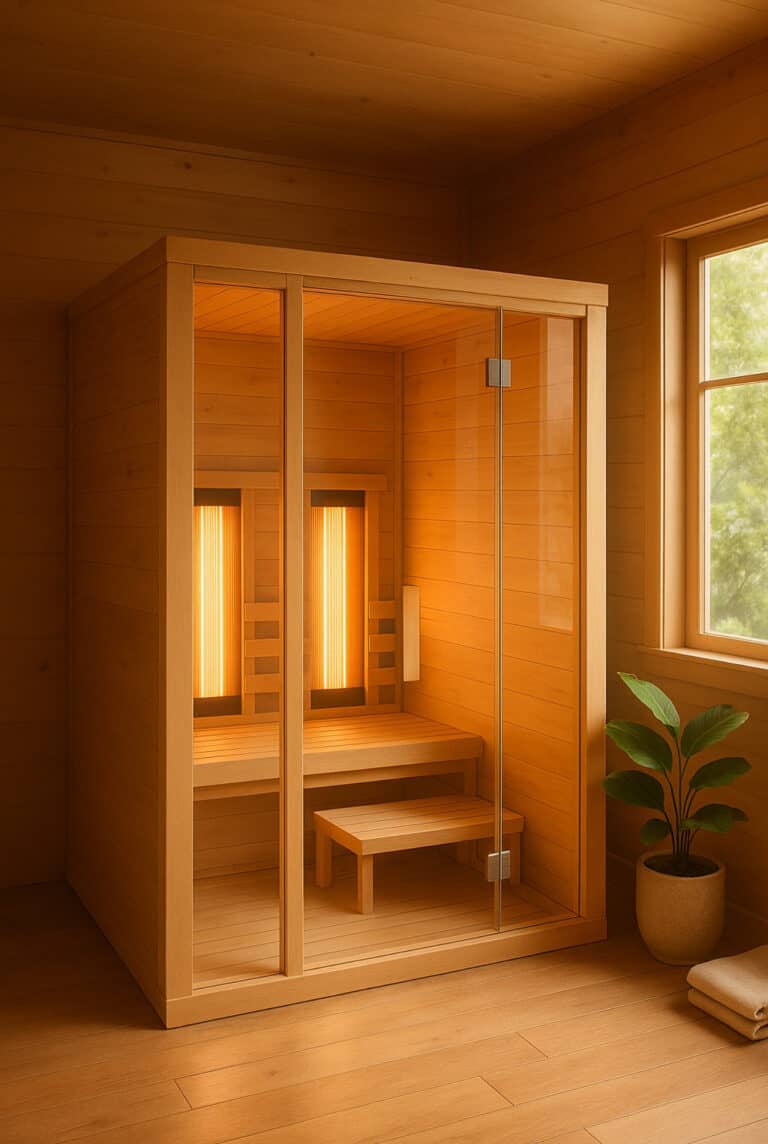
Best Outdoor Infrared Saunas
Published: November 26, 2025
Last updated: December 27, 2025

Outdoor infrared saunas are a niche category — and that’s exactly why buyers get tripped up. Some models are truly outdoor-rated (built to handle humidity swings and exterior exposure), while many “outdoor setups” are really covered patio installations where the sauna stays protected from rain, snow, and direct wind.
In this roundup of the best outdoor infrared saunas, we’ll focus on what actually matters for real-world outdoor use ✅: enclosure durability, moisture protection, heating consistency in cold weather, electrical realities, and the difference between outdoor-rated vs patio-safe under cover.
Start here if you’re still choosing a sauna type
Outdoor installs can change what “best” means (space, power, EMF preferences, climate). See the full 2025 Buyer’s Guide →
Quick heads-up on how this post is structured 👇
- Top outdoor picks (including a true outdoor model + smart covered-patio alternatives)
- Comparison table to simplify decisions
- Climate + placement guidance (cold winters, humidity, wind)
- Buying checklist so you don’t overpay for the wrong “outdoor” claim
And if you’re specifically looking for a model built for outdoor exposure, we’ll also link you to our dedicated review once you’re ready to go deeper: Read the Sunray Burlington Outdoor Review →
What “outdoor infrared sauna” really means (and why it’s confusing) 🌦️
Here’s the truth: most “outdoor infrared sauna” searches are really asking one of two different questions:
- True outdoor-rated sauna: Designed to live outside long-term, with exterior protection that tolerates moisture swings and changing temps.
- Covered patio / screened porch install: The sauna sits outdoors physically, but it’s protected from direct rain/snow and harsh wind.
Those two scenarios require very different buying standards ✅.
Why true outdoor infrared is harder than outdoor traditional sauna
Infrared saunas depend on emitters, electronics, and stable cabin conditions. Outdoor environments introduce variables that can reduce performance and increase wear:
- Moisture + humidity swings can stress internal wiring and controller components.
- Cold temps can change how the sauna “feels” (you may need longer sessions to reach the same sweat response).
- Wind exposure can strip away warm air, making the cabin feel drafty and less consistent.
- Sun exposure can degrade finishes and accelerate exterior cracking over time.
That’s why most smart buyers either:
- choose a true outdoor model designed for exterior exposure, or
- use a covered patio strategy (roof + side protection) with a high-quality indoor cabin model.
Outdoor sauna safety note (non-negotiable)
Because outdoor installs introduce electrical and weather variables, treat this as a “safety first” purchase. If you have any cardiac issues, blood pressure instability, pregnancy, or heat intolerance, start with our safety guidance:
Infrared Sauna Benefits (science-backed overview) → | Contact Sauna Sage with a setup question →
Now let’s get into the picks — and we’ll separate true outdoor from covered patio alternatives so you don’t buy the wrong type for your climate. ✅
Best outdoor infrared saunas: top picks (2025) 🏡
Below are our top recommendations for outdoor use. The first pick is the cleanest “true outdoor” option in the current lineup. The remaining picks are excellent covered-patio alternatives if you’re installing under a roofline, screened porch, gazebo, or enclosed patio.
🏆 Best true outdoor option: Sunray Burlington 2-Person Outdoor Infrared Sauna
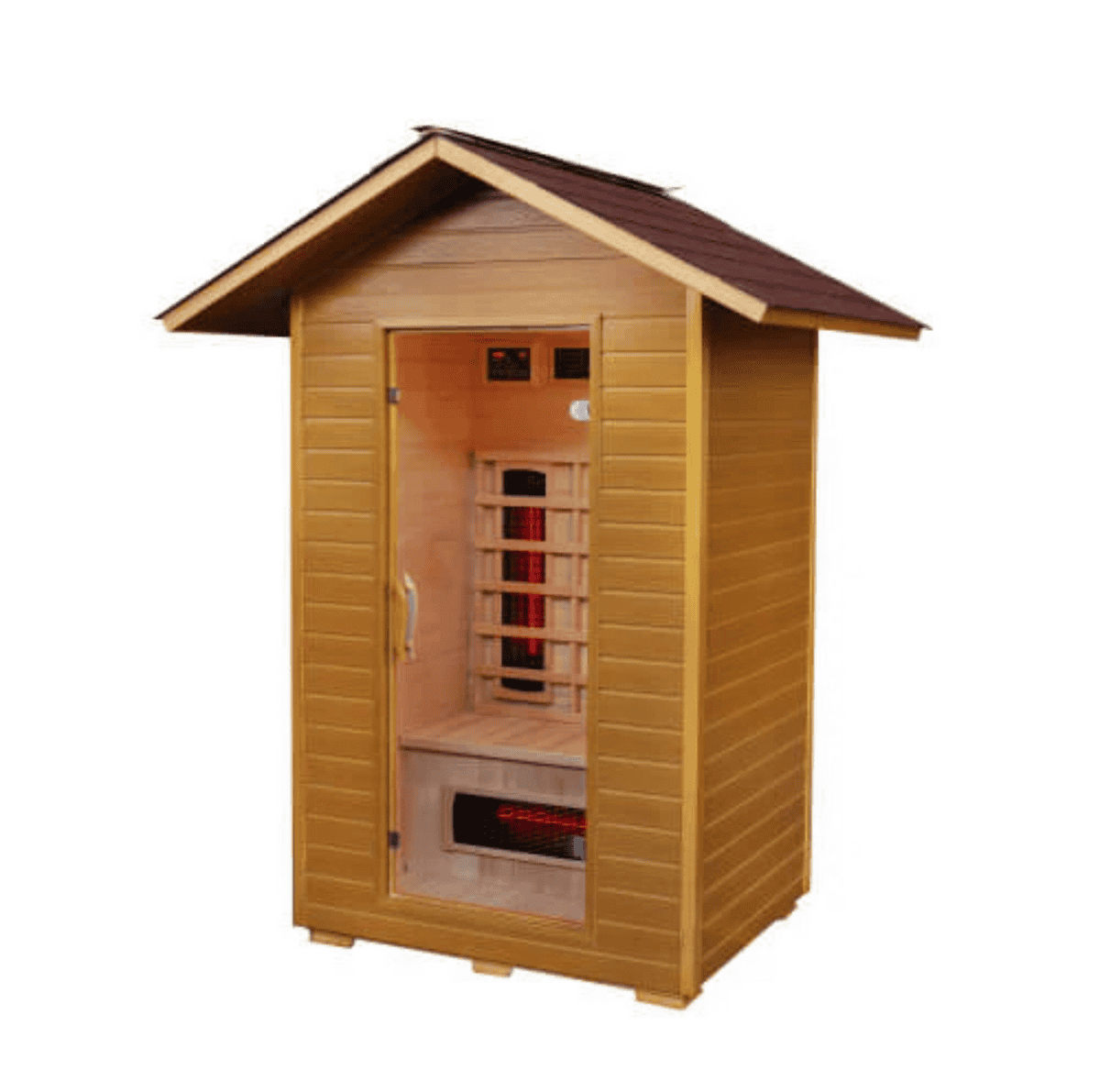
- Best for: buyers who want a sauna intended for outdoor placement (backyard/patio) rather than “outdoor under cover.”
- Why it’s here: It’s one of the clearest outdoor-specific infrared models in our set — a practical choice when outdoor exposure is part of the plan.
- Real-world note: For cold climates, performance is strongest when your placement reduces wind and direct precipitation (covered patio wins).
Check current pricing (outdoor model)
Use the Select Saunas partner link to view the Sunray Burlington availability. Shop Sunray Burlington →
Read full review → Sunray Burlington Outdoor Review
🌤️ Best covered-patio alternative (2-person): Dynamic Barcelona 1–2 Person Low EMF Far Infrared Sauna
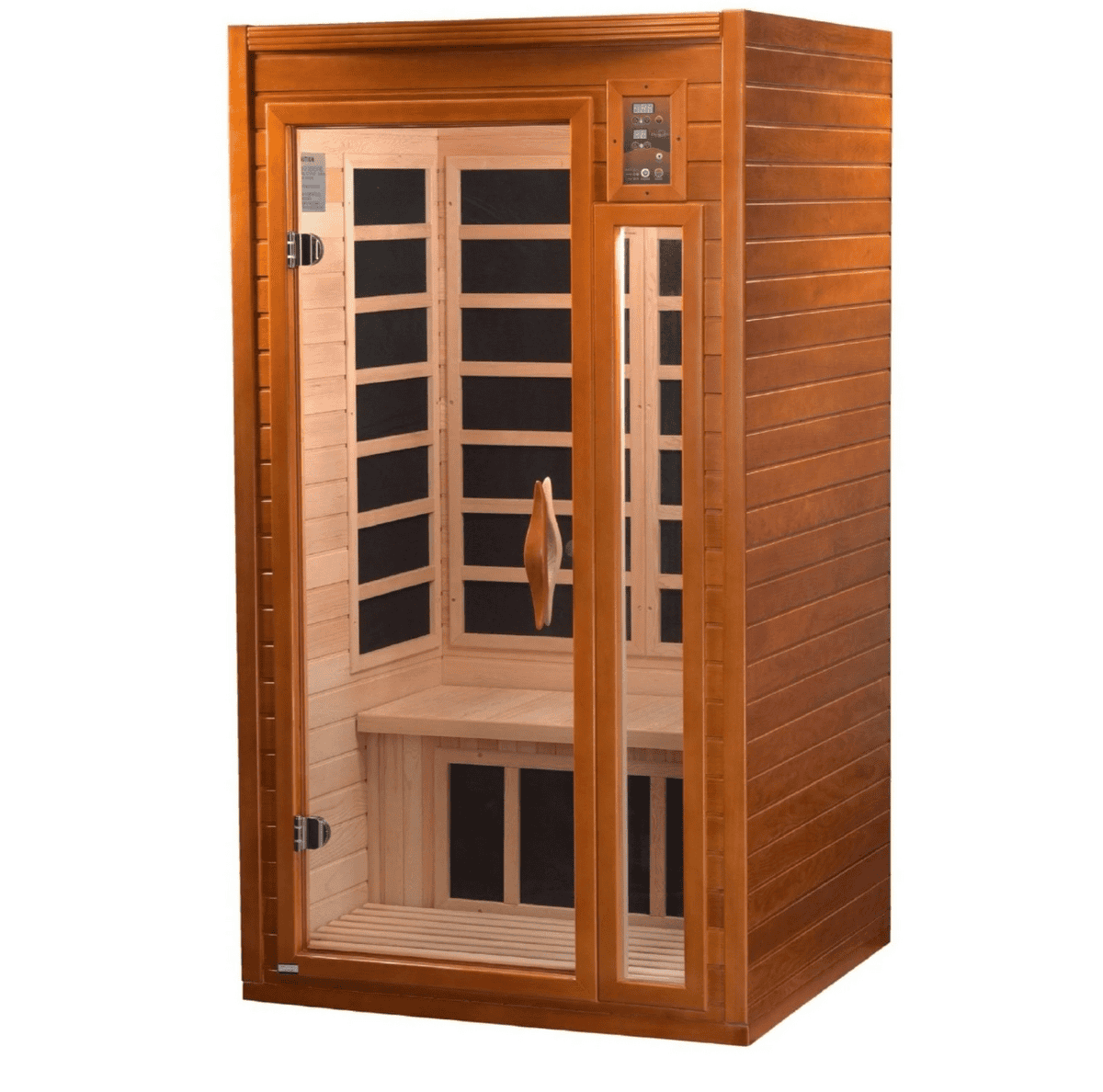
- Best for: budget-aware buyers using a roofed patio, screened porch, or protected outdoor room.
- Why it works outdoors (under cover): Solid cabin format with a simple footprint — easier to place and protect.
- Placement tip: Keep it out of direct rain/snow. Add side wind protection for better heat feel.
Read full review → Dynamic Barcelona 2-Person Review
🧊 Best cold-climate covered-patio alternative (1-person): Finnmark FD-1 Full Spectrum 1-Person Infrared Sauna
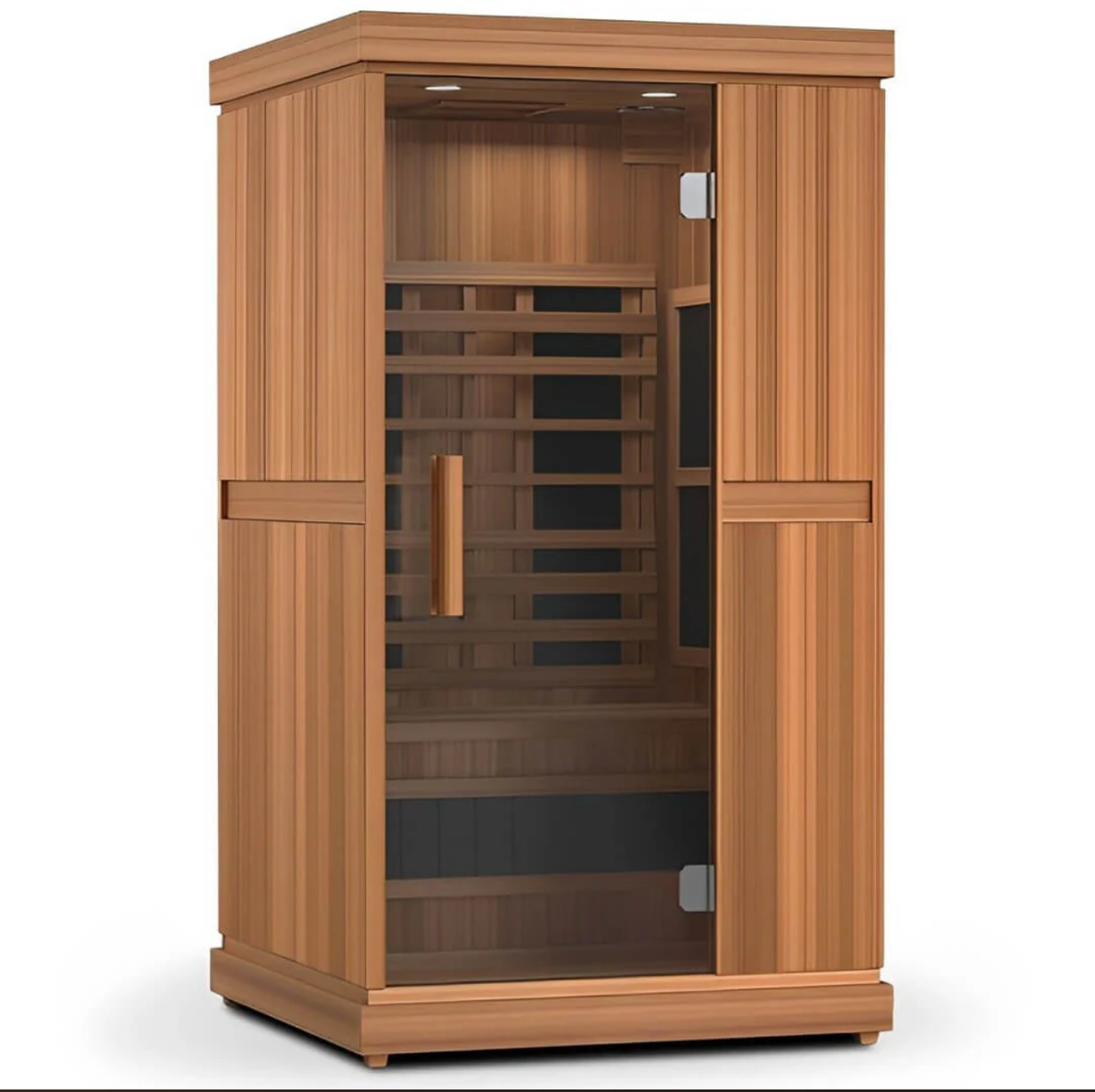
- Best for: solo users who want higher-end performance in a smaller footprint.
- Why it’s strong for protected outdoor installs: Smaller cabins are easier to keep warm and less exposed to drafts when placed strategically.
- Best practice: Pair with a wind-blocking corner placement or enclosed porch.
Read full review → Finnmark FD1 Full-Spectrum Review
Next, we’ll look at how to compare these options (and what “outdoor-ready” features actually matter), then we’ll build the decision framework and table. ✅
Outdoor-ready features that actually matter ✅
If you’re placing an infrared sauna outdoors (even under a roof), you’re basically managing three enemies: moisture, temperature swings, and wind exposure. Here’s what to prioritize.
1) Exterior durability + finish protection
- Look for: solid exterior build, tight seams, and a finish that won’t degrade fast under sun or humidity.
- Real-world rule: the more direct sun and weather exposure, the more you should treat this as an “outdoor-rated” purchase — not a standard indoor cabin.
2) Door seal + heat containment
Outdoors, heat loss is accelerated by drafts. A better door seal and tighter cabin fit usually means:
- more consistent “heat feel,”
- shorter time to reach comfort,
- less frustration in winter sessions.
3) Electrical reality (don’t skip this)
Outdoor installs often involve longer cable runs, GFCI considerations, and weather exposure. Before you buy, confirm:
- where the outlet will be,
- whether you need a dedicated circuit,
- how you’ll protect cords from water and foot traffic.
4) Cold-weather expectations (infrared isn’t “steam heat”)
Infrared warms you primarily by radiant energy — not by superheating the air like a traditional sauna. Outdoors, that means:
- you may need longer sessions to reach the same sweat response in cold temps,
- wind protection matters more than people expect,
- covered installs often perform far better than fully exposed placements.
5) Safety + session discipline
Outdoor installs can make sessions feel deceptively comfortable (cool air around you, warm inside). Don’t use that to push too long. If you’re building your routine, start with:
- shorter sessions,
- hydration + electrolytes,
- clear “stop signs” (dizziness, nausea, pounding heart).
Next up: we’ll add another pick for bigger households, then build the comparison table in Block 8 to make the choice simple. 📊
Best large-capacity covered-patio option (family use) 👨👩👧👦
If you’re planning to place an infrared sauna outdoors under cover and want room for multiple users, capacity and heat retention become the deciding factors — not just “outdoor” labeling.
🏡 Best for space + group sessions: Golden Designs Catalonia 8-Person Infrared Sauna
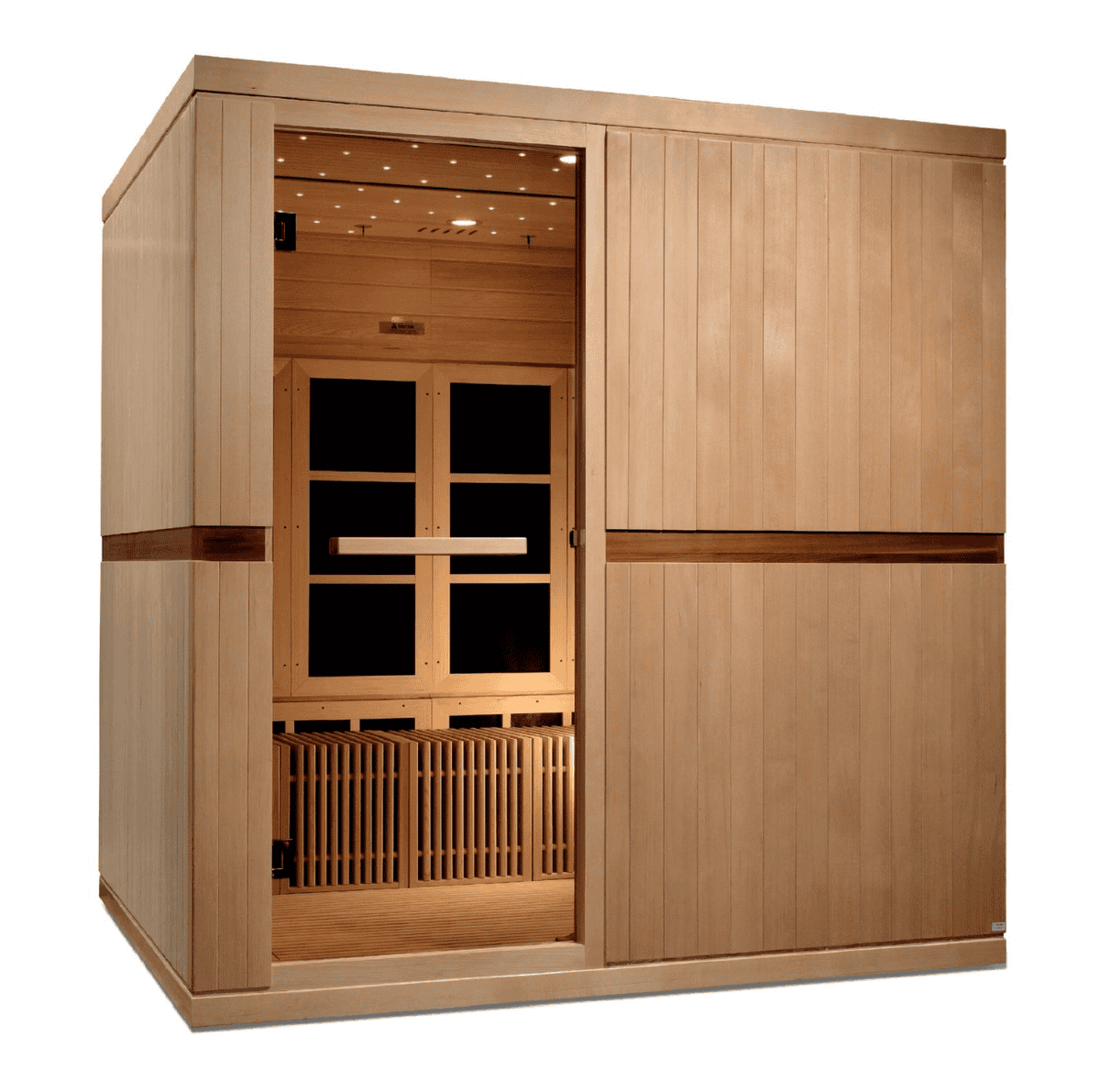
- Best for: families or shared wellness spaces using a roofed patio, sunroom, or enclosed outdoor structure.
- Why it works outdoors (with protection): larger cabins retain radiant heat better when shielded from wind.
- Important placement note: this is not a “leave it in the rain” sauna — overhead cover and side protection are essential.
Read full review → Golden Designs Catalonia 8-Person
This option is especially popular for people who want an outdoor wellness zone without committing to a fully exposed backyard install.
Climate & placement strategy for outdoor infrared saunas 🌡️
Your climate affects outdoor infrared performance more than brand marketing ever will. Matching placement to environment is what separates a great experience from a disappointing one.
Cold climates (Midwest, Northeast, Mountain states)
- Covered patios outperform exposed installs by a wide margin.
- Wind is a bigger enemy than low temperature.
- Smaller cabins heat more efficiently in winter.
- Snow accumulation around the base should be avoided.
Hot & humid climates (South, Southeast, coastal regions)
- Humidity increases perceived heat — start conservatively.
- Ventilation and airflow matter more than max temperature.
- Shade prevents exterior finish degradation.
Coastal & high-humidity environments
- Salt air can accelerate exterior wear.
- Covered placement significantly extends lifespan.
- Regular inspections of hardware are recommended.
Universal placement best practices
- Use a wall-backed or corner placement to block wind.
- Avoid direct afternoon sun on exterior panels.
- Ensure proper drainage under the sauna base.
- Keep electrical connections elevated and dry.
Next, let’s talk about longevity — and what outdoor placement really changes over time.
Maintenance, longevity & real-world expectations 🔧
Outdoor placement doesn’t mean high maintenance — but it does mean different maintenance. Understanding that difference protects your investment.
What changes when your sauna lives outdoors
- Exterior finishes: may require sealing or inspection sooner.
- Hardware exposure: hinges and handles benefit from periodic checks.
- Electrical vigilance: moisture protection becomes non-negotiable.
What typically stays the same
- Emitter lifespan (with proper protection)
- Cleaning routines inside the cabin
- Health benefits and session protocols
Seasonal maintenance checklist
- Fall: inspect seals, confirm drainage, check outlet protection.
- Winter: clear snow buildup, monitor drafts, shorten sessions initially.
- Spring: inspect for moisture wear, tighten hardware if needed.
The simplest longevity rule: covered placement almost always extends lifespan — even for models marketed as outdoor-capable.
Outdoor infrared sauna comparison (quick view) 📊
| Model | Best Use | Capacity | Outdoor Rating | Ideal Placement |
|---|---|---|---|---|
| Sunray Burlington | True outdoor install | 2-person | Outdoor-specific | Backyard / covered patio |
| Dynamic Barcelona | Budget patio option | 1–2 person | Indoor (protected) | Covered patio / porch |
| Finnmark FD-1 | Solo cold-climate use | 1-person | Indoor (protected) | Enclosed patio / wind-blocked area |
| Golden Designs Catalonia | Family / group sessions | Up to 8 | Indoor (protected) | Large covered patio / sunroom |
This table is meant to narrow your choices quickly. In the next blocks, we’ll turn this into a simple decision framework so you can confidently choose without overthinking it.
Real-world outdoor use scenarios (what actually works) 🌤️

Most buyers don’t fail because of the sauna — they struggle because the placement strategy doesn’t match how infrared heat actually behaves outdoors.
Scenario 1: Covered patio (most common & most successful)
- Roof overhead + at least one solid side wall
- Best balance of heat retention and longevity
- Ideal for Barcelona, Finnmark, and Catalonia cabins
Scenario 2: Enclosed porch or sunroom
- Excellent wind protection
- Feels closest to indoor performance
- Great for colder climates
Scenario 3: Fully exposed backyard placement
- Only recommended for outdoor-specific models
- Performance depends heavily on wind and temperature
- Best when paired with partial fencing or barriers
If you’re unsure which scenario you fall into, revisit the fundamentals:
How to choose the right outdoor infrared sauna 🧭
Instead of chasing labels like “weatherproof,” use these decision anchors to narrow your choice quickly.
- If your sauna will be fully exposed: choose a model designed for outdoor use, prioritize structure and drainage.
- If you have a roof or enclosure: a high-quality indoor cabin often performs better than a marginal outdoor model.
- If winter use matters: smaller cabins + wind protection win.
- If family use matters: prioritize interior volume and bench layout.
Cold weather performance: what infrared heat really feels like outdoors ❄️
Outdoor infrared sauna performance is often misunderstood because people expect it to behave like a traditional steam or wood-fired sauna. Infrared heat works differently — and cold air changes how that difference feels.
Radiant heat vs air heat (the key distinction)
Infrared saunas heat your body directly through radiant energy, not by superheating the surrounding air. Outdoors, this creates a few important realities:
- The cabin air may feel cooler than an indoor sauna — even while your body is heating effectively.
- Sweat response depends more on emitter quality and session length than air temperature.
- Wind exposure can dramatically reduce perceived warmth if the cabin isn’t shielded.
Why smaller cabins outperform larger ones in winter
In cold climates, smaller cabins almost always feel hotter outdoors. That’s because:
- There’s less air volume to stabilize.
- Your body stays closer to the emitters.
- Drafts have less impact on overall comfort.
This is why one-person or compact two-person cabins often outperform large family models when placed on patios or porches during winter.
Session length expectations by outdoor temperature
Use these as rough, conservative guidelines — not prescriptions:
- 50–65°F ambient: Performance similar to indoor use for most cabins.
- 30–50°F: Expect longer warm-up and slightly longer sessions.
- Below freezing: Covered placement + wind blocking becomes essential for comfort.
The takeaway: outdoor infrared sessions still work — but they reward patience, protection, and realistic expectations.
Accessories & setup tips for outdoor installs 🔌

- Weather-rated extension covers: protect outdoor outlets.
- Rubber mats or pavers: improve drainage and airflow underneath.
- Electrolytes: outdoor heat + cool air can mask dehydration.
- Wind screens: a simple barrier can dramatically improve heat feel.
A simple decision framework (use this) ✅
- Want true outdoor placement? → Sunray Burlington
- Covered patio + tight budget? → Dynamic Barcelona
- Cold climate, solo use? → Finnmark FD-1
- Family or group sessions? → Golden Designs Catalonia
If you’re still torn, step back and compare categories rather than models:
Final thoughts: choosing the best outdoor infrared sauna 🌿
The biggest mistake buyers make with outdoor infrared saunas isn’t choosing the wrong brand — it’s choosing the wrong placement strategy.
If your sauna will be fully exposed to the elements, your safest path is a model that’s specifically designed for outdoor use. If you have a roof, enclosure, or wind protection, you’ll often get better heat performance, lower cost, and longer lifespan from a high-quality indoor cabin placed outdoors under cover.
Use this roundup as a starting filter, not a final verdict. Once you’ve narrowed your category, the smartest next step is to compare all sauna types side by side and confirm power, space, and safety requirements.
Next step: compare before you buy
See how outdoor, patio, dome, and indoor cabins compare across heat feel, space, EMF, and budget. View the 2025 Infrared Sauna Buyer’s Guide →
If you still have questions about placement, climate, or safety, you can always reach us here: