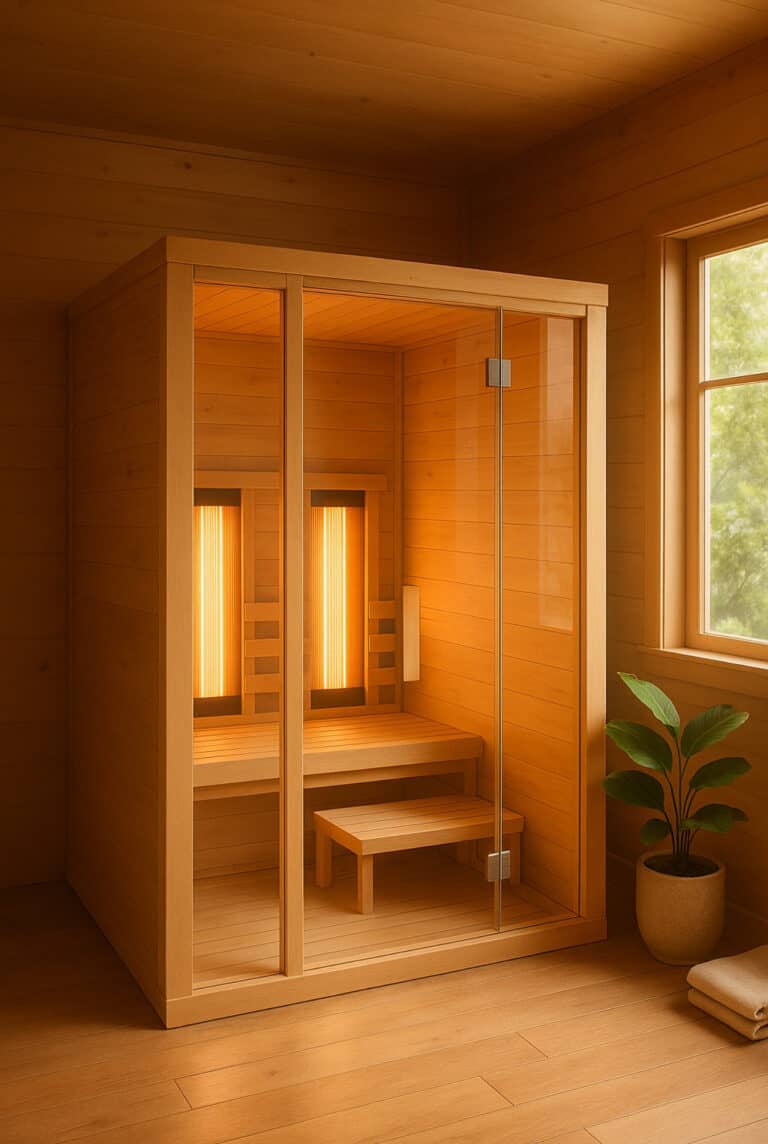
Maxxus 3-Person Near-Zero EMF Infrared Sauna Review (2025)
Published: December 1, 2025
Last updated: December 25, 2025

If you’re looking for a family-size cabin with a strong “low-EMF” positioning, this Maxxus 3-Person Near-Zero EMF infrared sauna review is designed to help you decide—without marketing fog. We’ll cover the real decision points: how it feels to use, what setup is like, how “near-zero EMF” claims should be interpreted, and who this cabin fits best in 2025.
Quick context: “near-zero EMF” is a popular shopping filter, but it’s not a universal standard. Different brands measure differently, and placement inside the cabin can matter. This review walks you through what to look for so you can make a confident, safety-first purchase decision.
Want the full comparison set?
If you’re still deciding between cabin sizes and brands, start with our complete lineup first: Best Infrared Saunas 2025 – Buyer’s Guide →
Maxxus 3-Person Near-Zero EMF: quick product snapshot
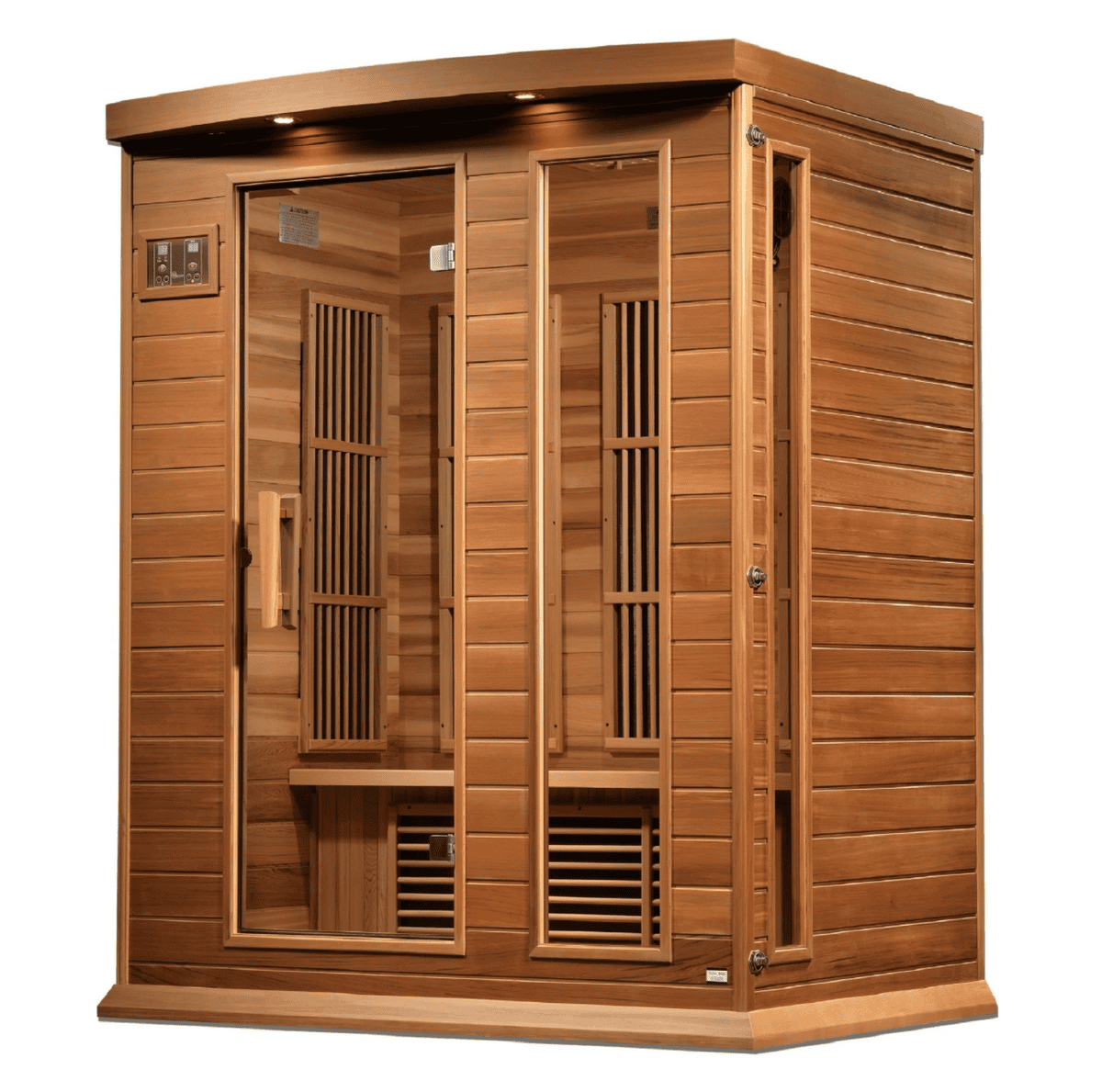
The Maxxus 3-person near-zero EMF cabin is built for people who want a roomy indoor infrared sauna with an emphasis on low-EMF design goals, comfortable bench seating, and a “set it and sweat” routine that’s easy to repeat week after week.
What most buyers are actually optimizing for
- Space + comfort: enough room to sit comfortably (and sometimes stretch) without feeling boxed in.
- Lower-EMF confidence: a design that aims to reduce exposure compared with typical cabin layouts.
- Reliable heat feel: steady warmth that supports consistent sessions and predictable recovery routines.
- Long-term ownership: materials, upkeep, and parts support that won’t become a headache.
This review follows the Sauna Sage hierarchy: it links up to the Buyer’s Guide and up to the relevant roundup, Best Indoor Infrared Sauna Cabins, so you can compare alternatives without bouncing around randomly.
Check current pricing (Select Saunas)
See today’s availability and any bundle options via our partner link: Check current pricing →
Who the Maxxus 3-person near-zero EMF cabin is best for
Most people considering this model are trying to solve a specific problem: “I want a real cabin experience at home, but I don’t want to ignore EMF considerations—and I don’t want a tiny 1-person box.” If that’s you, this Maxxus 3-person cabin is a strong contender.
Best for
- Households sharing sessions: couples or families who want flexible seating and less crowding.
- Routine-based users: people who thrive on 3–5 sessions/week with consistent heat and timing.
- EMF-sensitive buyers: shoppers who want a “low EMF” oriented design and plan to verify placement and measurements.
- Recovery + stress management: users building a calm evening routine (heat + hydration + wind-down).
Consider skipping if
- You need true portability: a cabin is a semi-permanent home install; a tent or dome fits better for storage.
- You have tight square footage: a 3-person cabin needs real clearance and a stable spot in your home.
- You want the smallest electrical footprint possible: cabins generally demand more planning than compact options.
If you’re still deciding whether a cabin is even the right “sauna type,” start with the educational foundation in our Infrared Sauna Benefits guide, then return here for the product decision.
Heat feel, comfort, and what a typical session is like

Cabin-style infrared saunas tend to feel different from domes and tents. Instead of an “enclosed wrap” sensation, you get a more open, seated environment where the experience depends on heater placement, airflow, and how you position your body during the session.
What most owners report as the “best” way to use a 3-person cabin
- Start conservative: shorter sessions at first, then build up as your body adapts.
- Rotate posture: small shifts can change how evenly the heat feels across your back/legs.
- Hydrate intentionally: dehydration sneaks up faster than most people expect.
- Finish with a cooldown: a slow, calm exit supports comfort and reduces the “head rush” effect.
For general sauna safety and hydration considerations, clinical guidance emphasizes staying alert to symptoms like dizziness, nausea, or feeling “off,” and ending the session early if needed. (See general heat safety guidance from major medical institutions like Mayo Clinic and Cleveland Clinic when building your routine.)
Next, we’ll get specific: the “near-zero EMF” angle—what it typically means, how to think about it, and what you can do to make the setup more confidence-inspiring.
“Near-zero EMF” explained: what to look for (and what to verify)

In a Maxxus 3-person near-zero EMF infrared sauna review, the most important thing to understand is this: “near-zero EMF” is a design goal and marketing term, not a universal medical standard. Different brands may test at different distances, in different locations inside the cabin, and under different operating conditions.
How to evaluate low-EMF claims the smart way
- Ask “where was it measured?” EMF levels can vary depending on where you sit and how close you are to components.
- Ask “at what distance?” A measurement taken inches away can look very different than one taken at typical seated distance.
- Ask “under what conditions?” Heating systems can behave differently at warm-up vs steady-state operation.
- Plan your own verification: If EMF is a top concern, consider measuring with a meter once installed, focusing on seated positions.
Separately, it’s worth remembering that the main physiological “stress” of sauna use is heat stress. If you’re building safe sessions (especially if you’re new), follow conservative heat-safety guidance like the heat-stress resources from the National Institute for Occupational Safety and Health (NIOSH/NIH): NIOSH heat stress guidance for safe exposure and warning signs.
Bottom line: the Maxxus low-EMF positioning can be a meaningful differentiator, but your real confidence comes from: smart placement + realistic expectations + verification where you actually sit.
Performance: heat delivery, consistency, and what “good sessions” look like

With cabin infrared saunas, performance is less about “how hot can it get” and more about how consistently you can repeat sessions. A good cabin supports predictable routines: you preheat, you sit comfortably, you get a steady heat feel, and you can build a schedule that sticks.
What to pay attention to during the first 2 weeks
- Warm-up rhythm: does the cabin feel stable once it reaches your target setting?
- Evenness of heat: do you feel one-sided heat that requires frequent repositioning?
- Comfort factors: bench comfort, posture options, and whether you feel cramped or relaxed.
- After-session response: are you calm and recovered, or drained and dehydrated?
Infrared sauna research is still evolving, but the “why” most people pursue it is consistent: relaxation, recovery support, and cardiovascular-style heat conditioning. If you want to browse peer-reviewed clinical research on infrared saunas, PubMed is the safest place to start: PubMed search results for infrared sauna therapy studies.
For the bigger picture comparison between cabin models (including other Select Saunas options), use the roundup page that sits above this review in the hierarchy: Best Indoor Infrared Sauna Cabins →
Setup and footprint: what installation really requires in a home

A 3-person cabin is a commitment—mostly because of space planning and electrical readiness. Before you get excited about features, make sure the “boring basics” are solid: you can place it safely, you can ventilate the room reasonably, and you can support repeat use without turning setup into friction.
Home checklist (practical, not theoretical)
- Placement: choose a stable, dry location with enough clearance to enter/exit comfortably.
- Routine convenience: place it where sessions are easy to do (the best sauna is the one you’ll use).
- Ventilation: you don’t need industrial airflow, but you do want a comfortable room environment.
- Electrical planning: confirm outlet requirements and avoid “temporary” extension-cord solutions.
- Safety basics: keep water nearby, start with shorter sessions, and listen to your body.
If you want the deeper “home install” education, we keep those foundational guides in the blog hub: Infrared Sauna Blog Index →
For general sauna safety and who should be cautious, Cleveland Clinic’s patient-facing guidance is a good baseline reference: Cleveland Clinic overview of sauna benefits and safety considerations.
Check availability + current pricing
If you’re ready to confirm options, see the latest listing details here: Check current pricing →
Maxxus 3-person near-zero EMF: comparison table (what matters most)

Here’s a clean decision table focused on the factors that usually determine buyer satisfaction: comfort, repeatability, and whether the cabin matches your home constraints.
| Decision Factor | What to look for | Why it matters | How to validate |
|---|---|---|---|
| Cabin size (3-person) | Comfortable seating + ability to shift posture | More comfort = more consistent weekly sessions | Measure placement space + consider who will use it |
| Low-EMF goal | “Near-zero EMF” positioning and published test approach | Reduces uncertainty for EMF-sensitive buyers | Ask where/how measured; verify with a meter at seated distance |
| Heat consistency | Stable heat feel once warmed up | Predictable sessions support habit formation | Track first 10 sessions: warm-up, comfort, post-session response |
| Home practicality | Electrical readiness + reasonable ventilation | Friction kills usage; convenience wins long-term | Confirm outlet requirements; avoid makeshift power solutions |
| Ownership experience | Ease of cleaning + routine upkeep | Lower maintenance = higher lifetime value | Plan towel use, wipe-down habits, and airflow management |
If you want to compare this cabin against the full category lineup (without jumping into other reviews), use the roundup page: Best Indoor Infrared Sauna Cabins →
And if you want the “all sauna types” context (domes vs tents vs cabins vs outdoor), go one level higher: Best Infrared Saunas 2025 – Buyer’s Guide →
Real-life use: how owners typically integrate this cabin

Most long-term owners don’t use a 3-person cabin randomly—they build it into a repeatable routine. The Maxxus cabin works best when sessions are predictable, calm, and paired with recovery habits that reduce friction.
Common routines that stick
- Evening wind-down: 20–30 minutes after dinner, followed by hydration and a cool shower.
- Post-workout recovery: light stretching inside the cabin, then a slow cooldown.
- Shared sessions: rotating seating positions when used by two people in the same session.
The biggest mistake new owners make is doing too much, too fast. Medical guidance around heat exposure consistently emphasizes listening to early warning signs—dizziness, nausea, or unusual fatigue—and ending sessions early if they appear. This conservative approach is echoed across major health systems such as Mayo Clinic and Cleveland Clinic.
If you’re still building your baseline knowledge, the foundational guide below helps frame frequency, timing, and expectations: Infrared Sauna Benefits →
Decision criteria: is the Maxxus 3-person the right cabin for you?

Choose this cabin if…
- You want a true indoor cabin experience with room to sit comfortably.
- Low-EMF positioning is a priority and you plan to verify placement sensibly.
- You value routine consistency over extreme temperatures or gimmicks.
- You expect multiple household members to use the sauna over time.
Consider alternatives if…
- You need something you can store away after each use.
- Your space or electrical setup is limited.
- You’re experimenting with sauna use and want a lower-commitment entry point.
For side-by-side cabin comparisons—including other Select Saunas models—this review always sits under: Best Indoor Infrared Sauna Cabins →
Ownership tips: comfort, upkeep, and long-term satisfaction
The difference between a sauna that gathers dust and one that becomes a lifestyle anchor is usually maintenance simplicity. Cabin saunas reward small, consistent habits.
Simple habits that extend satisfaction
- Wipe surfaces after sessions: a quick towel pass prevents odor buildup.
- Use towels on benches: reduces moisture absorption and cleanup time.
- Ventilate briefly post-session: keeps the room environment comfortable.
- Hydrate intentionally: water plus electrolytes if sessions are frequent.
From a health standpoint, hydration and pacing are consistently highlighted in clinical heat-exposure guidance from institutions like NIH and CDC/NIOSH. These principles matter more than brand-specific features when it comes to safe, repeatable use.
If you want deeper guidance on home placement, ventilation, and upkeep, explore our full resource hub: Infrared Sauna Blog Index →
A simple way to decide (without overthinking it)
- If you want space + shared use → a 3-person cabin like this makes sense.
- If low-EMF design matters to you → prioritize placement, verification, and calm sessions.
- If convenience matters most → choose the option you’ll realistically use 3–5× per week.
- If you’re unsure → compare across all sauna types before committing.
The safest next step for most buyers is to zoom out one level, confirm category fit, then zoom back in: Best Infrared Saunas 2025 – Buyer’s Guide →
Once you’re confident a cabin is right, this review gives you the context you need to move forward without regret.
Conclusion: a strong low-EMF-leaning family cabin (if your home setup is ready)
In this Maxxus 3-Person Near-Zero EMF Infrared Sauna Review (2025), the takeaway is simple: this cabin makes the most sense for buyers who want a comfortable, repeatable indoor sauna routine with an extra layer of confidence around low-EMF positioning—while still prioritizing the fundamentals (safe heat exposure, hydration, and consistency).
Best fit summary
- Buy it if: you want a spacious indoor cabin, you’ll use it 3–5× per week, and low-EMF design matters to you.
- Reconsider if: you’re tight on space, need portability, or aren’t ready to plan placement and power correctly.
Next steps:
- Compare this cabin to the full cabin category: Best Indoor Infrared Sauna Cabins →
- Zoom out to see all sauna types (domes, tents, cabins, outdoor) before you commit: Best Infrared Saunas 2025 – Buyer’s Guide →
- If you have a question about fit or content on the site: Contact Sauna Sage →
Check current pricing (Select Saunas)
If you’re ready to confirm options and availability: Check current pricing →